
Updated: July 2026
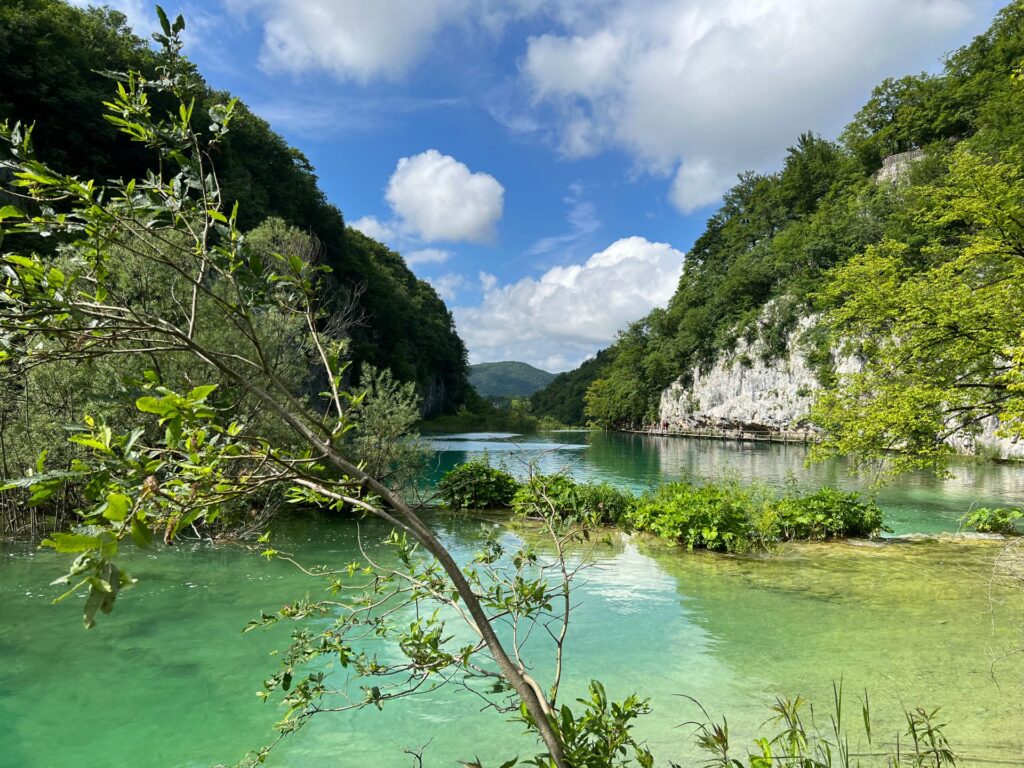
Lonely Planet named Croatia one of its “Best in Travel” destinations, and it is easy to see why. Beyond idyllic islands, sun-kissed shorelines, and historic walled cities, Croatia holds a long list of surprising facts, from ancient ruins to record-setting beaches. Here is a closer look at what makes the country so distinctive.
Croatia History Facts
Gladiators Fought in a Colosseum
Although Pula Arena is far less famous than Rome’s Colosseum, it is arguably more impressive and in better condition. The amphitheater, located in Istria, once hosted gladiator fights and is one of only three preserved in the world, as well as the sixth largest in existence.
Wealthiest Collection of Neanderthal Bones
The Krapina Neanderthal Museum holds 900 bones from Neanderthal humans who lived roughly 40,000 years ago, along with tools and artifacts uncovered in the Šandalja Cave more than a century ago. Opened in 2010 and spanning 13,000 square feet, it holds the largest such collection and is one of the most modern museums in central Europe.
Vinkovci is the Oldest Inhabited City in Europe
The eastern Croatian city of Vinkovci has been continuously inhabited for the past 8,300 years, making it the oldest such city in Europe and an important archaeological site.
Other History Facts
- Shakespeare’s comedy, Twelfth Night, was set in Dalmatia
- The Croatian currency, the kuna, is named after the marten, a ferret-like animal
- The dog breed Dalmatian can be traced back to Croatia and the Dalmatia region
- The official language is Croatian and spoken by almost 7 million people in Croatia and neighboring countries
Croatia Geography Facts
Croatia has Over 1,000 Islands

Croatia is home to 718 islands, 389 islets, and 78 reefs, so it is no surprise island hopping is such a popular way to explore the country. The largest islands are Krk, Cres, and Brač, each around 150 square miles, along with Hvar at 115 square miles. Only about 50 of the islands are inhabited. The most visited are Hvar, Vis, Korčula, believed to be the birthplace of Marco Polo, and Brač.
10% of Croatia is National Parks
Croatia has 8 national parks, 11 nature parks, and 2 nature reserves. The oldest and most iconic is Plitvice Lakes National Park, a UNESCO World Heritage Site where turquoise water flows through 16 lakes via a series of waterfalls. Krka National Park is known for its 7 waterfalls, Paklenica for dense forests and deep valleys, and Kornati for its roughly 90 islands and coral reefs. Mljet National Park rounds out the list with its two saltwater lakes and is well worth a visit on its own.
Cleanest Water for Swimming in Europe
In 2022, swimming water quality was tested at 1,011 Croatian beaches. Of those, 98.12% were graded excellent, and not a single beach tested received a poor rating.
Hum is the World’s Smallest Town
Guinness World Records recognizes Hum as the world’s smallest town with its own city walls, home to a church, two small roads, and a population that fluctuates between 17 and 23 residents.
Game of Thrones was Filed in Croatia
Several scenes from the HBO series were shot along the Dalmatian coast in Dubrovnik and Split, along with the island of Lokrum, St. Jacob Cathedral in Šibenik, and Krka National Park. If Split is on the itinerary, One Day in Split, Croatia covers how to make the most of a quick visit.
The Cool Sun Salutation
The Monument to the Sun, or Greeting to the Sun, is a modern art installation in Zadar designed by architect Nikola Bašić. The 22-meter-wide circle collects solar energy throughout the day and lights up in neon colors each evening.
Other Geography Facts
- Croatia receives more than 2,715 hours of sunshine per year
- Zlatni Rat beach on the island of Brač is known for changing shape when winds are strong, more on that phenomenon in The Amazing Geographical Wonder of Zlatni Rat Beach
- Alfred Hitchcock once called Zadar’s sunset the most beautiful in the world
- Fiddler on the Roof, Sophie’s Choice, Doctor Who, Mamma Mia! Here We Go Again, and Star Wars: The Last Jedi were all filmed in Croatia
- The strongest bura winds ever recorded in Croatia hit 154 mph on December 21, 1990
- The last population of Mediterranean monk seals lives in Croatian waters
- Croatia has over 40,000 winemakers and vineyards covering more than 20,000 hectares
Croatia Food Facts
Seafood is a Large Part of Their Diet
With a coastline stretching along the Adriatic Sea, it is no surprise seafood plays such a central role in Croatian cuisine, often caught, cooked, and served the same day.
Cuisine is Divided into Coastal and Inland
Croatian cuisine reflects the many cultures that have shaped the country over time, along with its diverse geography. The Dalmatian coast leans into Mediterranean flavors built around fish and seafood, while inland cooking favors heartier Slavic staples like cabbage, pork, and potatoes. For a taste of the coast, Bakra: Where Locals Go to Grab a Sensational Pizza in Split and Gelato Bar Bella in Trogir are both worth a stop.
Home to the World’s Biggest Truffle
Guinness World Records lists Croatia as home to the largest truffle ever found, weighing 2.9 pounds. Giancarlo Zigante and his dog discovered the white truffle on November 2, 1999, in the Motovun forest of Istria. White truffles are the most valuable variety and can sell for more than 3,000 euros per kilo.
Other Geography Facts
- Italian cuisine has had a strong influence on Croatian cooking
- Croatian olive oil is taken seriously and highly regarded
- Even traditional peasant dishes hold their own against more refined fare
Croatia Culture Facts
Soccer is Extremely Popular
As in much of Europe, soccer is Croatia’s most popular sport, played across all ages at both amateur and professional levels. Catching a match is a great way to experience the country’s competitive spirit firsthand.
Other Cultural Facts
- The oldest person recorded in Croatia, Nena Tolj, passed away in 2011 at age 110
- 78% of Croatians speak at least one other language, with 60% fluent in English, a fact worth remembering even after brushing up on a few basic Croatian phrases
- Croatia won the highest per capita gold medal haul in Europe at the 2016 Rio Olympics More
- Croatians live outside the country than within it, an estimated 3.8 million abroad
- Croatia has produced tennis’s top career ace server, Ivo Karlović
- Croatia has one of the oldest populations in the world, with an average age of 43.3
- The voting age, legal drinking age, and legal marriage age are all 18 In 2023,
- Croatia ranked 14th on the Global Peace Index’s list of the safest countries in the world
- Croatia reached a 99.80% literacy rate in 2021
- In 2019, Croatian men aged 18 were recorded as the tallest in the world
Adriatic Close
From ancient amphitheaters to record-breaking beaches, Croatia has a way of surprising even seasoned travelers. Whether it is the history, the islands, the food, or the culture that draws you in, there is always another layer to discover along the Adriatic coast.
— izzy
Additional information on travel in Croatia:
- Discover Split’s Top Beaches
- Dubrovnik Cable Car
- Zlatni Rat Beach
- Bakra – Best Pizza in Split
- Croatian Pearls of Wisdom
- Gelato Bar Bella · Best Ice Cream in Trogir
- Fun Facts About Croatia
- Croatian Slang
- One Day in Split
- Korčula for a Day
- Black Pepper in Hvar
- What to Know About Sailing Croatia
- Mljet National Park
- Exploring the Stunning Croatian Coast on a Luxury Cruise
- Bllue Cave
- Basic Croatian Phrases for Travelers
3 responses to “Fun Facts About Croatia: History, Geography & Culture”
On the travel wish list! Would love to visit Croatia for a longer trip. But I did not know many of these facts about Croatia. And I did not realize how much inland space there was. All good to know before a visit.
Hi Linda. i try to read up before traveling to a new country to help me prepare for my visit. Thanks for the comment. izzy
Nice that youre visiting soon (here’s a local speaking) ,so if u need tips you know who to ask and i just need zo say u should visit Primosten