The Climate of Anna Maria Island: What You Need to Know

Climate Overview

Anna Maria Island boasts warm air temperatures year-round, making it a great destination in any season. Summer is the hottest and most humid, often with afternoon showers, while spring and fall provide milder weather. Even in winter, the island stays pleasantly cool, ideal for outdoor activities.

While Anna Maria island offers consistently warm waters suitable for swimming year-round, temperatures can vary with the seasons. Visitors seeking the warmest water typically prefer late spring through early fall, when the Gulf reaches its most comfortable swimming temperatures.

When planning your visit, understanding Anna Maria Island’s weather becomes essential for making the most of your beach getaway. While the island welcomes visitors year-round, each season brings its own unique charm—from warm, breezy springs and sun-soaked summers to mild autumns and pleasantly cool winters.

Here’s a complete guide to Anna Maria Island’s climate to help you choose the perfect time to visit.


Quick Climate Overview

If you’re planning a trip to Anna Maria Island, here’s the short version:

  • 🌡 Warm year-round temperatures
  • ☀️ Hot, humid summers
  • 🌴 Mild, sunny winters
  • 🌧 Rainiest months: June–September
  • 🌊 Swimmable Gulf water most of the year

Anna Maria Island has a classic Florida Gulf Coast climate — meaning sunshine dominates, but summer afternoons often bring brief tropical showers.


Best Time to Visit

The best time to visit Anna Maria Island depends on what you’re looking for.

March to May
Warm temperatures, lower humidity, and fewer afternoon storms make spring one of the most ideal seasons. Beaches are lively but not overwhelmingly crowded.

June to September
Hot and humid with higher chances of rain, but perfect if you love warm Gulf waters and don’t mind quick afternoon storms.

October to November
Still warm enough for swimming, but with fewer visitors and lower accommodation rates. This is a hidden gem season.

December to February
Mild winter temperatures make this a favorite for snowbirds escaping colder climates.


Weather by Month

MonthAvg HighAvg LowGulf Water TempRainfall
Jan72°F52°F~64°FLow
Feb74°F55°F~65°FLow
Mar77°F59°F~68°FModerate
Apr82°F64°F~73°FModerate
May87°F70°F~78°FIncreasing
Jun90°F75°F~83°FHigh
Jul91°F77°F~86°FHigh
Aug91°F77°F~87°FHigh
Sep89°F75°F~85°FHigh
Oct84°F69°F~80°FModerate
Nov78°F61°F~73°FLow
Dec74°F55°F~68°FLow

Spring Weather · March to May

Spring is one of the most beautiful times of year on Anna Maria Island. Temperatures gradually warm from the mid-70s in March to the mid-80s by May, while humidity remains relatively comfortable compared to the peak summer months. Sunshine is abundant, and rainfall is typically light and scattered.

The Gulf waters begin warming quickly in spring, making it an ideal season for swimming, paddleboarding, boating, and long afternoons on the beach. Breezy evenings are perfect for waterfront dining or sunset strolls along the shore. Spring strikes that rare balance between warm beach days and comfortable nights, which is why many visitors consider it the best time to visit Anna Maria Island.

Summer Weather · June to September

Summer on Anna Maria Island is hot, humid, and wonderfully tropical. Daytime temperatures often reach the upper 80s to low 90s, and the Gulf water feels like bathwater — perfect for swimming and water sports.

This is also the island’s rainy season. Afternoon thunderstorms are common, but they are typically brief and fast-moving. Mornings are usually sunny and bright, with storms rolling through later in the day before clearing again. The dramatic summer skies can make for stunning sunset views once the rain passes.

While the heat and humidity are higher, summer is ideal for travelers who love warm water, vibrant beach energy, and longer daylight hours. Just plan outdoor activities earlier in the day and expect a quick tropical shower now and then.

Fall Weather · October to November

Fall is one of Anna Maria Island’s best-kept secrets. Temperatures remain warm — typically in the upper 70s to mid-80s — but humidity begins to drop, and afternoon storms become less frequent.

The Gulf waters are still warm from summer, making swimming comfortable well into October. Crowds thin out compared to peak spring and summer seasons, creating a quieter, more relaxed atmosphere on the beaches and at restaurants.

Fall offers that sweet spot of pleasant weather, warm water, and fewer visitors. It’s an excellent time for romantic getaways, beach walks, and outdoor dining without the summer heat.

Winter Weather · December to February

Winter on Anna Maria Island is mild and sunny, especially compared to much of the United States. Daytime temperatures typically range from the upper 60s to mid-70s, with cooler evenings that may call for a light sweater.

Rainfall is generally lower during winter months, and humidity is noticeably reduced. While Gulf water temperatures are cooler than summer, many visitors still enjoy swimming on warmer days.

Winter is especially popular with seasonal visitors escaping colder climates. The comfortable temperatures make it a wonderful time for biking, beachcombing, exploring local shops, and enjoying outdoor activities without intense heat.


Activities Per Season

Spring · March to May

Spring is one of the most vibrant and enjoyable seasons on Anna Maria Island. With warm sunshine, comfortable humidity, and beautifully swimmable Gulf waters, it’s an ideal time for swimming, sunbathing, dolphin watching, and sunset cruises.

It’s also prime season for getting active outdoors. Calm mornings are perfect for paddling — and my Ultimate Guide to Kayaking on Anna Maria Island shares the best launch spots and scenic routes. If you prefer something on land, spring’s mild temperatures make it a fantastic time to play — my Ultimate Guide to Pickleball on Anna Maria Island highlights where to join a game. For a slower, more mindful start to your day, you can roll out a mat and embrace the island vibe with the community featured in Coastal Serenity: Join The Yoga Tribe on Anna Maria Island.

March tends to be lively with spring breakers, bringing a fun, energetic beach atmosphere. April often hosts vibrant festivals and events, while May is especially exciting as tarpon fishing heats up.

Spring truly offers the best balance of activity, sunshine, and island energy.

Summer · June to August

Summer on Anna Maria Island is all about long beach days, warm Gulf waters, and vibrant island energy. With water temperatures at their peak, it’s the perfect season for swimming, snorkeling, boating, and high-adrenaline fun. If you’re ready to turn up the excitement, my Ultimate Guide to Jet Ski Rental on Anna Maria Island shares everything you need to know about getting out on the water.

June also marks the beginning of sea turtle nesting season, when loggerhead turtles return to the island’s shores — a special reminder of the island’s natural beauty and conservation efforts.

July brings festive energy, especially around Independence Day. Fireworks, parades, and waterfront celebrations make it one of the most spirited times of year. You can find more details in my Ultimate Guide to Anna Maria Island Festivals, which highlights seasonal events and celebrations throughout the year.

By August, brief afternoon showers become more common, but they rarely last long and often give way to glowing skies and spectacular sunsets. The warm Gulf waters also create excellent conditions for inshore and nearshore fishing, especially in the early morning hours. And when summer rain does roll through, it’s the perfect opportunity to explore the ideas in my Ultimate Guide to Rainy Day Activities on Anna Maria Island, from relaxing indoor experiences to cozy island escapes.

Summer storms can temporarily create rougher surf and stronger currents. Always check the beach warning flags before swimming, and refer to my Complete Guide to Beach Warning Flags on Anna Maria Island to understand what the colors mean.

Summer may be hot and humid, but for travelers who love beach life at its fullest, it’s an unforgettable time to visit.

Fall · September to November

Fall brings a quieter, more relaxed rhythm to Anna Maria Island. The summer crowds fade, but the warmth lingers — especially in September, when Gulf waters remain perfect for swimming, beach days, and water adventures. It’s also a fantastic time to see the island from above, and Parasailing: A Unique Way to Explore Anna Maria Island shows just how unforgettable the views can be.

October marks the highly anticipated start of stone crab season, one of the island’s most celebrated culinary traditions. My Ultimate Guide to Stone Crab on Anna Maria Island shares where to enjoy this local delicacy at its freshest. With cooler mornings and comfortable afternoons, fall is also ideal for exploring on land. You can cruise scenic paths and soak in coastal views using tips from Pedal Your Way Through Beautiful Anna Maria Island, when biking feels especially enjoyable without the summer heat.

By November, the island settles into a peaceful, breezy calm that’s perfect for browsing local shops, enjoying uncrowded beaches, and observing the return of migratory birds. This is one of the best times to explore the island’s natural habitats, and my Ultimate Guide to Birdwatching on Anna Maria Island highlights where to spot some of the area’s most beautiful coastal species.

Fall offers that rare combination of warm weather, seasonal flavors, and a slower island pace that makes it especially memorable.

Winter · December to February

Winter on Anna Maria Island brings mild temperatures, sunny skies, and a peaceful coastal atmosphere that’s perfect for slowing down and savoring the island. It’s an ideal season for beachcombing, sunset cruises, and relaxed days spent exploring charming local spots. It’s also a wonderful time to unwind and recharge — my Discover the Best Pampering Spots on Anna Maria Island guide highlights the perfect places to relax and escape the winter chill found elsewhere.

December transforms the island into a festive coastal retreat, with holiday markets, boat parades, and seasonal celebrations. My Ultimate Event Guide for the Holidays on Anna Maria Island shares the best ways to experience the island’s unique coastal holiday spirit.

January is typically one of the quietest months, offering uncrowded beaches and a slower pace that makes it easy to explore at your leisure. By February, visitors begin returning as warmer spring weather approaches, bringing renewed energy to the island — especially along the shops, restaurants, and waterfront charm featured in my Ultimate Guide to Bridge Street on Anna Maria Island.

Winter offers a peaceful, sunny escape and a glimpse of island life at its most relaxed.


loader-image
Anna Maria Island
Anna Maria Island
3:31 am, Mar 7, 2026
temperature icon 71°F
clear sky
Humidity: 92 %
Pressure: 1021 mb
Wind: 13 mph
Wind Gust: 21 mph
Clouds: 5%
Visibility: 6 mi
Sunrise: 6:49 am
Sunset: 6:34 pm

Best Beaches for Swimming

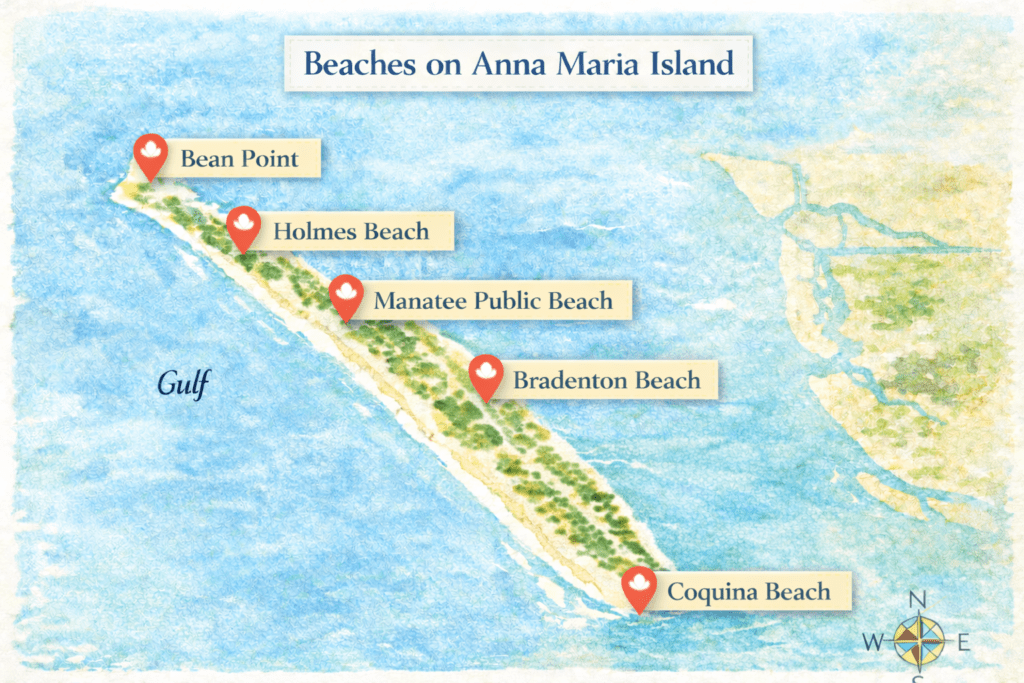
Not all beaches on Anna Maria Island offer the same swimming experience. Gulf conditions, crowd levels, and amenities vary slightly from north to south, so choosing the right stretch of sand can make your beach day even better.

Bean Point
Bean Point is one of the most beautiful spots on the island, but it is not recommended for swimming. Strong currents, shifting sandbars, and the absence of lifeguards can create unpredictable conditions. This beach is best enjoyed for walking, photography, and soaking in the scenery rather than entering the water.

Manatee Public Beach
This beach is one of the safest and most swim-friendly beaches on Anna Maria Island, thanks to its gentle shoreline, typically calm waters, and regular lifeguard presence. The shallow Gulf makes it ideal for families and casual swimmers, while easy access allows for both quick dips and full beach days. As one of the island’s most popular beaches, it also offers convenient amenities including restrooms, picnic areas, and nearby food options. You’ll often find a lively atmosphere here, with music drifting from nearby beach cafés—something I cover more in my Live Music Vibe on Anna Maria Island guide—making it a fun and comfortable place to spend the day both in and out of the water.

Holmes Beach
The central portion of the island offers consistently good swimming conditions with convenient access points. This area tends to strike a balance between quiet and accessible, making it a reliable choice throughout the year.

Bradenton Beach
Located toward the southern end of Anna Maria Island, Bradenton Beach offers excellent swimming conditions with calm waters and wide stretches of soft, white sand. The gradual slope into the Gulf makes it easy to wade in, while consistent gentle waves create a refreshing but manageable swimming experience. Its central location near shops, restaurants, and attractions along Bridge Street makes it easy to combine a swim with exploring, dining, or enjoying the lively coastal atmosphere.

Coquina Beach
Coquina Beach sits at the southern end of the island and is beloved for its laid-back atmosphere, wide stretch of soft sand, and calm, clear waters. The gradual slope into the Gulf makes swimming easy and comfortable, while the open shoreline keeps waves manageable most days. One of its most distinctive features is the line of Australian pines, offering natural shade that creates the perfect setting for lingering between swims. It’s especially enjoyable when paired with a relaxed picnic or takeout, as highlighted in my Ultimate Guide to Beach Chair Dining on Anna Maria Island, where sitting under the Australian pines becomes part of the experience itself.

Wherever you enter the water, the Gulf side of the island is known for its warm temperatures, soft sandy bottom, and generally gentle surf—making Anna Maria Island one of Florida’s most inviting places to swim in every season.


Best Time of Day to Swim

The best time to swim on Anna Maria Island is typically in the morning, especially between 8 AM and 11 AM. During these hours, the Gulf of Mexico is often at its calmest, with lighter winds, smoother water, and excellent clarity.

By afternoon, especially in summer, onshore breezes can create choppier conditions and occasional storms. While swimming is still enjoyable most days, mornings usually offer the safest and most comfortable experience.

Evenings can also be pleasant, particularly around sunset, when winds often settle again and temperatures cool. Always check current conditions and beach warning flags before entering the water.


What to Pack for Swimming

Pack the basics like sunscreen, a reusable water bottle, and a towel, but a few extra items can make your swim far more comfortable. Water shoes can help on shell-heavy shorelines, and a dry bag is useful for protecting valuables. If you want a complete breakdown of the essentials seasoned beachgoers never forget, see my What Super-Travelers Carry in Their Beach Bags guide for smart, practical additions that make every beach day easier.


What to Pack by Season

Seasonal packing on Anna Maria Island isn’t about dramatic weather shifts—it’s about comfort, timing, and making the most of the island’s unique conditions.

Spring · March to May
Spring offers ideal swimming conditions, with warming water and low humidity. This is one of the best times to stay in the water longer, so practical items like extra sunscreen and a reusable water bottle become essential. The sun feels stronger than expected, especially during midday swims, and protection matters more than people realize.

Summer · June to September
Summer swimming is effortless—the Gulf is warm and inviting—but the intensity of the sun and heat catches many visitors off guard. A hat, polarized sunglasses, and a lightweight cover-up make a noticeable difference between a short swim and comfortably spending hours at the beach. Quick-dry clothing is especially useful when moving between the water and nearby restaurants or shaded spots.

Fall · October to November
Fall is one of the island’s best-kept secrets. The water remains warm, but mornings and evenings begin to cool. A light layer helps extend your beach time, especially if you stay through sunset. With fewer crowds, fall is perfect for longer, more relaxed beach days—having comfortable, practical gear helps you take full advantage.

Winter · December to February
Winter brings some of the most pleasant beach weather, but the Gulf can feel cool, especially in the mornings. Many visitors pack only swimwear and regret not bringing a light layer. A thin sweatshirt or long-sleeve cover-up makes early swims and sunset beach walks far more comfortable. This is also peak season, so having your own beach gear—chair, towel, or umbrella—means you’re not relying on limited rentals.


Quick Climate Summary

Anna Maria Island enjoys a warm, beach-friendly climate year-round, with average daytime temperatures ranging from the low 70s°F (21°C) in winter to the low 90s°F (32–34°C) in summer. Spring and fall offer the most comfortable balance of sunshine, warm Gulf of Mexico water, and lighter crowds, making them the ideal times to visit. Summers are hotter with brief afternoon showers, while winters remain mild and sunny—perfect for beach walks, outdoor dining, and soaking up island life in every season.


FAQ · Climate on Anna Maria Island

What is the best month to visit?

April and May are widely considered the best months to visit. The weather is warm but not overly humid, the Gulf of Mexico is comfortable for swimming, and crowds are lighter than peak spring break and summer. October and November are also excellent, with warm water, fewer visitors, and the start of stone crab season.

Can you swim year-round?

Yes, swimming is possible year-round. Water temperatures are warmest from May through October and coolest in January and February. Even in winter, many visitors still swim on sunny days, especially in the afternoon when temperatures peak.

When is the rainy season?

The rainy season runs from June through September. Showers are usually brief and often occur in the afternoon, followed by clear skies and beautiful sunsets. Rain rarely lasts all day, and there are still plenty of beach opportunities between showers.

What is the hottest month?

August is typically the hottest month, with daytime highs in the low 90s°F (32–34°C). The Gulf water is at its warmest, making it ideal for swimming, paddleboarding, and boating.

What is the coldest month?

January is usually the coolest month, with daytime highs averaging around 70°F (21°C). Cold fronts can occasionally bring cooler mornings and breezy conditions, but sunny beach days are still common.

Is Anna Maria Island humid?

Yes, humidity is present year-round and highest in summer. However, coastal breezes from the Gulf help moderate temperatures and keep conditions more comfortable than inland Florida.

When is hurricane season?

Hurricane season runs from June 1 through November 30, with peak activity between August and October. It is wise to monitor forecasts if visiting during this period.

When is the water calmest?

Water is often calmest in spring (April–May) and fall (October–November). Summer mornings also tend to have smooth, clear conditions before afternoon breezes develop.


While you’re visiting Anna Maria Island, stay up to date with the latest weather by following Dennis Phillips on Facebook. His reliable forecasts can help you plan your days with confidence.


Until next time…

· izzy

Discover the best spots to eat, sip, and unwind across Anna Maria Island with this comprehensive restaurant guide. Whether you’re craving fresh Gulf seafood, sunset cocktails, or hidden local favorites, this ebook makes planning your next meal easy and delicious.

Perfect for visitors and locals alike, vacation rental owners, and foodies — it’s your go-to resource for dining on Anna Maria Island.

Anna Maria Island Restaurant Guide