
Updated: September 2026
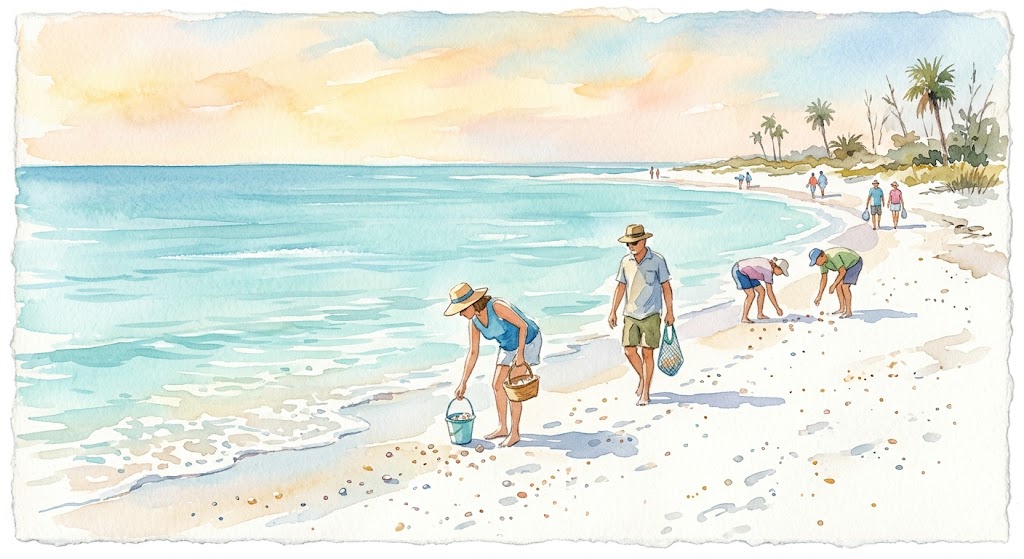
Shelling on Anna Maria Island is one of those simple pleasures that never gets old. The island’s position along Florida’s Gulf Coast, combined with its natural currents and barrier island geography, makes it one of the best spots in the state for finding a wide variety of shells. Whether you’re a seasoned collector chasing a rare junonia or a first-timer just hoping to fill a bucket, the island delivers.
Best of all, it costs nothing, requires almost no gear, and is fun for every age. A bucket, a little patience, and an early morning are really all you need.
Shelling is just one of many things to do here. For more ways to explore the island from the water see my Water Activities on Anna Maria Island: My Insider Guide. Bringing the family? Check out my Best Family Activities on Anna Maria Island: My Insider Guide .
Know Before You Go: Shelling Rules in Florida
Shelling on Anna Maria Island is legal and encouraged, but a few rules apply.
Empty shells are fair game on Florida’s public beaches with no statewide limit on how many you can take for personal use. The key rule is simple: only collect shells that are clearly empty. Picking up a live shell, meaning one with a living creature still inside, is illegal. If something is moving inside the shell, put it back.
Best Time to Go Shelling
Timing matters more than most people realize. The best window is right after high tide at daybreak, before other beachcombers arrive and before the water pulls back too far. That is when freshly deposited shells are sitting on the sand waiting to be found. As the tide recedes, you can also wade into the shallows to uncover shells that have not fully made it to shore yet.
Winter is the prime season overall. Cold fronts and storms push shells up onto the beach in higher volumes, and the cooler months tend to bring calmer, more focused crowds. If you can time an early morning walk in the days after a weather event between January and March, your odds of a great haul go up significantly.
Best Beaches for Shelling
Bean Point
Bean Point sits at the northern tip of the island where the Gulf meets Tampa Bay. The convergence of those two bodies of water pushes in a wider variety of shells than you will find at most other spots on the island. It is secluded and requires a short walk from the nearest parking, which keeps the crowds down and leaves more on the sand for you. This is widely considered the best shelling spot on the island. Go at low tide after a cold front for the best results and keep an eye out for tulip shells, whelks, and conchs.
Coquina Beach
Coquina Beach sits at the southern end of the island near Longboat Pass, and the tidal exchange through that pass is what makes it such a productive shelling spot. Shells collect in concentrated bands along the shoreline, and the further south you walk toward the pass, the better the pickings tend to get and the fewer people you will encounter. This is also one of the best spots on the island to find shark teeth.
Manatee Public Beach
Located at 4000 Gulf Drive in Holmes Beach, Manatee Public Beach is one of the most accessible shelling spots on the island. It is a long, wide stretch of sand with good shell deposits, especially early in the morning. The beach also has a café, playground, and picnic areas, making it an easy choice for families who want to combine shelling with a full beach day.
Bayfront Park
Bayfront Park on the north end of the island at 316 N Bay Blvd in Anna Maria offers a different kind of shelling experience. Because it faces the bay rather than the Gulf, you tend to find a mix of shell types that you will not come across on the Gulf-side beaches. It draws fewer visitors than the main beaches, which means more opportunity for you. The views of the Sunshine Skyway Bridge are a bonus.
Shells You Might Find
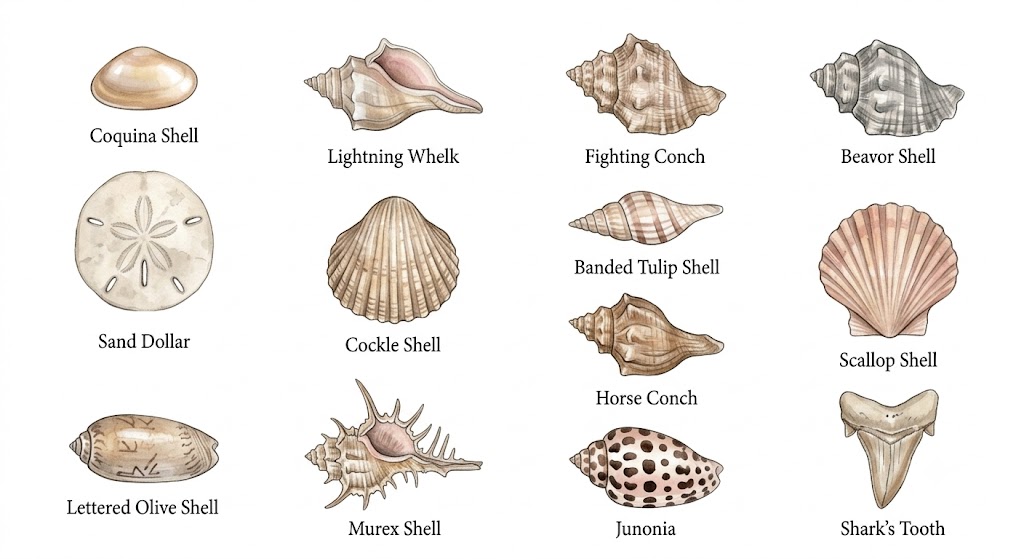
Anna Maria Island’s beaches are home to over 400 species of shells. Before your trip, consider picking up Florida’s Seashells: A Beachcomber’s Guide by Blair Witherington. It is the go-to field guide for Gulf Coast shelling, packed with color photos that make identifying your finds easy right on the beach.
This website uses affiliate links which may earn a commission for purchases at no additional cost to you.
Here are the ones you are most likely to encounter and what to look for:
Coquina Shells are tiny and plentiful, especially at their namesake beach. They come in soft pastel shades of pink, yellow, blue, purple, and white, and sometimes wash up with both halves still hinged together in a butterfly shape. Small but beautiful.
Lightning Whelk is Florida’s official state shell and one of the most recognizable finds on the Gulf Coast. What makes it distinctive is that it spirals to the left, the opposite of most shells. They range from a couple of inches to well over a foot long and are very common here.
Fighting Conch is one of the most colorful shells you will find, with rich tones of orange, pink, and brown. They are named for the feisty behavior of the live animal, which will kick if handled. Collect empty ones only.
Sand Dollars are flat, circular, and fragile, and finding an intact one feels like a real win. The safest way to tell if one is alive is to look at the tiny hair-like cilia on the underside. If they are moving, put it back. A safe-to-keep sand dollar is pale white or gray with no movement.
Cockle Shells are heart-shaped with distinctive ridges and range in color from white to pale yellowish-brown. They are one of the most common finds on the beach and a favorite for crafts.
Banded Tulip Shells are conical with alternating brown and cream bands spiraling around the shell. They are a popular collector’s find and not hard to spot once you know what to look for.
Lettered Olive Shells are smooth and glossy with brown markings that look almost like handwriting or brushstrokes. They tend to be partly buried in the wet sand at the waterline, so look closely.
Horse Conch is Florida’s state shell and one of the largest you can find on the Gulf Coast. It can reach impressive sizes and is a striking find in any collection.
Scallop Shells are fan-shaped and come in a range of warm colors including yellow, orange, and red. They are abundant at Bean Point and are a favorite for crafting and decorating.
Murex Shells are unmistakable thanks to the spiny projections on the outside of the shell. They are less common but unforgettable when you find one.
Junonia is the holy grail of Gulf Coast shelling. It is rare, off-white with distinctive brown spots, and finding one is considered a serious trophy among collectors. Do not expect to find one on your first try, but do keep an eye out.
Shark’s Teeth are not shells, but they are one of the most exciting things you can find on the beach and worth hunting for. Coquina Beach near Longboat Pass is one of the better spots on the island.
Tips for a Better Shelling Experience
Getting up early is the single best thing you can do. Arriving at daybreak right after high tide, before the beach fills up, gives you first access to whatever washed in overnight.
Walk the waterline rather than the dry sand further up the beach. Shells move with the water and tend to collect right where the waves meet the sand. Shark’s teeth and heavier objects tumble differently and are more likely to be found slightly below the surface of the wet sand, so do not be afraid to dig a little.
Wade in. Some of the best shells are sitting in just a few inches of water and have not made it fully onto shore yet. Water shoes are worth wearing if you plan to get your feet wet, as broken shells underfoot are no fun.
Bring a mesh bag or bucket, a small spade for digging, and sunscreen.
How to Clean Your Shells
Getting your shells home is just the beginning. Cleaning them properly makes a real difference in how they look and how long they last.
Start with a fresh water rinse to remove sand and salt. Then soak them in warm, soapy water for about 20 to 30 minutes to loosen any remaining debris or organic material. Use an old toothbrush to scrub into ridges and crevices. For stubborn spots, a baking soda paste works well and is gentle on the shell surface.
Skip the vinegar soak. Vinegar is acidic and will slowly dissolve the calcium carbonate that shells are made of, which dulls their surface and can damage delicate markings. If you want to use it at all, limit it to a quick spot treatment.
Once scrubbed, rinse thoroughly and pat dry with a soft towel. Let them finish air drying out of direct sunlight. Once completely dry, a light coat of mineral oil or baby oil brings out the natural color and gives the shell a subtle, healthy-looking sheen. It is optional but makes a noticeable difference.
If a shell still has an odor after cleaning, try a longer baking soda soak or leave it outside in indirect sun for a day or two.
How to Display Your Shells
Once cleaned, the fun of figuring out what to do with them begins. A few ideas that work well for a Gulf Coast collection:
Fill a glass apothecary jar, bowl, or tray and let the shells speak for themselves. Grouping by type or color makes even a simple display look intentional. A shallow wooden bowl or woven basket gives a natural, coastal feel to a mixed collection. Shadowboxes are a great option for smaller or more delicate shells, keeping them organized and protected. For something more personal, shells hot-glued around a simple picture frame make a meaningful piece of wall art, especially paired with a photo from the beach.
Looking for more creative ways to spend your time on the island? Check out my Hands-On Experiences On Anna Maria Island: My Insider Guide.
Sun Protection
A morning of shelling has a way of turning into a full day on the beach without you noticing. sunscreen, a wide-brim hat, and UV-protective clothing are all worth packing. Shop my favorite sunscreen products at my Amazon storefront.
Want more real-time tips and honest answers about Anna Maria Island? Join Anna Maria Island Insider, my Facebook group built on one simple rule: real, helpful answers only. Join the group.
Coastal Close
Shelling on Anna Maria Island is the kind of activity that slows you down in the best way. There is something grounding about walking the shoreline at sunrise, eyes on the sand, completely present. Whatever you bring home, even a single perfect coquina, is a little piece of the island that travels with you.
— izzy