
Updated: June 2026
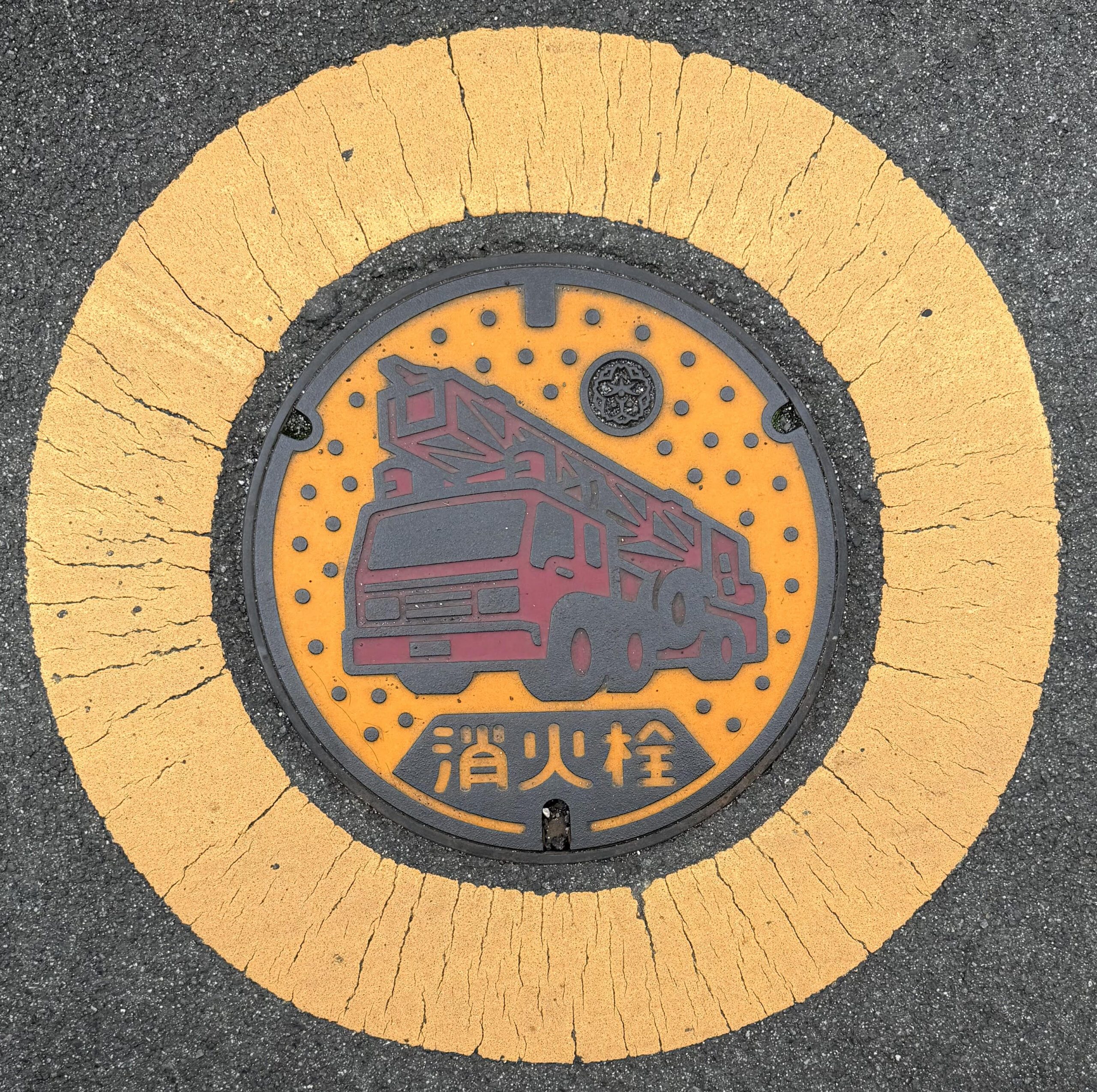
Japan is famous for temples, food, and neon cities, but one of its most unexpected cultural obsessions is right under your feet. Across the country, ordinary manhole covers have been transformed into detailed works of art celebrating local identity, history, and pride. What started as a public infrastructure project has become a nationwide treasure hunt for travelers, and once you start noticing them, you will never walk the same way again.
Planning a trip to Japan? Start with Japlanning 101: Your Crash Course to an Epic Trip for everything you need to know before you go.
The Story Behind Japanese Manhole Cover Art
The first decorative manhole covers appeared in Japan in the late 1970s, beginning in Naha City in 1977 with a design featuring fish swimming in clean water, symbolizing improved sanitation systems. By the 1980s, color printing techniques allowed municipalities to create detailed, hand-painted designs that reflected their local identity and culture.
What began as a public awareness campaign evolved into something far bigger: regional tourism branding, local pride projects, and a nationwide collectible culture that draws travelers to neighborhoods they might never have visited otherwise.
What Makes Japanese Manhole Covers Special
Each city designs its own covers based on local culture, history, and identity. Common themes include cherry blossoms and seasonal flowers, mountains and landscapes, castles and historic sites, local legends and folklore, and regional wildlife and seafood culture. Some cities go a step further and feature pop culture icons including Pokémon, Hello Kitty, and Astro Boy, turning familiar characters into civic landmarks.
The artistry is genuinely impressive. These are not stickers or decals but cast iron covers designed and produced specifically for each municipality, built to last decades underfoot while still functioning as everyday infrastructure. It is the kind of detail that reflects the broader Japanese attention to craft and public space you will notice throughout the country, from the noren curtains hanging in shop doorways explored in The Art and History Behind Traditional Japanese Noren Curtains to the remarkably clean streets explained in Why Japan Does Not Have Public Trash Cans.
Manhole Cards: Japan’s Most Unusual Souvenir
One of the biggest reasons manhole cover tourism has taken off is the introduction of manhole cards, collectible postcard-style cards issued by local municipalities. Each card features the official design of a local manhole cover, the exact location where it can be found on the street, and a short explanation of the design’s cultural meaning. Some cards include QR codes linking to videos or local history, blending street art with digital storytelling.
Travelers collect them by visiting city offices, visitor centers, and tourism desks, turning manhole hunting into a real-life scavenger hunt across the country. The cards are free, easy to carry, and have become one of the more unique souvenirs you can bring home from Japan without spending a yen.
Manhole Cover Tourism and the Manholer Subculture
Fans known as manholers travel across Japan specifically to photograph and collect designs, sometimes following official manhole card routes issued by municipalities. It has become a full travel subculture, similar in spirit to stamp collecting but played out on sidewalks and city streets.
The movement has had a meaningful impact on tourism, drawing visitors to smaller cities and quieter neighborhoods that might otherwise be overlooked in favor of the major destinations. Finding a particularly striking cover in an unexpected corner of a city is one of those small, satisfying travel moments that Japan seems to specialize in.
Notable Manhole Cover Locations
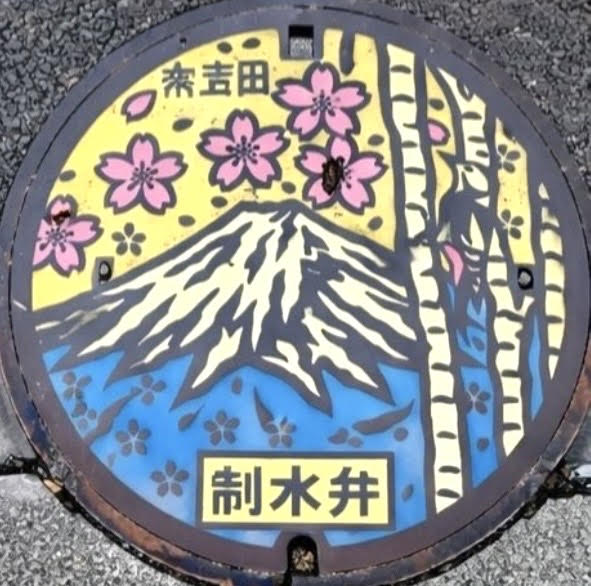
Fujiyoshida City One of the most iconic covers prominently features Mount Fuji surrounded by sakura cherry blossoms. Visitors seek it out specifically for photos and the accompanying collectible card, making it a genuine destination stop for manhole enthusiasts.
Fukushima City Designs here include traditional straw sandals referencing the Waraji Festival and tributes to composer Yuji Koseki, blending local history with modern touches like QR code-linked content.
Tsukuba City Home to JAXA, Japan’s space agency, Tsukuba features covers inspired by Earth, Mount Tsukuba, and space exploration themes that reflect the city’s identity as a center of science and research.
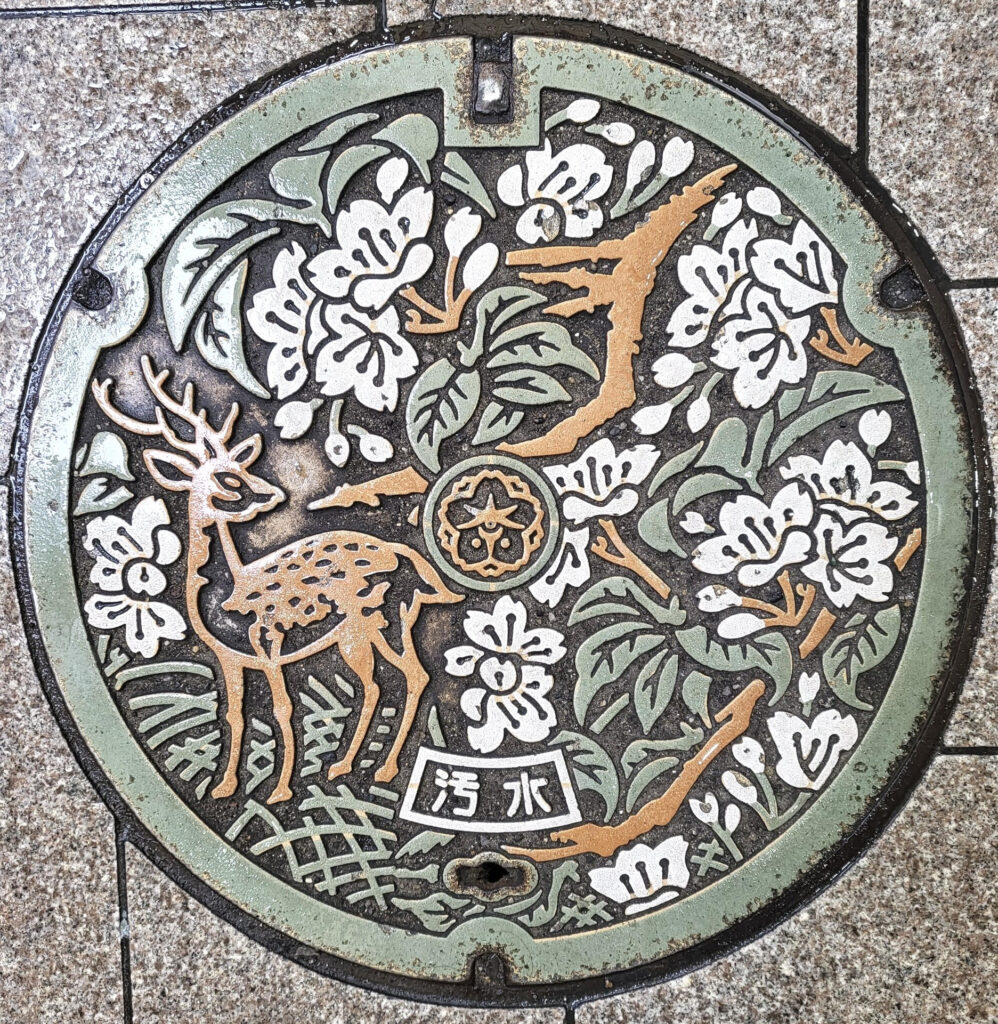
Nara City Nara’s manhole covers are among the most beautiful in the country, featuring the city’s beloved sika deer surrounded by camellia blossoms, Nara’s official flower. The warm copper and sage green tones make this one of the most visually striking covers you will find anywhere in Japan. Nara’s deer are a living symbol of the city and roam freely through Nara Park, so finding this cover while exploring the area feels especially fitting. A must-photograph stop for any manhole hunter passing through.
Hiroshima Covers featuring Carp Boy celebrate the beloved Hiroshima Carp baseball team near Mazda Stadium, a detail that feels deeply local and easy to miss if you are not looking for it.
Pop Culture Covers: Tokyo and Kyoto
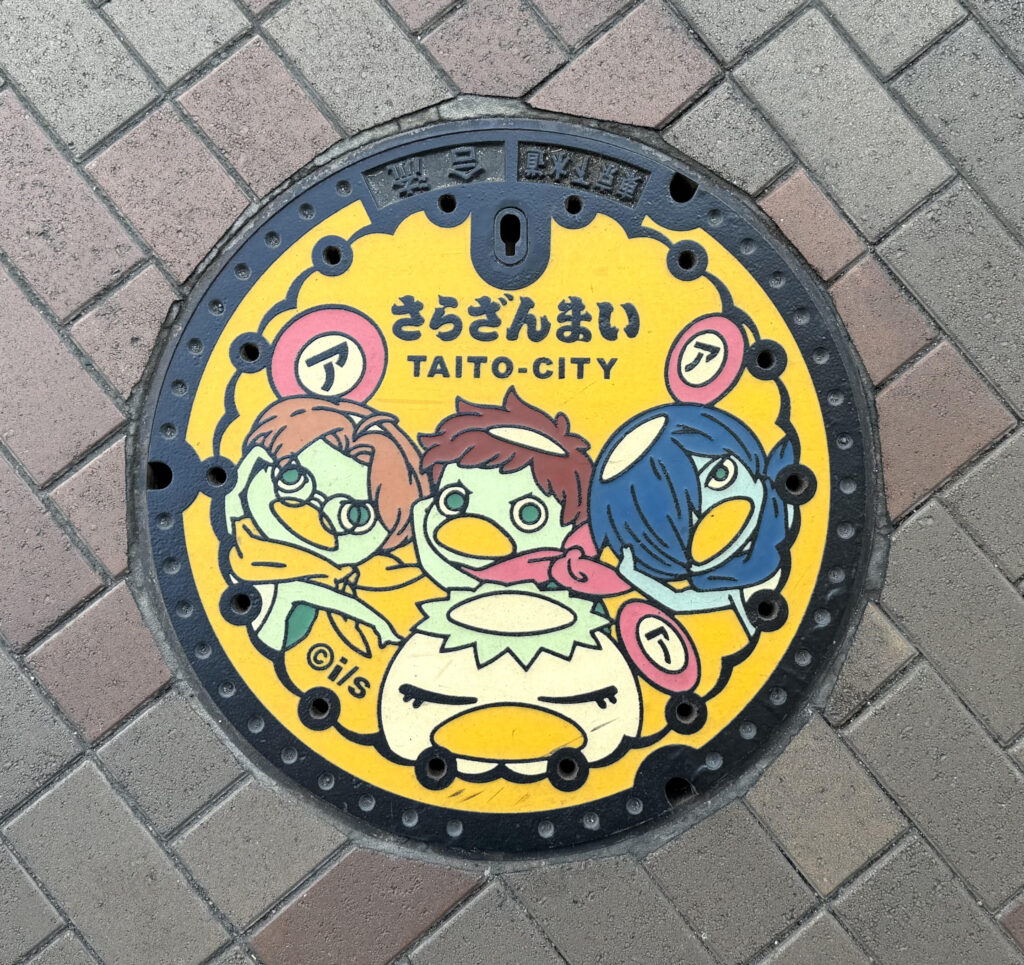
Japan’s pop culture cities deliver some of the most sought-after manhole covers in the country. In Tokyo’s Chiyoda Ward, Astro Boy designs pay tribute to one of Japan’s most beloved manga characters. In Tama City, Sanrio characters make for a colorful and instantly recognizable find. Near the Kappabashi intersection in Taito City, a custom cover celebrates the two-year anniversary of the Sarazanmai anime series, depicting the main characters transformed into kappa creatures, a playful nod to the neighborhood’s kappa folklore roots.
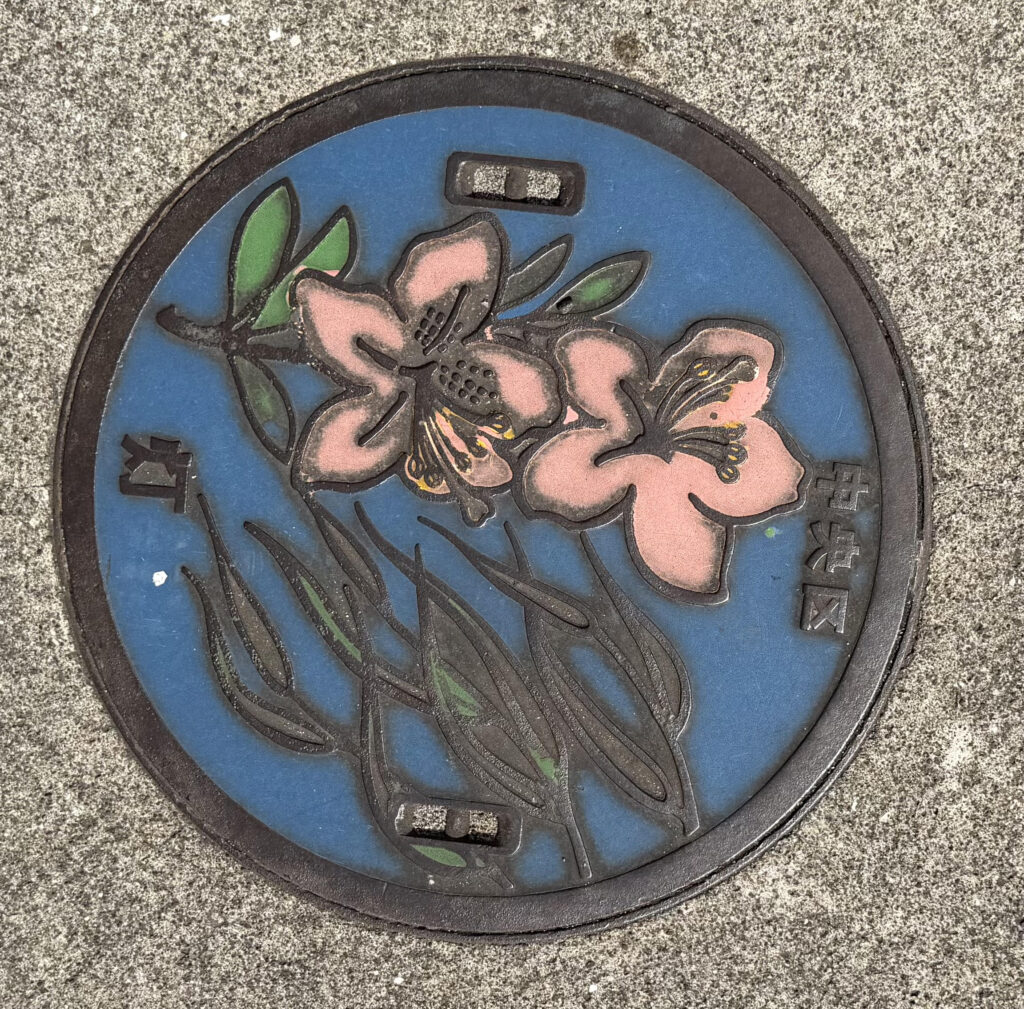
Chuo Ward, Tokyo Chuo Ward’s manhole cover features azaleas, the official flower of the ward, surrounded by iris leaves. A beautiful example of how Tokyo’s individual wards each bring their own distinct identity to their covers, making the city a rewarding hunting ground for manhole enthusiasts willing to explore beyond the obvious tourist trail.
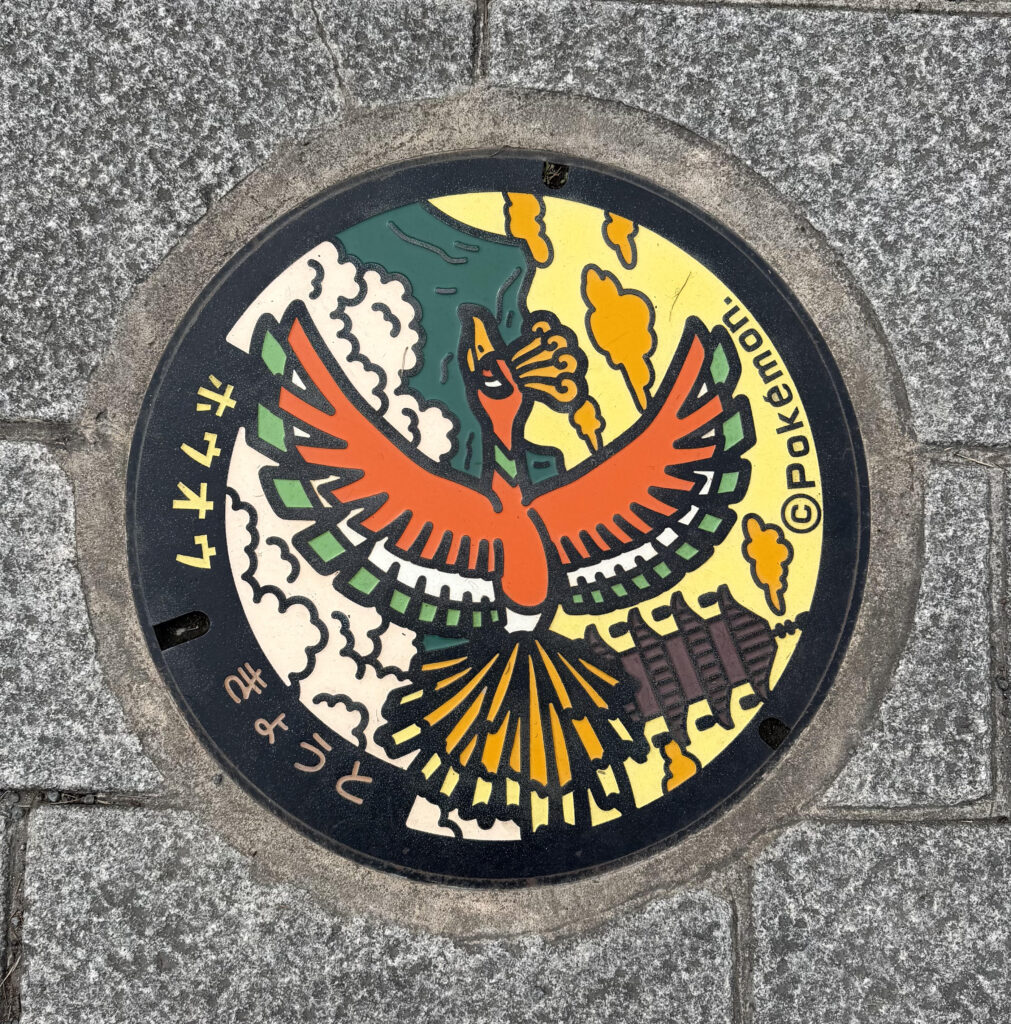
Kyoto (Arashiyama) A Pokémon manhole cover known as a Poke Lid features the legendary Pokémon Ho-Oh near the iconic Togetsukyo Bridge in Arashiyama Park. It is one of the more rewarding finds for Pokémon fans and sits in one of the most beautiful settings of any manhole cover in the country. For a full guide to spending the day in the area, see the Ultimate Guide to a Day in Arashiyama in Japan.
Yokohama Pikachu Pokémon covers are among the most photographed in the country and a must-seek for fans making their way through the city.
Tips for Manhole Cover Hunting
Looking down while walking is the obvious first step, but a few things make the hunt more rewarding. Slow down in historic neighborhoods and near local landmarks, where covers tend to be more elaborate and culturally specific. City hall entrances, visitor centers, and tourism offices are your best bet for picking up manhole cards, so stop in early in the day before they run out.
Getting around efficiently matters when you are covering a lot of ground. For navigating Japan’s train system, see Train Etiquette in Japan: Everything You Need to Know Before You Ride. If you are moving between cities with luggage, the Ultimate Guide to Luggage Transport in Japan is worth reading before you go, as it covers the delivery services that make getting around far easier. And when you sit down to eat after a day of hunting, brush up on the Ultimate Guide to Chopstick Etiquette in Japan so you are comfortable at the table.
Japan Close
Japan turns something as ordinary as a manhole cover into public art, cultural storytelling, and a reason to explore a neighborhood you might have walked right past. It is a small reminder that the most interesting parts of any place are often the ones nobody told you to look for.
Don’t forget to look down.
— izzy