

If you’ve traveled to Japan, you may have noticed something surprising: the streets are spotless, yet public trash cans are almost nowhere to be found.
This curious phenomenon has deep historical and cultural roots, shaped by environmental awareness, government policies, and a major safety event in 1995. For travelers, understanding how to handle waste in Japan is key to enjoying a smooth, respectful visit.
If you’re planning a trip to Japan, check out my Japlanning 101: Your Crash Course to an Epic Trip, which covers everything from transportation to sightseeing.
Contents
The 1980s: A Shift Toward Personal Responsibility
- In the early 1980s, Japan began encouraging people to carry their trash home instead of relying on public bins.
- Environmental campaigns and schools reinforced mottainai, a traditional concept reminding people not to waste resources.
- Communities gradually reduced street-side trash cans, teaching residents that waste is your responsibility.
With this cultural shift, citizens took pride in keeping streets clean—shops cared for their storefronts, and neighborhoods upheld local cleanliness standards.
1995: The Turning Point — Public Bins Almost Vanished
On March 20, 1995, the Aum Shinrikyo sarin gas attack in the Tokyo subway system shocked the nation. In its aftermath:
- Trash cans, especially metal bins, were removed due to security concerns.
- Public safety became a top priority, accelerating the trend of carrying trash.
- From that point on, carrying your trash became both common etiquette and a safety practice.
Today, Japan’s sparse-bin landscape is a result of both culture and caution.
Cultural Etiquette Around Waste
Cleanliness in Japan isn’t just personal preference—it’s a shared social value rooted in respect for public spaces.
Key points for visitors:
- Respect public spaces: Don’t eat while walking or leave trash behind.
- Follow local rules: Sort recyclables and burnable items correctly.
- Observe designated areas: Festivals and parks have waste stations, but bins are often limited.
When visiting Japan, following local habits goes a long way.
Where Tourists Can Find Trash Cans
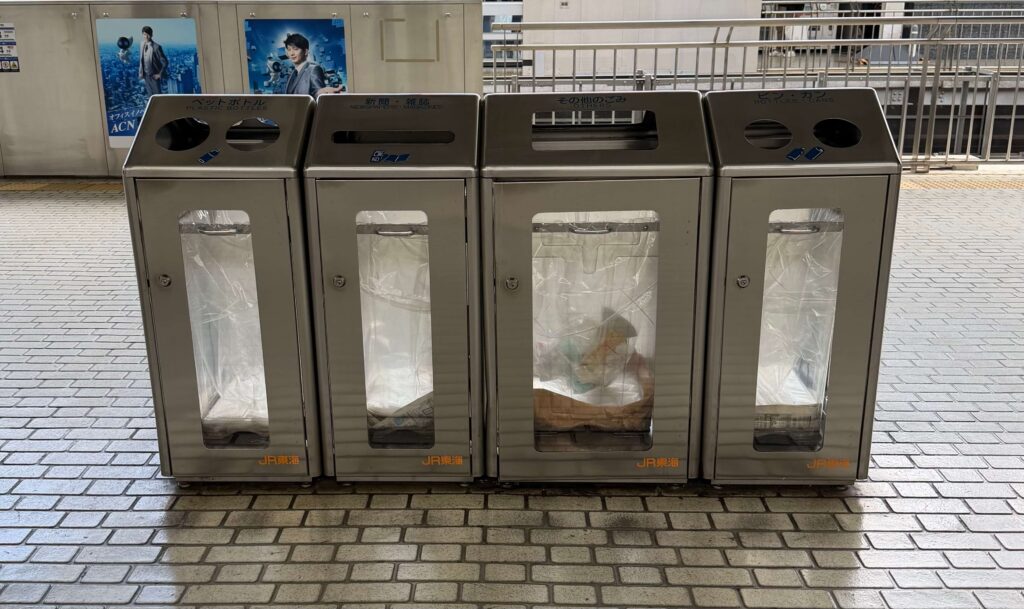
Though rare, trash cans exist in a few reliable locations:
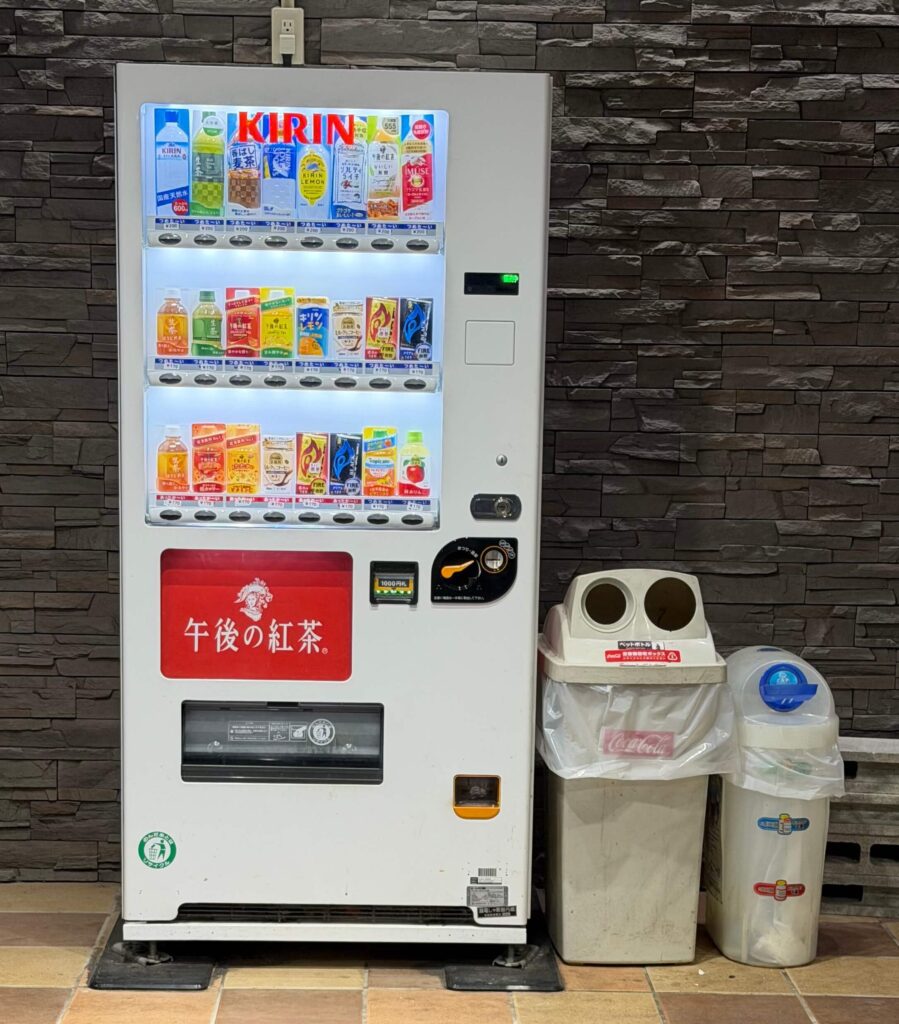
- Vending machines: Usually provide bins for PET bottles, cans, and glass—only for machine purchases.
- Train & subway stations: Some have bins near ticket gates or platforms; often for bottles only.
- Convenience stores (konbini): Bins are for paying customers; many stores keep them indoors.
- Parks & malls: Bins exist but are inconsistent.
- Hotels: Your safest option for small burnable trash or recyclables.
- Crowd-sourced maps: Sites like gomibako-map.com help locate nearby bins.
Carry a small bag for trash – easy, practical, and culturally respectful while exploring Japan’s cities and train stations.
Recycling and Waste Management
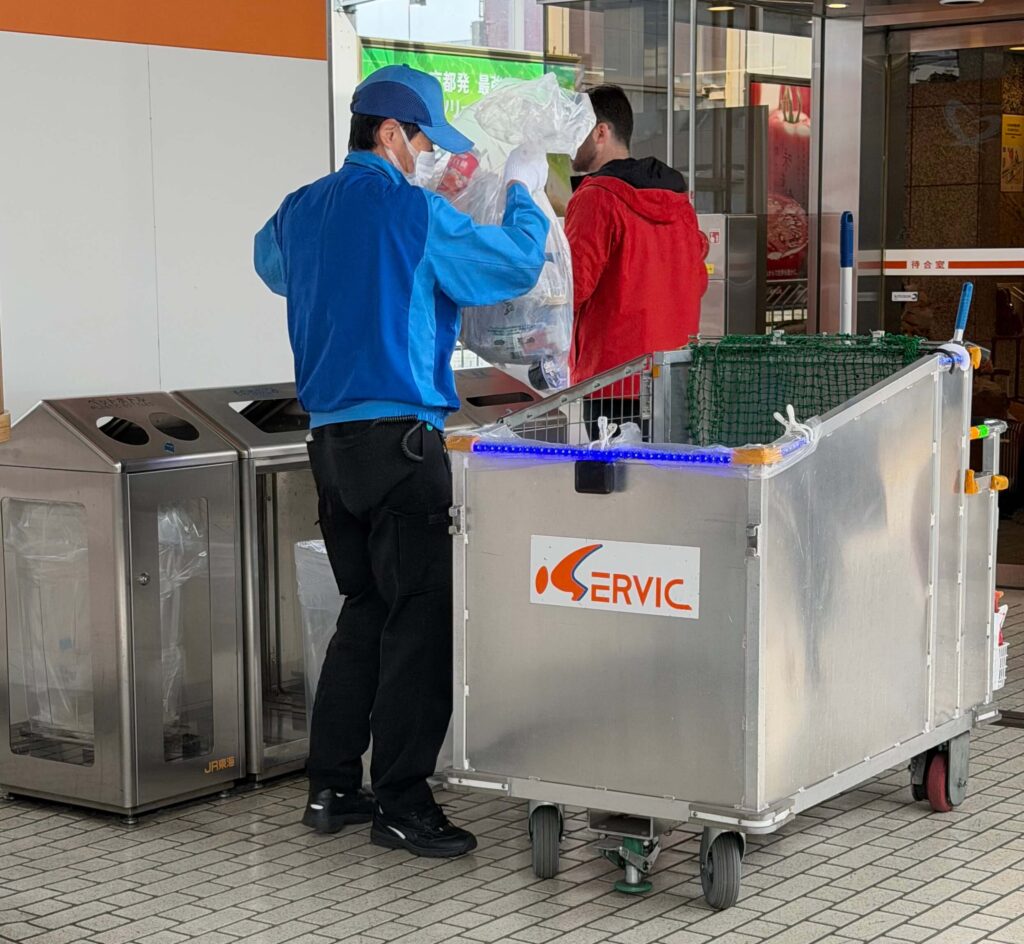
Japan separates waste into detailed categories, which may vary by city:
- Burnable (general waste): Food scraps, paper tissues, wrappers, plastics, wooden chopsticks, leather, and rubber items.
- Non-burnable (non-combustibles): Metals, ceramics, glass, electronics.
- Recyclables: PET bottles, cans, glass bottles, newspapers, magazines, cardboard, paper egg trays.
- Oversized / bulky items: Require special arrangements and fees (check with your hotel or local ward office).
Sorting trash properly helps the streets stay clean, keeps recycling efficient, and aligns with local customs.
Simple Tips for Tourists
- Carry a small bag for trash – easy, practical, and culturally respectful.
- Sort items where possible – separate recyclables from burnable trash.
- Use bins at vending machines, konbini, and hotels – avoid misusing private bins.
- Follow the crowd – if locals carry trash in a pocket or bag, it’s socially normal.
By adopting these habits, your visit can be smooth, enjoyable, and respectful of Japan’s clean streets.
Conclusion
Japan’s lack of public trash cans isn’t inconvenient—it’s a combination of history, safety, culture, and civic pride. Embrace the local approach: carry your trash, sort carefully, and respect public spaces. You’ll leave the streets as spotless as the locals do—and experience Japan the way it’s meant to be explored.
I’ll also be sharing more guides soon on Japan train travel, cultural etiquette, and must-visit destinations, so stay tuned if you’re planning your trip.
Until next time…
· izzy
One response to “Why Japan Does Not Have Public Trash Cans?”
[…] One thing that surprises many visitors is how few public trash cans there are—even though Japan is incredibly clean. I explain the history and where travelers can actually dispose of trash in my guide to Why Japan Does Not Have Public Trash Cans? […]