
Updated: October 2026
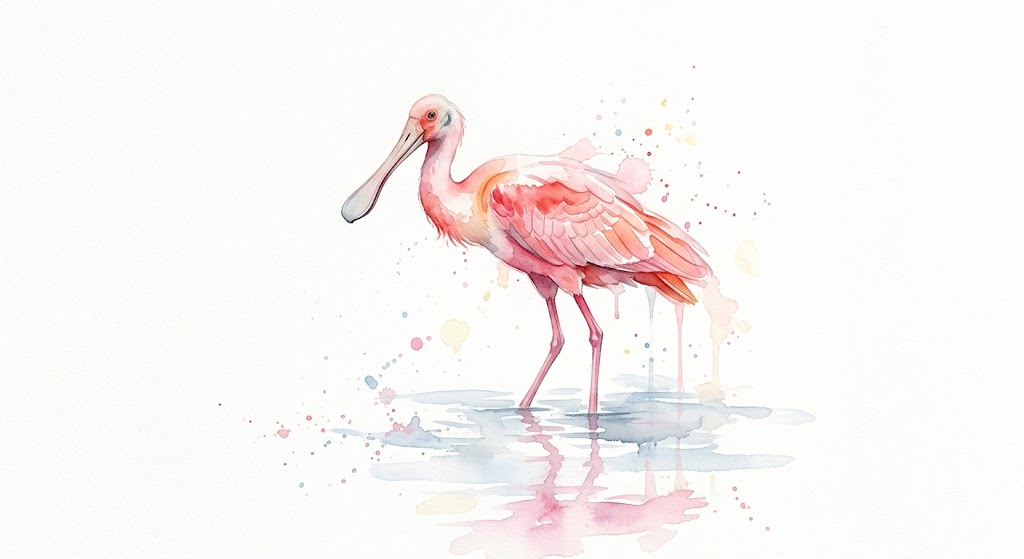
Anna Maria Island is one of the best places on Florida’s Gulf Coast to watch birds. Tidal flats, mangroves, beaches, and small preserves attract resident and migratory species all year, from roseate spoonbills in the shallows to ospreys fishing over the pass. Bring binoculars, even if you are new to birding.
Best Birdwatching Spots
Bayfront Park
Bayfront Park sits on the bay side of Anna Maria city, near the Anna Maria City Pier. The park’s waterfront access, shade trees, and calm tidal flats attract herons, egrets, gulls, ibis, and the occasional raptor. In winter, migrating sandpipers and plovers rest along the shoreline. Nanday Parakeets and Double-crested Cormorants are frequent sights overhead.
Beaches, Coquina Beach, and Longboat Pass
The island’s sandy shorelines, from Coquina Beach in the south to Bean Point at the northern tip, are prime feeding and resting grounds for shorebirds and seabirds. Sandpipers, sanderlings, plovers, gulls, Royal Terns, and Brown Pelicans are common, along with Great Egrets, Great Blue Herons, and White Ibises walking the wet sand.
Coquina Beach and Longboat Pass are the most accessible and active spots. Ospreys frequently patrol the pass, and Double-crested Cormorants perch along the piers. During fall and winter migration, shorebirds gather on the tidal flats in large numbers. Early morning and late afternoon are best, when falling tides expose tidal flats and wrack lines.
Many of the island’s top birding spots are easy to reach by bike, trolley, or car. My Transportation on Anna Maria Island: My Insider Guide covers the free trolley, golf carts, and bikes.
Grassy Point Preserve
This bayside spot has calm water, mangroves, and marshy edges. Limited foot traffic makes it a good choice for quiet wildlife observation. Great Egrets, Great Blue Herons, White Ibises, Little Blue Herons, Ospreys, Cormorants, and Nanday Parakeets are all regular visitors, with migratory shorebirds adding variety in fall and winter.
Leffis Key Preserve
Leffis Key is a small but ecologically rich preserve with mangrove-lined waterways, tidal flats, and calm bayside shores. Roseate Spoonbills, Great Egrets, Great Blue Herons, White Ibises, Double-crested Cormorants, and Ospreys are commonly seen here, along with migratory shorebirds in fall and winter.
Neal Preserve
Tidal marshes, mangrove-lined paths, and open grassy sections create a varied habitat. Well-maintained trails and boardwalks allow for quiet exploration. Great Egrets, Great Blue Herons, White Ibises, Roseate Spoonbills, Ospreys, and Cormorants are regular sightings, with migratory sandpipers and plovers visiting in cooler months.
Perico Preserve
Perico Preserve is on Perico Island, just off Anna Maria, and features mangroves, tidal flats, and saltwater marshes. Roseate Spoonbills, Great Egrets, Great Blue Herons, White Ibises, Double-crested Cormorants, and Ospreys are common, along with Nanday Parakeets in the mangroves and migrating shorebirds in fall and winter.
Robinson Preserve
Robinson Preserve is the top birdwatching destination in the area. Technically it sits just off the island in northwest Bradenton, but it is an easy trip from Anna Maria. Its nearly 700 acres of tidal marsh, mangrove forest, and open bayside flats make it the most diverse habitat nearby. Roseate Spoonbills, Anhingas, Great Egrets, Great Blue Herons, White Ibises, Ospreys, Double-crested Cormorants, Nanday Parakeets, and migratory shorebirds are all reliably spotted here. Observation platforms and boardwalks make it accessible for all levels. Some trails close temporarily during the year, so check the Manatee County Robinson Preserve page before you go, and download the Robinson Preserve Trail Map here.
When to Go Birdwatching
Birdwatching on Anna Maria Island is a year-round activity, but timing makes a difference.
Best Time of Year
Fall and winter, October through March, are peak seasons because of migration along the Gulf Coast. Spring migration, March through May, brings active feeding as birds prepare for the trip north. Summer has fewer migratory species, but it is a good time to see nesting behavior, young birds learning to forage, and resident herons, egrets, ospreys, and ibis. For a month-by-month look at the weather, see my Best Times to Visit Anna Maria Island: My Insider Guide.
Best Time of Day
Early morning and late afternoon are ideal. Mornings are cooler, the light is softer for photography, and birds are feeding. Late afternoon often lines up with changing tides, which expose feeding grounds and draw shorebirds to tidal flats and marsh edges. Midday can still be productive near shaded mangroves or deeper water, but bird activity slows in the heat.
Birders start early, so plan your coffee stop ahead of time. My Best Coffee Spots on Anna Maria Island: My Insider Guide lists good places to pick up coffee before sunrise or right after.
Watch the Tides
Tides play a major role. As the water recedes, fish and crustaceans collect in shallow pools, which draws in wading birds and shorebirds. A falling or low tide usually gives the best sightings at beaches, passes, and tidal marsh preserves.
Many of the island’s best birding spots sit right along the water, making a morning of birdwatching a natural pairing with kayaking, a boat tour, or a sandbar trip. See my Water Activities on Anna Maria Island: My Insider Guide for a complete guide to everything you can do on the water.
Bird Species You Might See
Anhinga
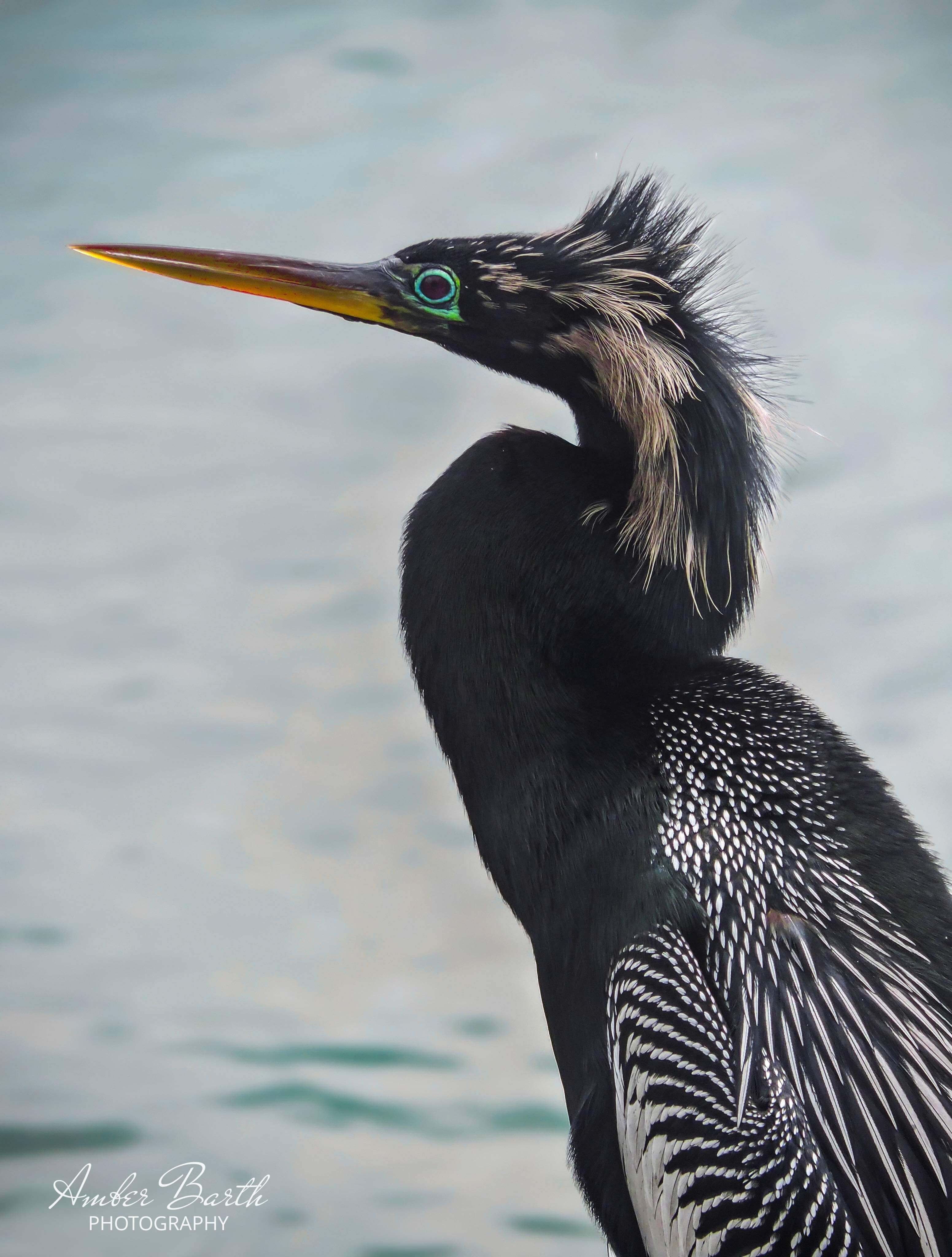
Often called the “snake bird” for its long, curving neck, the Anhinga swims low in the water and spears fish with its sharp bill instead of plunge-diving like a pelican. Its feathers are less waterproof than those of other waterbirds, so it often perches with its wings fully spread to dry in the sun. That drying pose is the easiest way to identify one.
- Where to spot: Robinson Preserve, freshwater ponds, brackish mangroves
- Best season: Year-round
Cormorant
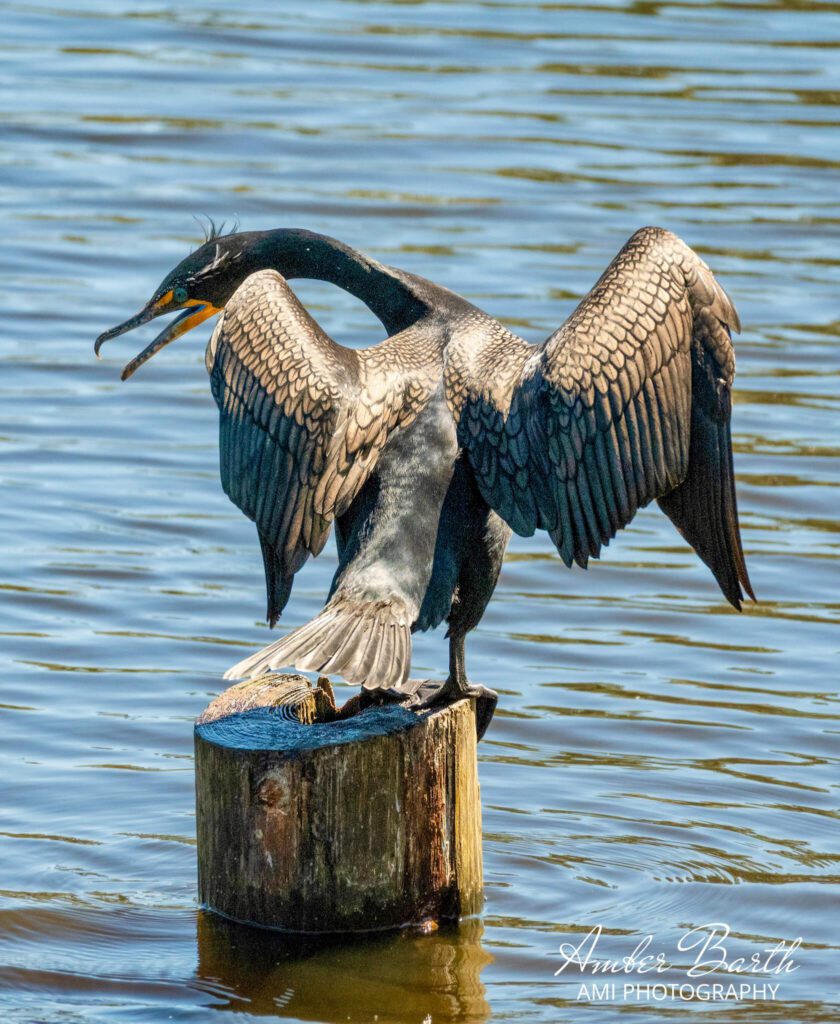
Cormorants are a common sight around bays, piers, and quiet coastal waters. They chase fish underwater using powerful webbed feet and are often visible only as a head and neck before they dive again. Like the Anhinga, they often perch with wings spread wide to dry. Numbers increase in winter as migratory birds join the local population.
- Where to spot: Bayside waters, piers, Longboat Pass, Robinson Preserve
- Best season: Most abundant fall and winter
Egret
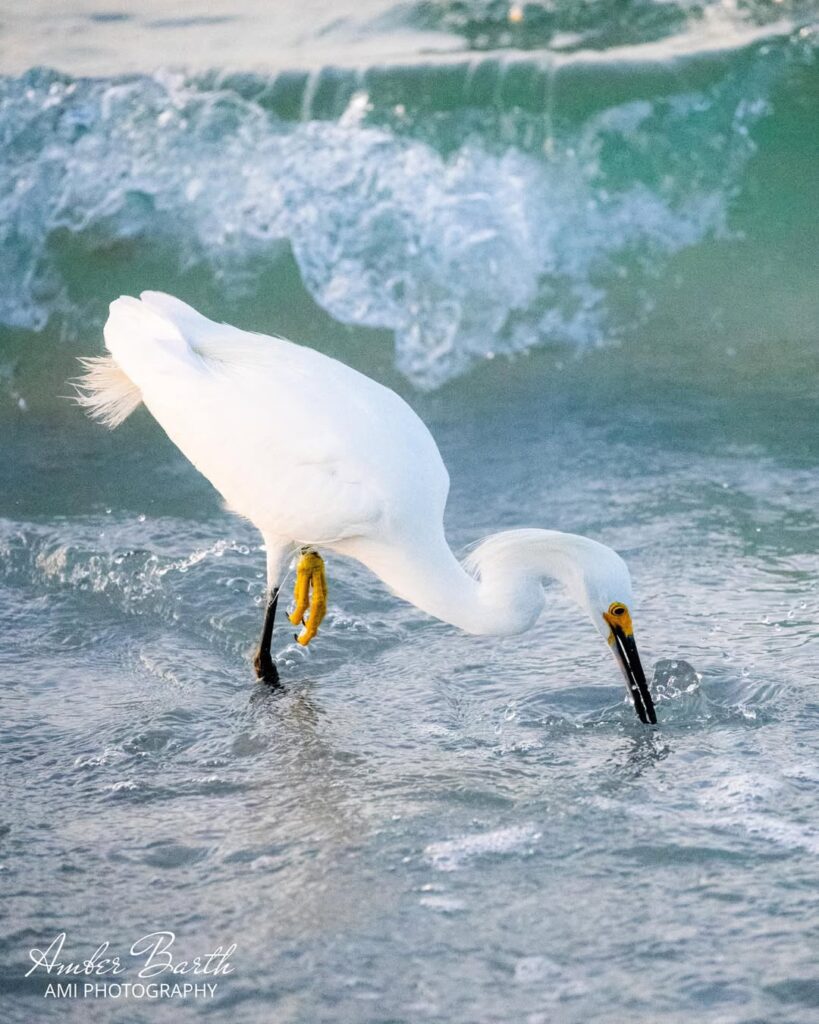
Tall, white, and slow moving, Great Egrets stalk through shallow water or stand perfectly still before striking at a fish. They are usually solitary hunters but may gather in loose groups where food is plentiful. During breeding season they grow long plume feathers on their backs. Those plumes were so popular in the fashion trade that Great Egrets were hunted nearly to extinction in the late 1800s, and protection laws brought them back.
- Where to spot: Robinson Preserve, Coquina Beach, bayside tidal flats
- Best season: Year-round
Heron
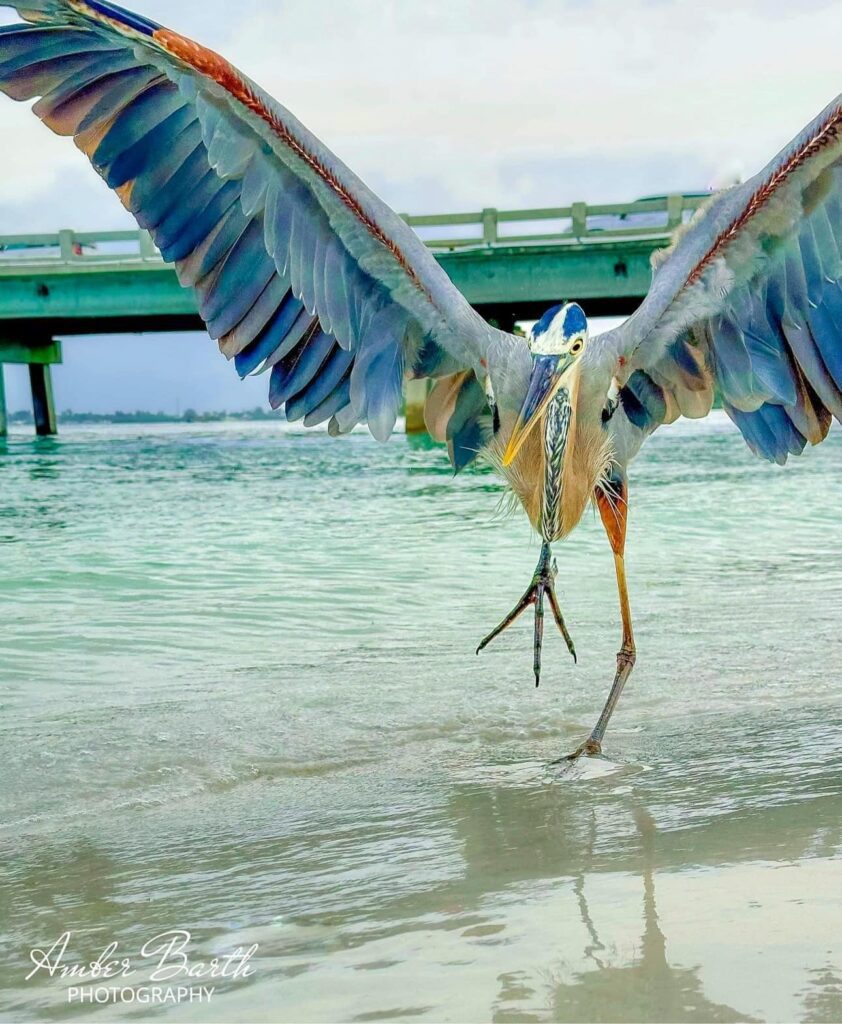
The Great Blue Heron is the largest wading bird on the island, standing over four feet tall, with a blue-gray body and an S-shaped neck. It stalks prey slowly through shallow water, then strikes quickly. In flight, look for broad wings, a slow wingbeat, and a neck tucked tightly against the body.
- Where to spot: Robinson Preserve, Leffis Key, bayside mangroves, tidal flats
- Best season: Year-round
Ibis
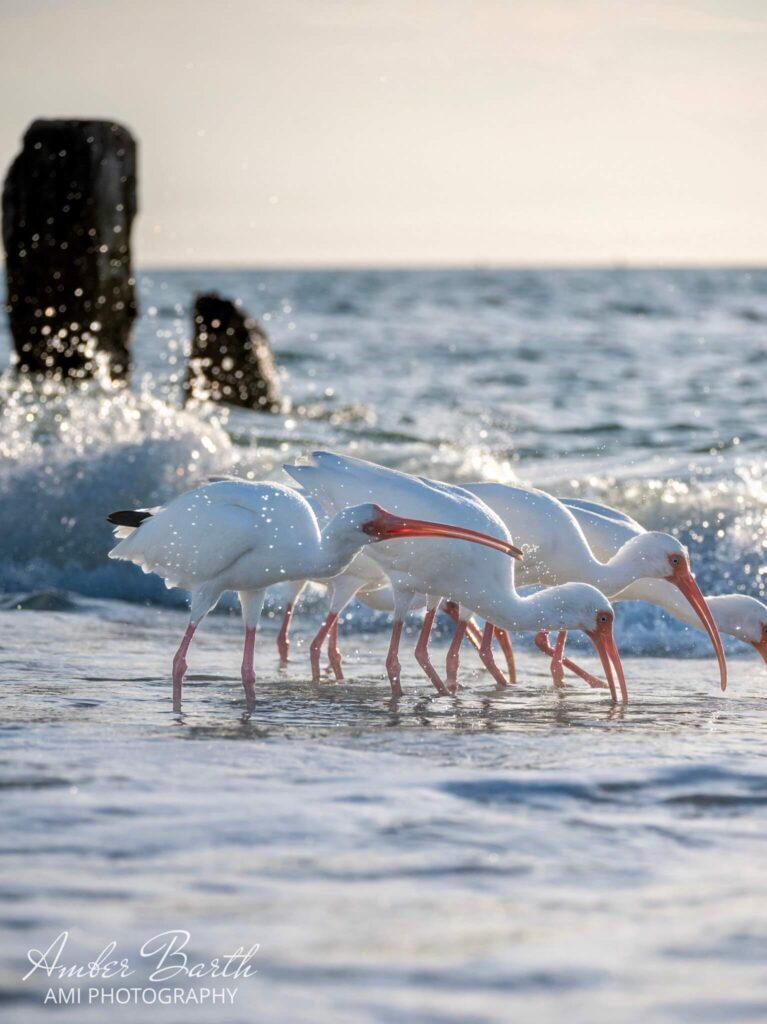
The White Ibis has a bright white body, a long curved red bill, and pinkish legs. It is social and forages in groups, moving its bill through the shallows to probe for crabs, shrimp, and small aquatic animals. In flight, black wingtips show against otherwise white wings. Ibis are easy to find and often feed on residential lawns as well as tidal flats.
- Where to spot: Robinson Preserve, Coquina Beach, bayside marshes, grassy parks
- Best season: Year-round
Nanday Parakeet
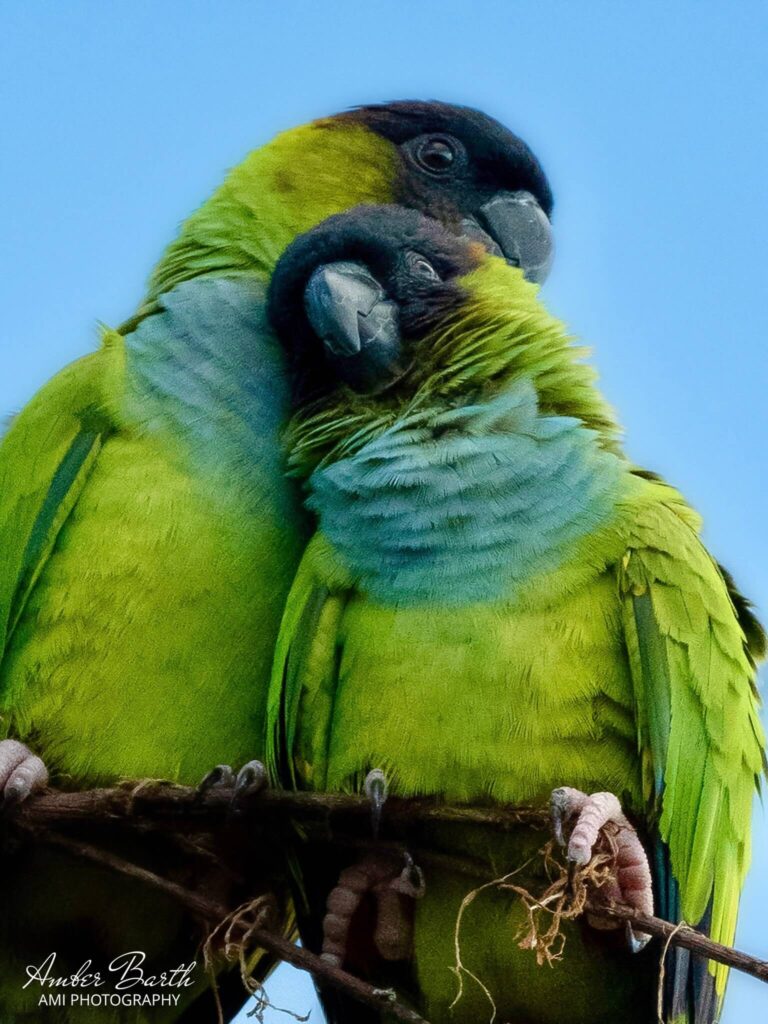
Nanday Parakeets are bright green with a black face mask and a long, tapered tail. These non-native parrots have formed small, established populations in parts of Florida. They are social and loud, so you will usually hear their sharp calls before you see them. Look for them on palm trees and power lines or flying overhead in noisy flocks.
- Where to spot: Residential areas, palm-lined streets, parks, tree canopies
- Best season: Year-round
Osprey
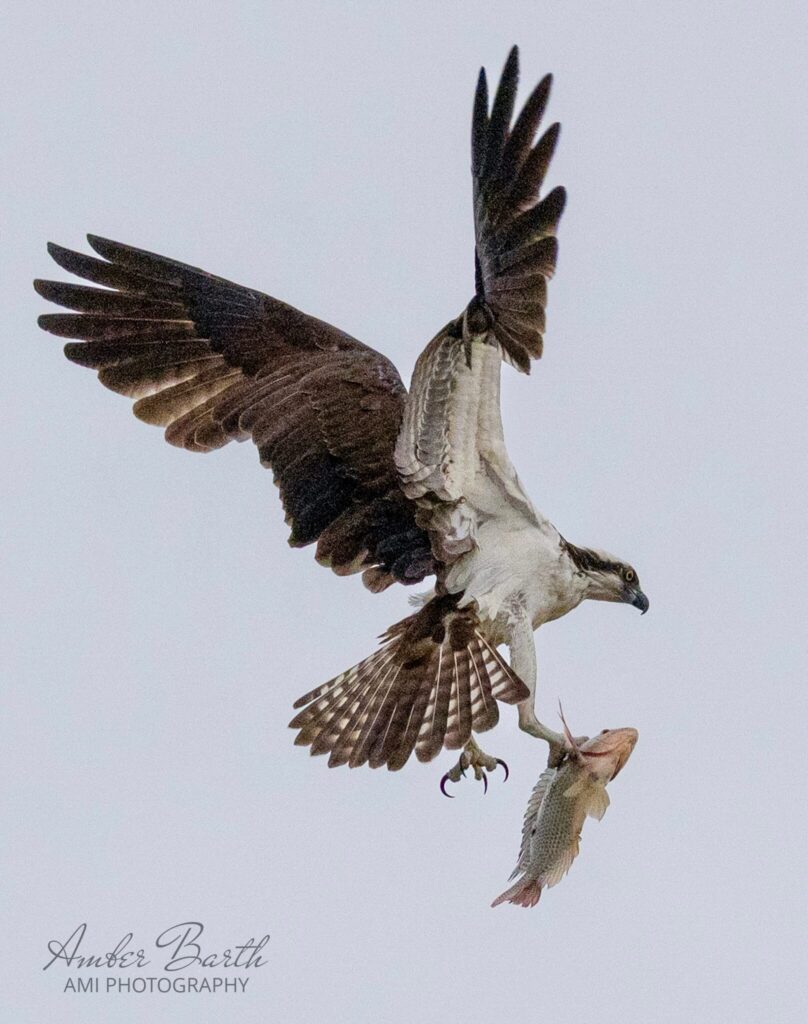
Ospreys are easy to identify in flight by their white heads, dark eye stripes, and bent, M-shaped wings. They hover high above the water, then plunge talons-first to catch a fish, and they carry their catch headfirst to a nearby perch. They are territorial and often nest on tall structures near the water.
- Where to spot: Coquina Beach, Longboat Pass, Robinson Preserve, bayside waters
- Best season: Year-round, most visible during spring and summer nesting
Pelican
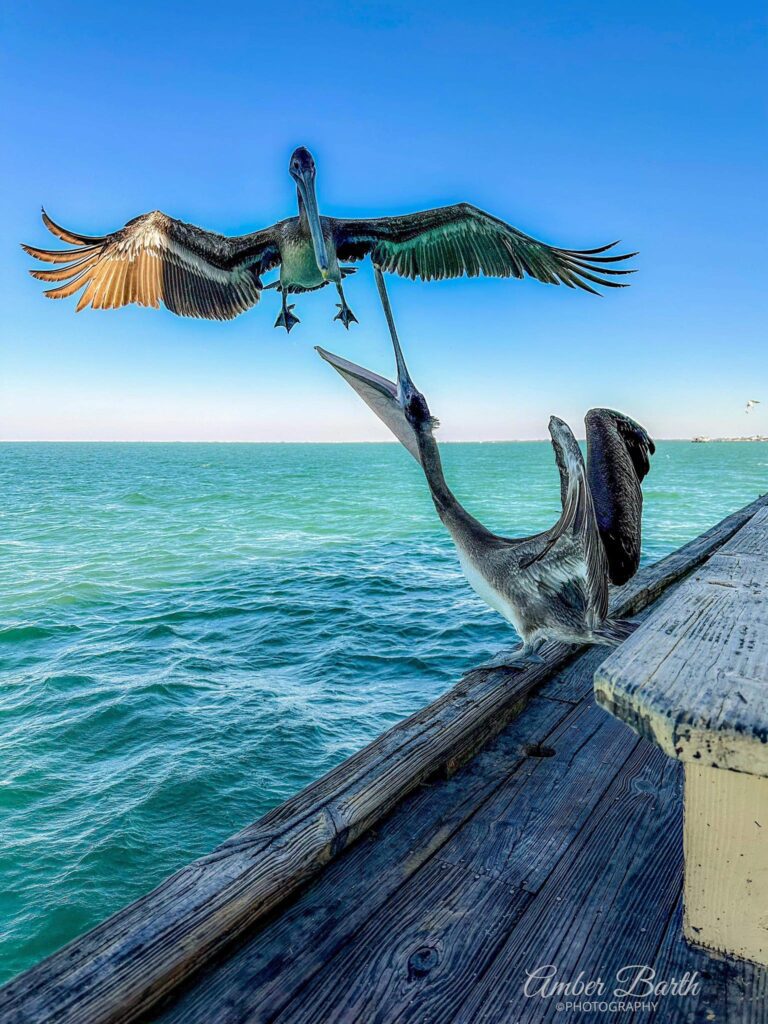
Brown Pelicans are the most familiar bird on the Gulf Coast. They plunge-dive from 30 to 60 feet, scoop fish into their expandable throat pouches and drain the water before swallowing. You will often see them gliding low over the surf in formation or resting on piers between dives.
- Where to spot: Coquina Beach, Longboat Pass, northern beaches, sandbars
- Best season: Year-round
Roseate Spoonbill
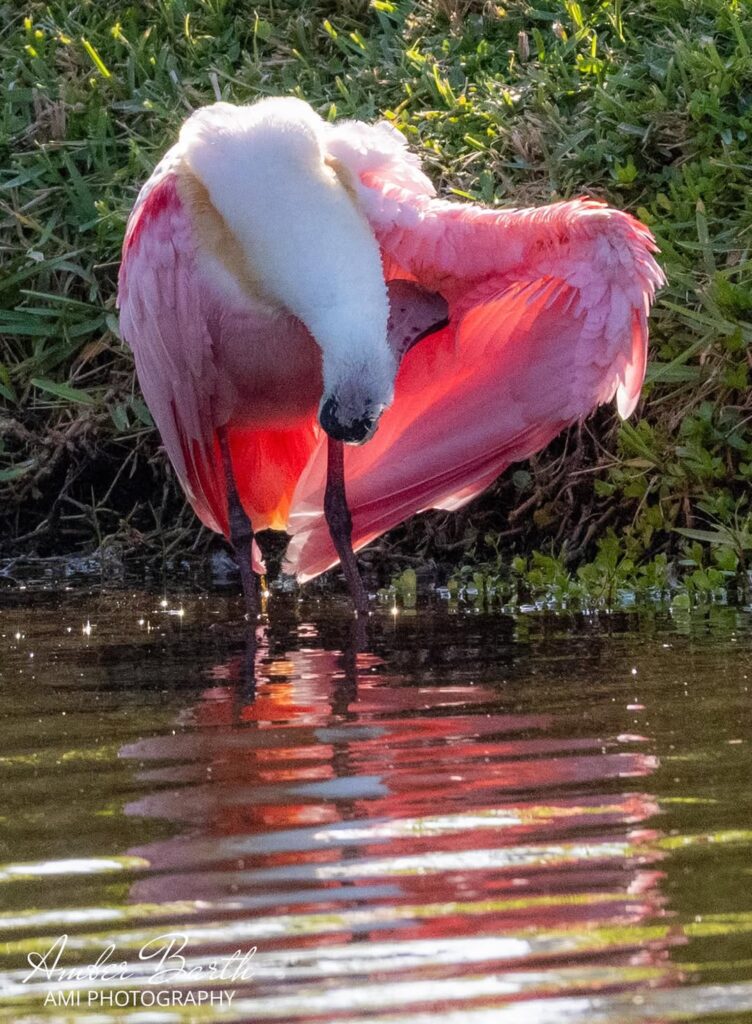
Pink feathers, long legs, and a spoon-shaped bill make the Roseate Spoonbill the easiest bird on the island to pick out. Unlike herons, which hunt by sight, spoonbills sweep their partly open bills side to side through shallow water and snap them shut the moment they touch prey. They often forage in small groups at low tide, and their pink wings are easy to spot in flight.
- Where to spot: Robinson Preserve, Leffis Key, bayside tidal flats
- Best season: Winter through early spring
Sandpiper
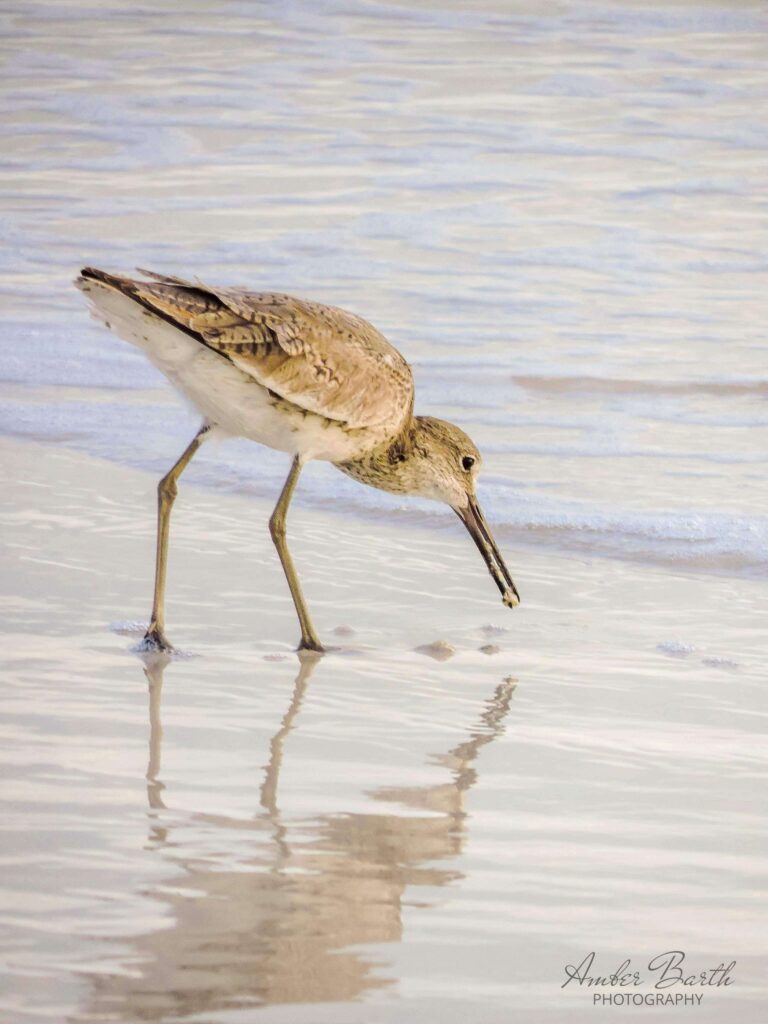
The sanderling is the classic shoreline sandpiper. Flocks race along the wet sand chasing the waves in and out, probing for sand fleas, small crustaceans, and marine worms. They move in tight groups and are constantly in motion, which makes them fun but tricky to photograph.
- Where to spot: Coquina Beach, Bean Point, sandy shorelines
- Best season: Fall and winter migration
Seagull
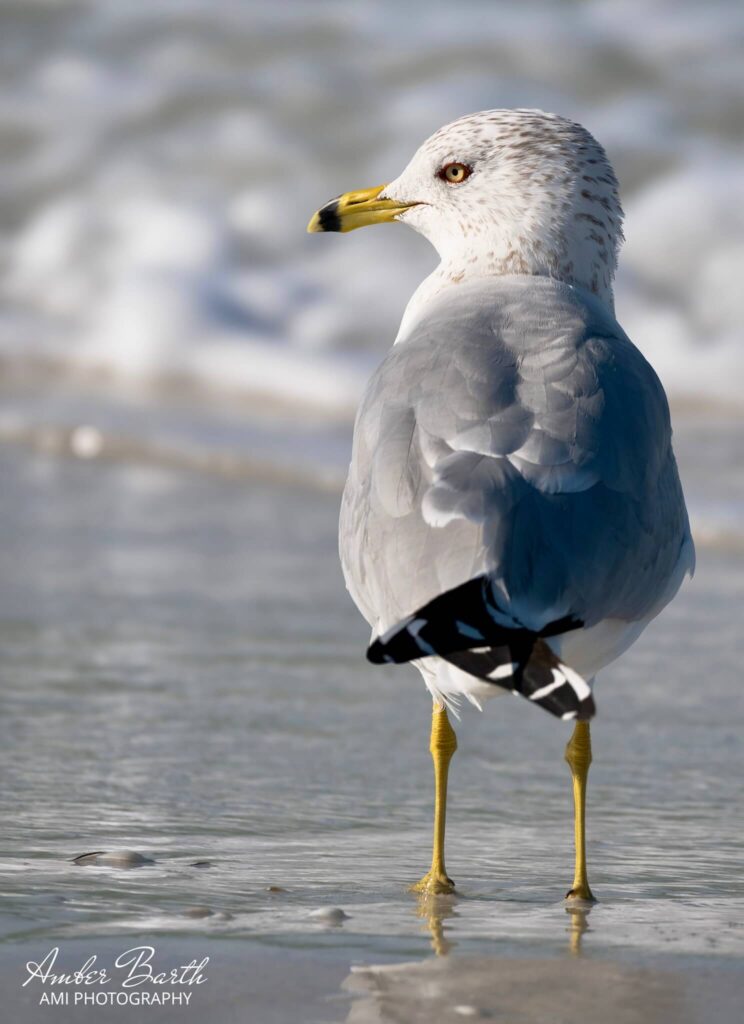
Gulls are on every beach walk. The Ring-billed Gull, recognizable by the black ring on its yellow bill, is mostly a fall and winter visitor, and other gulls stay through the warmer months. They eat fish, crustaceans, insects, and the occasional beachgoer’s lunch, and they gather in loose flocks along shorelines and near waterfront restaurants.
- Where to spot: Coquina Beach, Bean Point, piers, waterfront restaurants
- Best season: Year-round
Tern
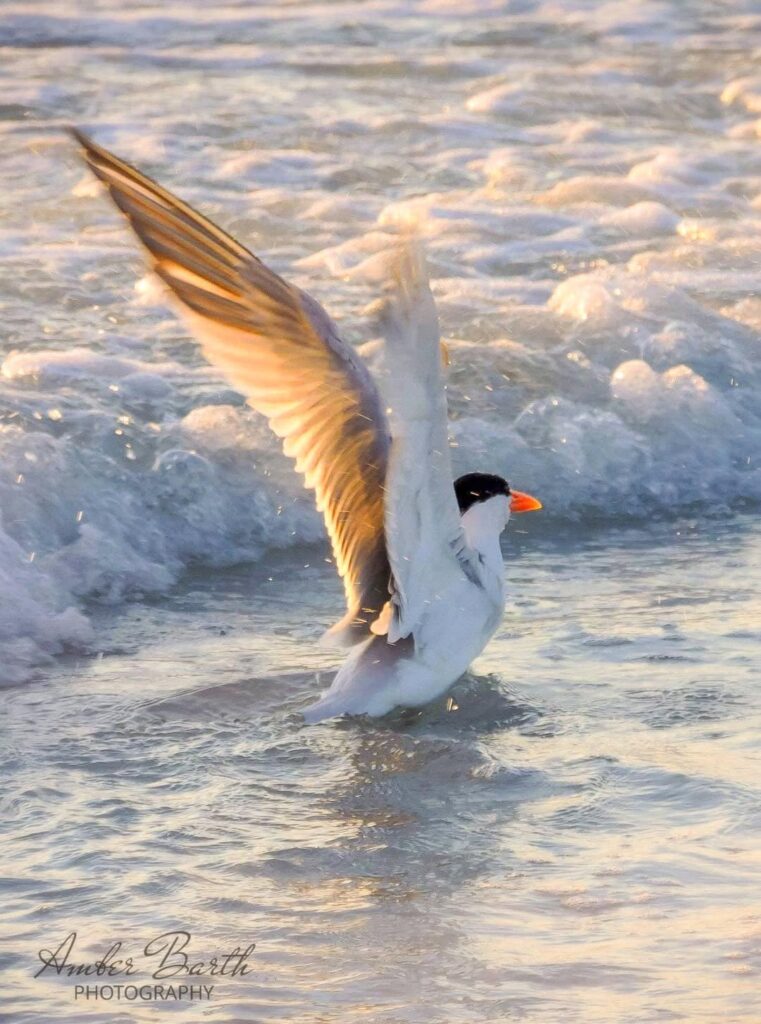
The Royal Tern is tall and slender, with a bright orange bill In spring and summer. It plunge-dives into shallow water for small baitfish, often hunting in loose groups over schools of fish. Between dives, terns rest together on sandbars or float in calm water, and their sharp “ker-ree” call carries along the shore well before you see them.
- Where to spot: Coquina Beach, Bean Point, sandbars, bayside flats
- Best season: Spring through summer
Bird Photos by Amber Barth
Hi! I’m Amber, a local nature photographer. I love sharing the beauty of our little paradise with you! If you would like a piece of AMI in you home, you can purchase my photography here: https://amiphotos.etsy.com
Tips for Successful Bird Watching
Essential Gear Binoculars, a field guide, comfortable shoes, sunscreen, and bug spray are the basics. Always check weather conditions before heading out.
Etiquette Keep a respectful distance, stay on designated trails, minimize noise, leave no trace, and never feed the birds. Neutral clothing helps you blend in without startling wildlife.
Photography Patience is everything. Birdwatching is a pastime, not a sport. Use good light (early morning is best), give birds time to settle, and let behavior unfold naturally before raising the camera.
Guided Tours AMI Bird Nerd Nature Tours offers guided birdwatching experiences with free mobile app access, binocular rentals, and tips for spotting local species. A portion of their profits supports local wildlife conservation.
Want more real-time tips and honest answers about Anna Maria Island? Join Anna Maria Island Insider, my Facebook group built on one simple rule: real, helpful answers only. Join the group.
Coastal Close
Birdwatching here comes down to timing and patience. Check the tide, get to the water at sunrise, and watch the shoreline and mangroves for movement. If you enjoy a morning of birds, you might also like a walk along the water for shells, which I cover in my Shelling on Anna Maria Island: My Insider Guide.
— izzy