
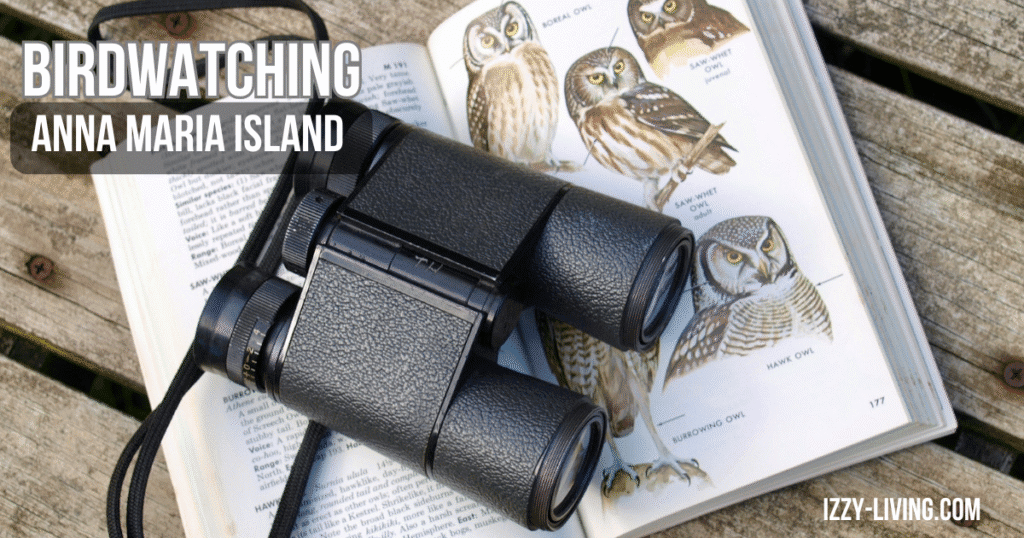
Anna Maria Island isn’t just white sand and turquoise water — it’s one of Florida’s most rewarding coastal birdwatching destinations.
From roseate spoonbills wading in the shallows to pelicans gliding over the Gulf, birdwatching on Anna Maria Island offers year-round sightings for beginners and seasoned birders alike. Thanks to its diverse coastal habitats — from tidal flats and mangroves to quiet preserves — the island attracts both resident and migratory species throughout the year.
Whether you’re walking the dunes at Coquina Beach or exploring nearby preserves, this guide covers the best birds to see, top birding spots, and the best time of year to go for peak activity.
Bring your binoculars — you’ll want them.
Contents
- Best Birdwatching Spots
- When to Go Birdwatching
- Bird Species You Might See
- Majestic Avian Photos by Amber Barth
- Tips for Successful Bird Watching
- Bird Watching Tours
- A Different Side on Anna Maria Island
- Frequently Asked Questions
- Is Anna Maria Island good for birdwatching?
- What birds can you see on Anna Maria Island?
- Where are the best birdwatching spots on Anna Maria Island?
- What is the best time of year for birdwatching on Anna Maria Island?
- What time of day is best for birdwatching?
- Do you need binoculars for birdwatching on Anna Maria Island?
Best Birdwatching Spots
Bayfront Park
Bayfront Park is a hidden gem for birdwatchers visiting Anna Maria Island, offering a mix of waterfront access, shaded trees, and calm tidal flats. Located in the heart of Anna Maria city, this small but diverse habitat attracts a variety of shorebirds, wading birds, and occasional migratory visitors. The park’s easy walking paths and benches make it ideal for both quick stops and longer birdwatching sessions, especially during early mornings or late afternoons when birds are most active.
Common species spotted here include herons, egrets, gulls, and ibis, while raptors like Osprey occasionally patrol the nearby waters. During winter months, migrating shorebirds such as sandpipers and plovers often rest along the shoreline, providing excellent photo opportunities and casual observation.
Behaviorally, birds in Bayfront Park can be surprisingly interactive — shorebirds frequently forage along the tidal edge, and the ibis often move through small grassy areas near picnic spots. Its proximity to the city means you might also see Nanday Parakeets and Double-crested Cormorants flying overhead or perched in trees. With a combination of easy access, diverse species, and scenic water views, Bayfront Park is a perfect spot for birdwatchers of all levels.
Beaches
nna Maria Island’s beaches are not just for sunbathing and swimming — they are also prime birdwatching locations. Stretching from Coquina Beach in the south to Bean Point at the northern tip, these sandy shorelines provide ideal feeding and resting grounds for a wide variety of shorebirds and seabirds. Early mornings and late afternoons are the best times to see activity, as the tide exposes tidal flats and wrack lines where birds forage for food.
Commonly spotted species include sandpipers, sanderlings, plovers, gulls, Royal Terns, and pelicans, all taking advantage of the abundant small fish, crustaceans, and invertebrates along the shoreline. Wading birds such as egrets, herons, and ibis are also frequent visitors, gracefully stalking the wet sand for prey.
Behaviorally, beach birds are fascinating to observe. Shorebirds move in quick, synchronized bursts along the water’s edge, terns dive dramatically for fish, and pelicans perform their iconic plunge-dives. Many species travel in loose flocks, allowing birdwatchers to spot multiple individuals feeding or flying together. With endless sandy stretches and unobstructed views, Anna Maria Island’s beaches are essential stops for anyone looking to experience the island’s vibrant coastal birdlife.
After a morning of spotting shorebirds along the sandbars, you’ll find several great lunch options nearby — I share my favorite local spots in my Anna Maria Island Restaurant Guide.
Bean Point Preserve
Bean Point Preserve, at the northern tip of Anna Maria Island, is a serene and highly rewarding spot for birdwatchers. With its wide sandy beaches, dunes, and tidal flats, it provides critical habitat for shorebirds and wading birds, while offering unobstructed views of the Gulf of Mexico and surrounding estuaries. Early mornings and late afternoons are the best times to visit, when birds are most active and the soft light makes for excellent observation and photography.
Common species here include sandpipers, sanderlings, plovers, Royal Terns, and Brown Pelicans along the shoreline. Wading birds like Great Egrets, Great Blue Herons, and White Ibises are frequently spotted stalking the tidal flats, while Nanday Parakeets occasionally fly overhead or perch in nearby palm trees. The preserve also attracts migratory species during fall and winter, making it a hotspot for seasonal birding diversity.
Behaviorally, the birds at Bean Point are a joy to watch. Shorebirds dart back and forth along the water’s edge, terns dive swiftly for fish, and pelicans and herons often hunt alone with calm precision. The quiet, less-developed surroundings allow for close, undisturbed observation, making Bean Point Preserve one of the most rewarding birdwatching locations on Anna Maria Island.
Coquina Beach and Longboat Pass
Coquina Beach and Longboat Pass are two of the most accessible and active coastal birdwatching locations on Anna Maria Island. With wide sandy beaches, tidal flats, and calm bayside waters, these areas attract a variety of shorebirds, wading birds, and seabirds throughout the year. Their open vistas and unobstructed water views make them ideal for spotting both foraging birds and dramatic flight behaviors.
Common species include Royal Terns, Brown Pelicans, Sanderlings, Plovers, Great Egrets, Great Blue Herons, and White Ibises. Ospreys frequently patrol the passes, diving for fish with precision, while Double-crested Cormorants and gulls are often perched along the piers or flying overhead. During fall and winter migration, sandpipers and other shorebirds flock to the tidal flats, adding seasonal variety and excitement for birdwatchers.
Behaviorally, the birds at Coquina Beach and Longboat Pass are active and easy to observe. Shorebirds dart along the wet sand chasing retreating waves, terns dive elegantly for fish, and pelicans plunge dramatically into the Gulf. Wading birds move with patient deliberation, while Ospreys hover and swoop for prey. These dynamic feeding and social behaviors make Coquina Beach and Longboat Pass not only beautiful scenic stops but also highly rewarding for anyone looking to experience Anna Maria Island’s coastal birdlife up close.
Grassy Point Preserve
Grassy Point Preserve is a peaceful, tucked-away gem for birdwatching on Anna Maria Island. Located along the bayside, this small preserve features calm waters, mangroves, and marshy edges that attract a wide variety of wading birds, shorebirds, and occasional raptors. The combination of protected habitat and limited foot traffic makes it an ideal spot for both beginner and experienced birders seeking a more intimate wildlife experience.
Common species observed here include Great Egrets, Great Blue Herons, White Ibises, and heron species like the Little Blue Heron. You may also spot Ospreys patrolling overhead, Double-crested Cormorants perched along mangrove branches, and Nanday Parakeets flying through the trees. Migratory shorebirds, such as sandpipers and plovers, often stop here during fall and winter, adding to the preserve’s seasonal variety.
Behaviorally, birds at Grassy Point are often active yet approachable. Shorebirds forage along the mudflats, herons and egrets stalk slowly before striking, and Ospreys dive skillfully for fish in the calm bay waters. The preserve’s quiet atmosphere allows for careful observation of these behaviors, making it a rewarding stop for anyone exploring the island’s birdlife.
Leffis Key Preserve
Leffis Key Preserve is a must-visit destination for birdwatchers exploring Anna Maria Island. This small but ecologically rich preserve features mangrove-lined waterways, tidal flats, and calm bayside shores, providing excellent habitat for wading birds, shorebirds, and occasional raptors. Its peaceful trails and observation areas allow visitors to quietly explore and spot birds in a natural, undisturbed setting.
Common species at Leffis Key include Roseate Spoonbills, Great Egrets, Great Blue Herons, White Ibises, and Double-crested Cormorants. Ospreys often patrol the waters overhead, while Nanday Parakeets and other small birds may be seen flying through the mangroves. During fall and winter migration, shorebirds such as sandpipers, plovers, and sanderlings stop by to forage along the tidal flats, adding seasonal variety for avid birders.
Behaviorally, Leffis Key birds are fascinating to observe. Spoonbills sweep their bills through shallow water for crustaceans, herons and egrets stalk patiently before striking, and Ospreys hover and dive for fish with precision. The preserve’s calm, sheltered waters also allow for reflection and close-up views of these behaviors, making Leffis Key a highlight of any Anna Maria Island birdwatching itinerary.
Neal Preserve
Neal Preserve is a quiet, scenic spot on Anna Maria Island that offers excellent opportunities for birdwatching. This small, protected area features tidal marshes, mangrove-lined paths, and open grassy sections, creating a diverse habitat for wading birds, shorebirds, and passerines. Its well-maintained trails and boardwalks allow visitors to explore without disturbing the wildlife, making it ideal for both casual observers and avid birders.
Common species at Neal Preserve include Great Egrets, Great Blue Herons, White Ibises, and Roseate Spoonbills wading through shallow waters. Ospreys are often seen hunting overhead, while Double-crested Cormorants perch along the waterways. During the fall and winter migration, shorebirds like sandpipers, plovers, and sanderlings frequently visit the tidal flats, enhancing the preserve’s seasonal variety.
Behaviorally, Neal Preserve birds display many fascinating feeding and social behaviors. Spoonbills sweep their bills through shallow water for crustaceans, herons and egrets stalk with patient precision, and Ospreys hover before plunging into the water to catch fish. The preserve’s quiet atmosphere and accessible vantage points make it a rewarding location to observe these coastal birds up close.
Perico Perserve
Perico Preserve, located on Perico Island just off Anna Maria Island, is a tranquil and rewarding spot for birdwatchers. The preserve features a mix of mangroves, tidal flats, and saltwater marshes, providing excellent habitat for wading birds, shorebirds, and raptors. Its quiet trails and boardwalks allow visitors to explore the area without disturbing the wildlife, making it a favorite for those seeking a peaceful birding experience.
Common species at Perico Preserve include Roseate Spoonbills, Great Egrets, Great Blue Herons, White Ibises, and Double-crested Cormorants. Ospreys are often seen soaring overhead, scanning the water for fish, while Nanday Parakeets and other small birds occasionally flit through the mangroves. During fall and winter, migrating shorebirds such as sandpipers and plovers visit the tidal flats, adding seasonal diversity to the preserve’s birdlife.
Behaviorally, birds at Perico Preserve exhibit fascinating foraging and social habits. Spoonbills sweep shallow waters with their unique bills, herons and egrets stalk patiently before striking, and Ospreys hover before diving for fish with precision. The combination of diverse habitats and limited human traffic makes Perico Preserve an ideal destination for observing Anna Maria Island’s coastal birds up close.
Robinson Preserve
Robinson Preserve is widely regarded as one of the top birdwatching destinations on Anna Maria Island, and for good reason. Spanning more than 600 acres of tidal marshes, mangrove forests, and open bayside flats, it provides diverse habitats for a wide array of birds, from wading species and shorebirds to raptors and passerines. Its well-maintained trails, observation platforms, and boardwalks make it accessible for both casual visitors and dedicated birders.
Common species include Roseate Spoonbills, Anhingas, Great Egrets, Great Blue Herons, White Ibises, and Ospreys. You may also spot Double-crested Cormorants, Nanday Parakeets, and migratory shorebirds such as sandpipers, plovers, and sanderlings. The preserve’s combination of freshwater ponds, saltwater marshes, and tidal flats provides year-round feeding, nesting, and resting opportunities for these birds, making it a reliable hotspot for observation.
Behaviorally, Robinson Preserve offers some of the most engaging birdwatching on the island. Spoonbills sweep their bills through shallow waters, herons and egrets stalk with calculated patience, and Ospreys dive with pinpoint precision for fish. Migratory shorebirds feed energetically along the tidal edges, while cormorants and pelicans perch or dive in the bay. The preserve’s wide range of habitats allows for observing a variety of species’ natural behaviors in one location — from solitary hunters to social flocking birds. Robinson Preserve Trail Map here.
Many of the island’s top birding locations are easily accessible by bike, trolley, or car. If you’re planning how to get around, my Guide to Transportation for Anna Maria Island
covers everything from the free trolley to bike rentals and parking tips.
When to Go Birdwatching
One of the best things about birdwatching on Anna Maria Island is that it’s a year-round activity. Thanks to Florida’s mild climate and diverse coastal habitats, there is always something to see — whether it’s resident wading birds, seabirds cruising the shoreline, or seasonal migrants stopping to refuel.
Best Time of Year
Fall and winter (October through March) are peak birdwatching seasons due to migratory activity along the Gulf Coast. Spring migration also brings increased feeding behavior, while summer offers opportunities to observe resident species and nesting activity. If you’re planning your visit around seasonal conditions, I break down monthly weather patterns in my The Climate of Anna Maria Island: What You Need to Know.
Spring migration (March through May) also brings exciting sightings as birds travel north. You may notice more active feeding behavior as they prepare for long journeys.
Summer offers fewer migratory species, but it’s an excellent time to observe nesting behavior, juvenile birds learning to forage, and resident species like herons, egrets, ospreys, and ibises.
Best Time of Day
Early morning and late afternoon are ideal for birdwatching on Anna Maria Island.
- Early morning offers cooler temperatures, softer light for photography, and increased feeding activity.
- Late afternoon coincides with changing tides, which expose feeding grounds and attract shorebirds to tidal flats and marsh edges.
Midday can still be productive, especially near shaded mangroves or deeper water areas, but bird activity tends to slow during the hottest hours.
Watch the Tides
Tides play a major role in successful birdwatching. As water recedes, fish and crustaceans become concentrated in shallow pools, drawing in wading birds and shorebirds. Planning your visit around a falling or low tide often yields the best sightings, particularly at beaches, passes, and preserves with tidal marshes.
With thoughtful timing — and perhaps a pair of binoculars in hand — birdwatching on Anna Maria Island can be rewarding in every season.
Bird Species You Might See
Anhinga
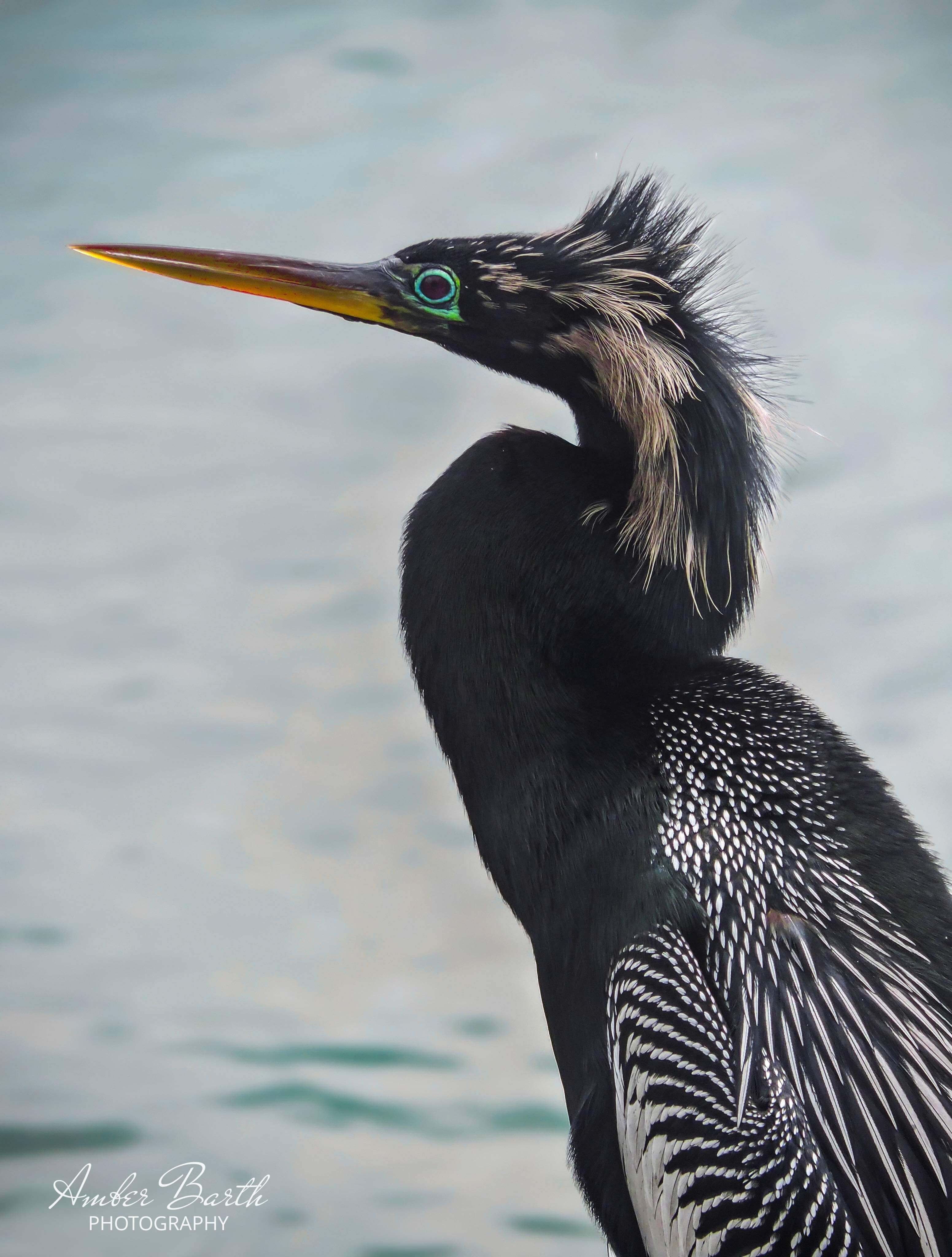
The Anhinga is one of the most fascinating birds to watch while birdwatching on Anna Maria Island. Often mistaken for a cormorant, this sleek waterbird is known for its long, snake-like neck — which is why it’s sometimes called the “snake bird.” You’ll most often spot Anhingas around freshwater and brackish areas near Robinson Preserve and other quiet inland waterways just off the island.
Anhingas feed primarily on fish, along with small aquatic creatures like amphibians and crustaceans. Unlike pelicans that plunge-dive, Anhingas swim low in the water and spear fish underwater with their sharp, pointed bills. After catching their prey, they surface and skillfully flip the fish into the air before swallowing it headfirst.
Behavior is where the Anhinga really stands out. Because their feathers are less waterproof than other waterbirds, they frequently perch with their wings fully outstretched to dry in the sun — a dramatic, almost prehistoric pose. You’ll often see them alone or quietly perched on mangrove branches, docks, or snags near the water, creating one of the most photogenic moments of any Anna Maria Island birdwatching outing.
Where to spot them: Robinson Preserve, freshwater ponds, brackish mangroves
Best season: Year-round
Habitat: Freshwater lakes, ponds, and calm coastal waterways
Cormorant
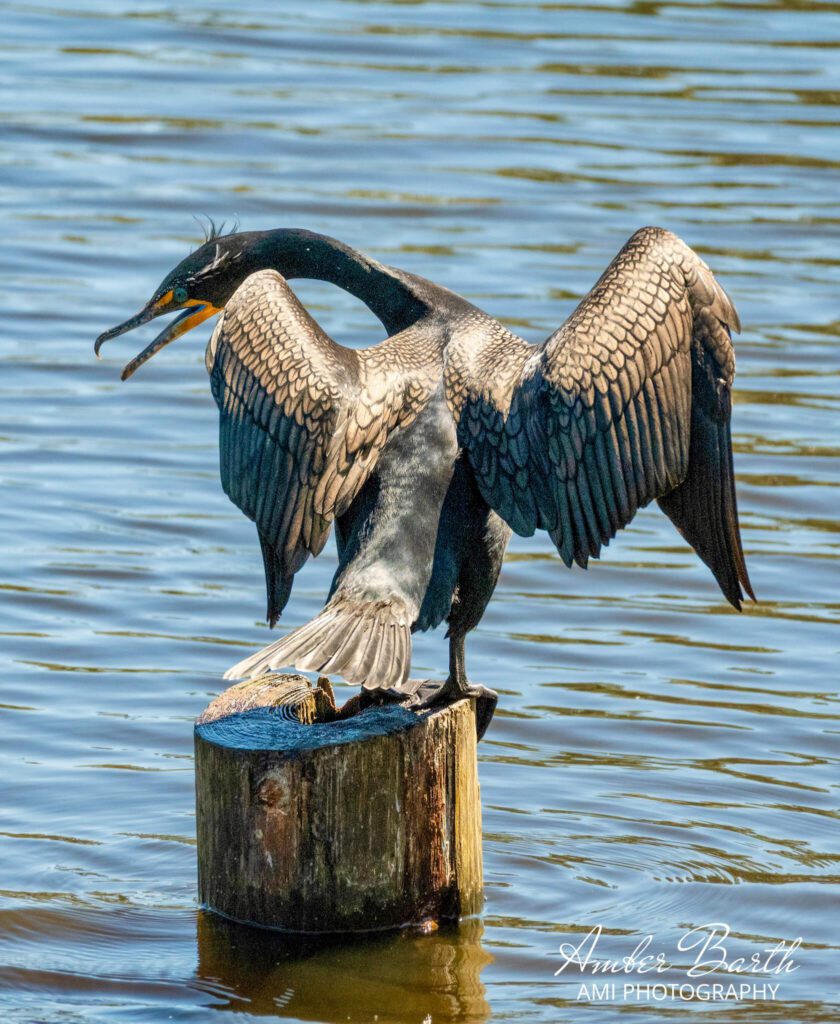
The Cormorant is a common sight during birdwatching on Anna Maria Island, especially around bays, piers, and quiet coastal waters. With its dark body, long neck, and hooked bill, it can look almost entirely black from a distance. During breeding season, adults develop subtle double crests of feathers on their heads — the feature that gives them their name.
Cormorants feed primarily on fish and are strong, efficient divers. Unlike pelicans that plunge from above, they pursue fish underwater, using powerful webbed feet to propel themselves beneath the surface. You’ll often see just their heads and necks visible as they swim low in the water before disappearing in a quick dive.
Behaviorally, they’re frequently spotted perched on pilings, channel markers, or mangrove branches with their wings spread wide to dry — a posture similar to the Anhinga. They may forage alone or in loose groups, and in winter months their numbers increase as migratory birds join local populations. Watching them surface with a wriggling fish is one of the quieter but rewarding moments of birdwatching around Anna Maria Island.
Where to spot them: Bayside waters, piers, Longboat Pass, Robinson Preserve
Best season: Most abundant in fall and winter
Habitat: Coastal bays, inlets, and open water
Egret
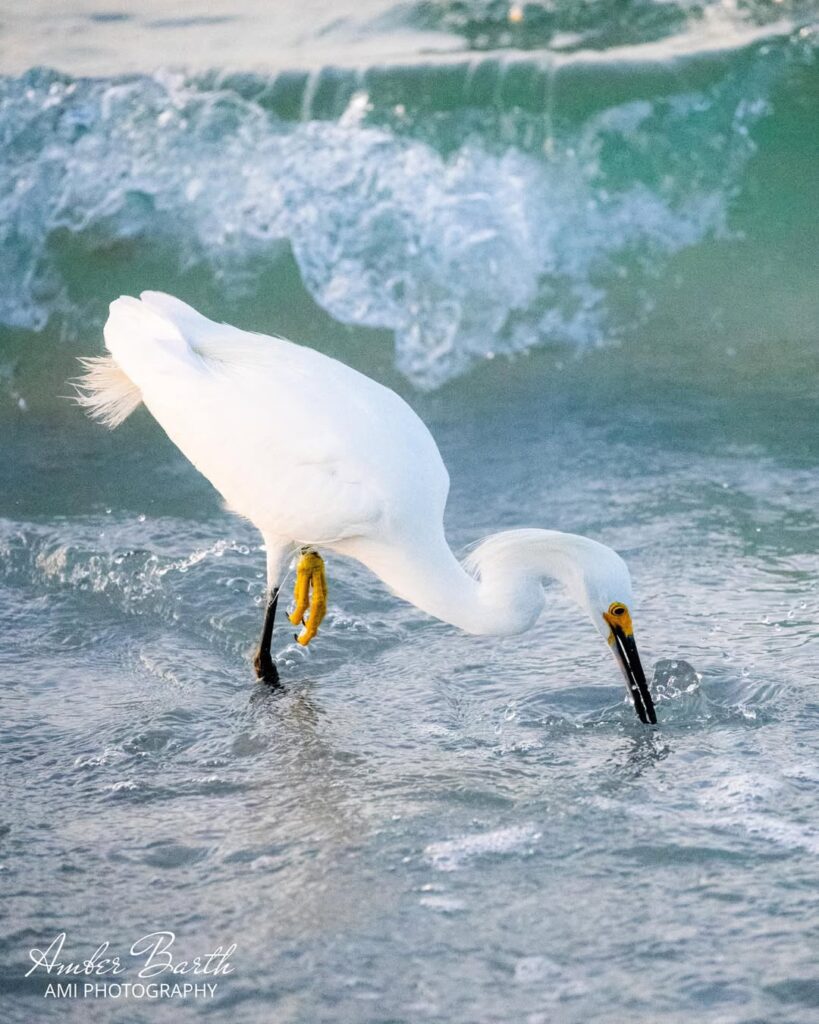
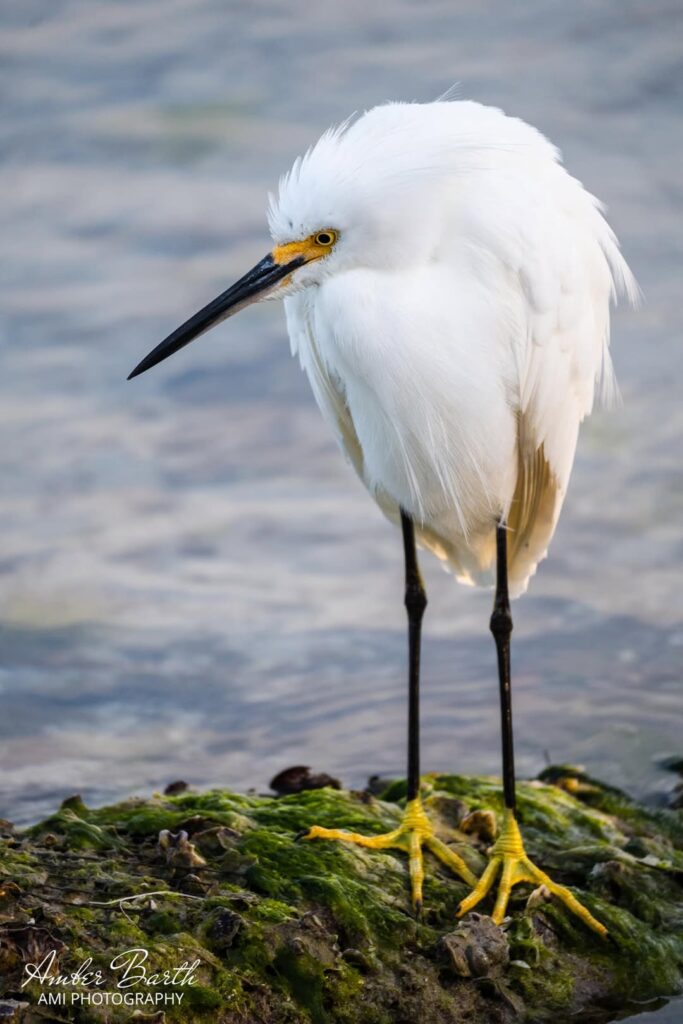
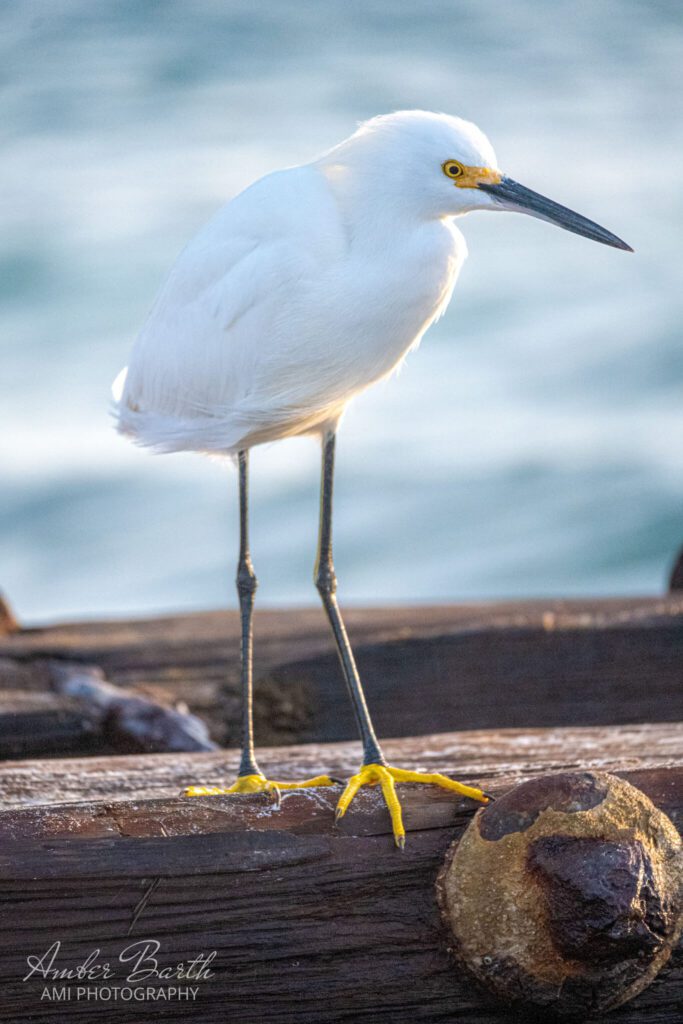
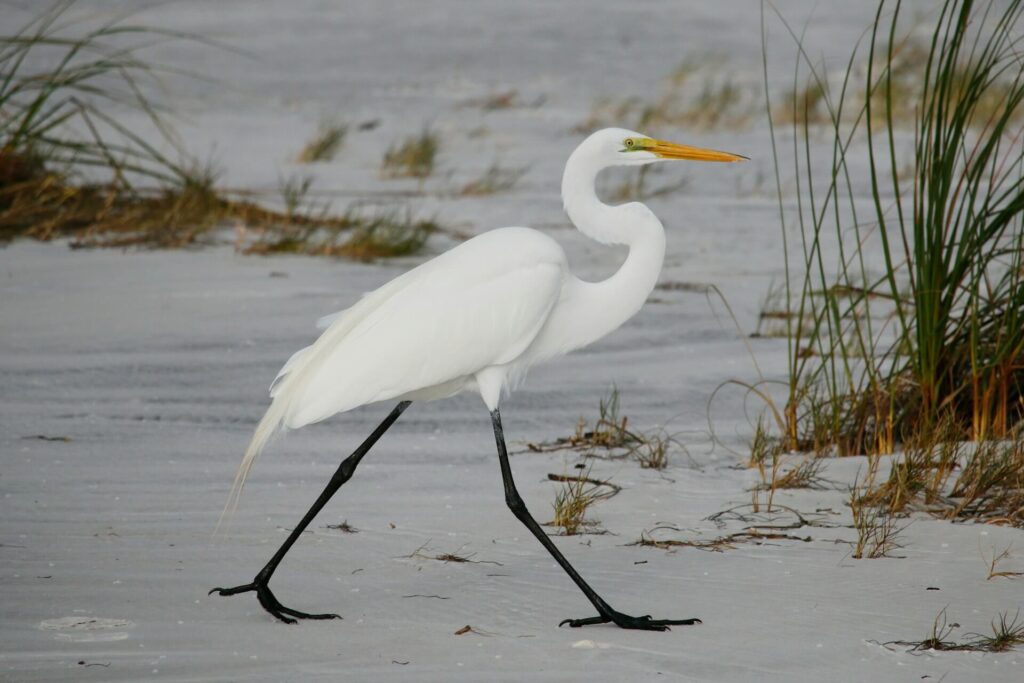
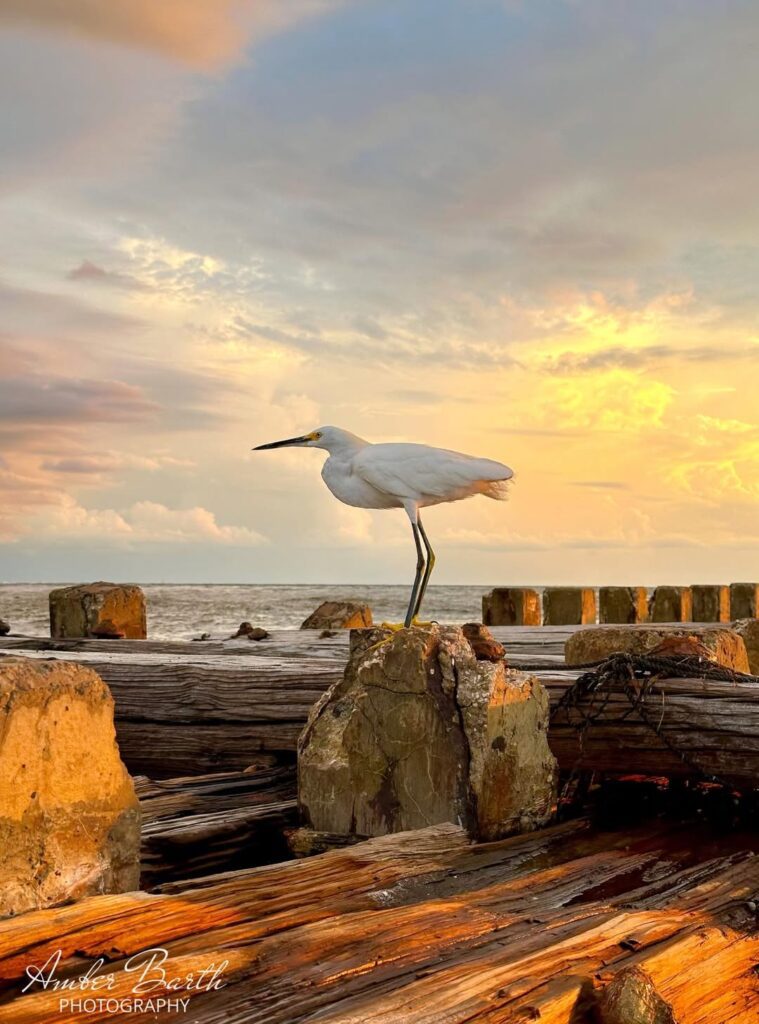
The Great Egret is one of the most elegant and easily recognizable birds you’ll encounter while birdwatching on Anna Maria Island. Tall and brilliant white with a long, slender black leg line and a sharp yellow bill, it’s often seen standing motionless in shallow water before striking with surprising speed. These graceful wading birds are common along the island’s bayside flats, mangroves, and preserves, especially around Robinson Preserve and Coquina Beach.
Great Egrets feed primarily on fish, but they also eat frogs, small reptiles, crustaceans, and insects. They hunt visually, stalking slowly through shallow water or standing perfectly still before delivering a lightning-fast jab of their bill to capture prey. Their patience is part of what makes them so captivating to watch.
Behavior-wise, Great Egrets are typically solitary hunters, though they may gather in loose groups where food is plentiful. During breeding season, they develop delicate plume feathers along their backs — once highly prized in the fashion trade, which nearly drove the species to extinction in the late 1800s. Today, their steady presence along Anna Maria Island’s shoreline is a conservation success story and a highlight of any birdwatching outing.
Where to spot them: Robinson Preserve, Coquina Beach, bayside tidal flats
Best season: Year-round
Habitat: Shallow coastal waters, marshes, mangroves
Heron
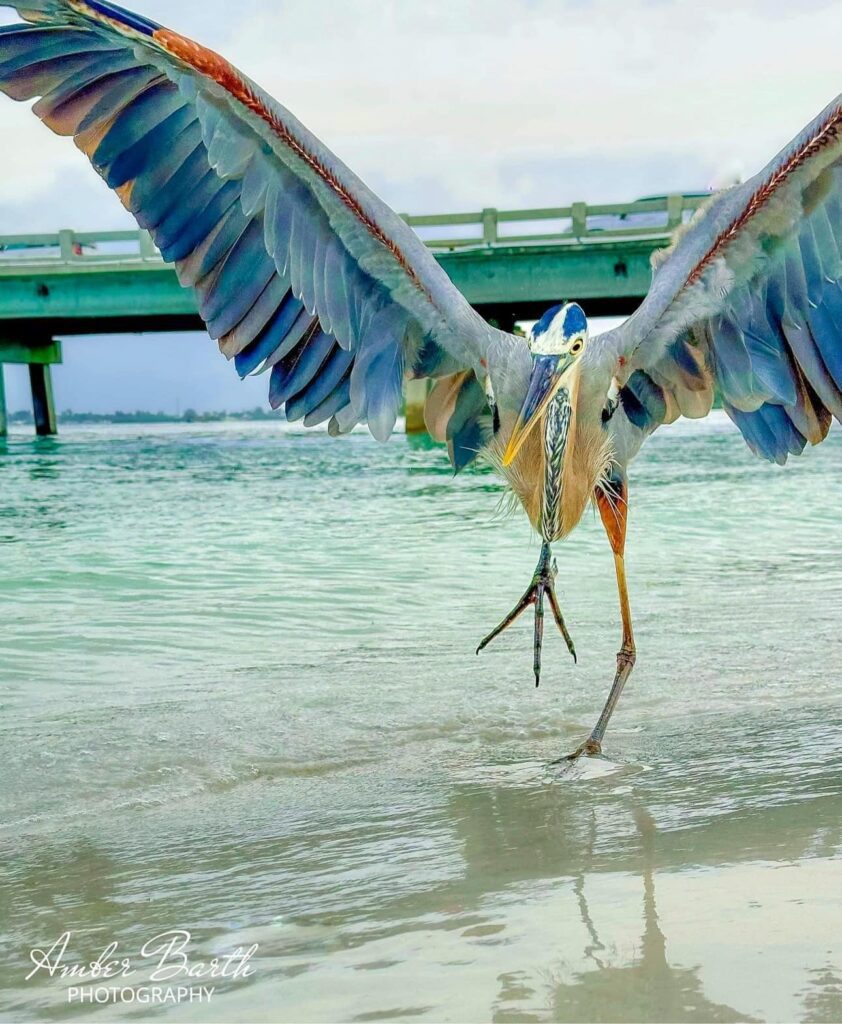
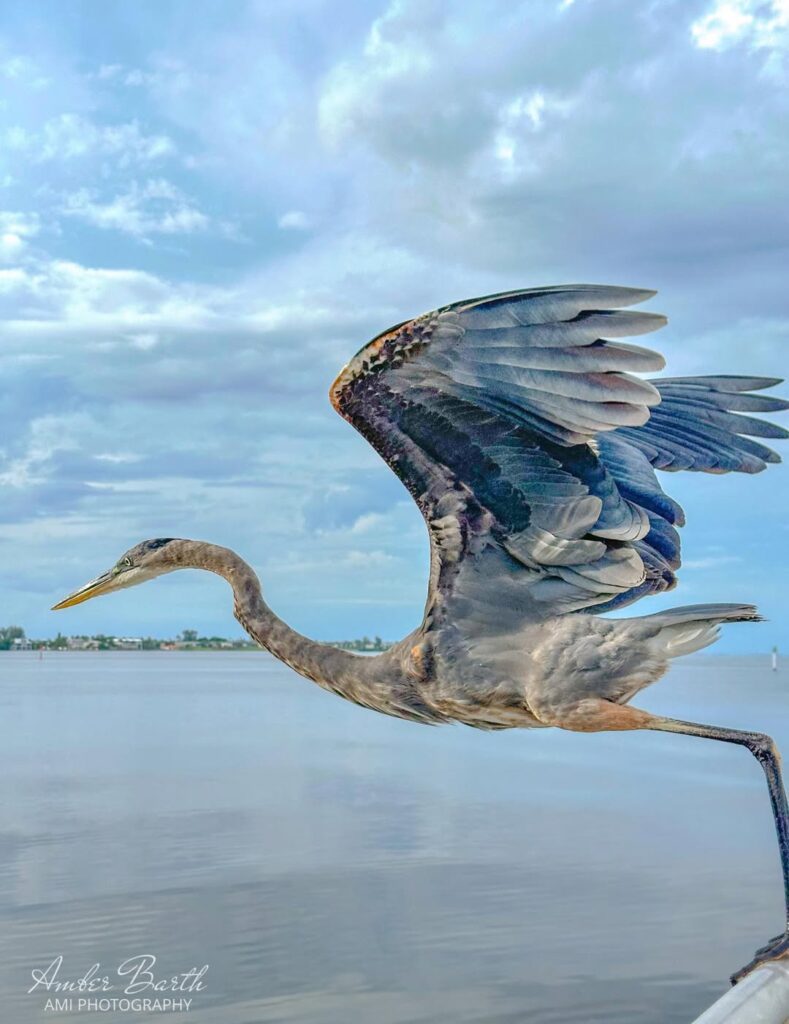
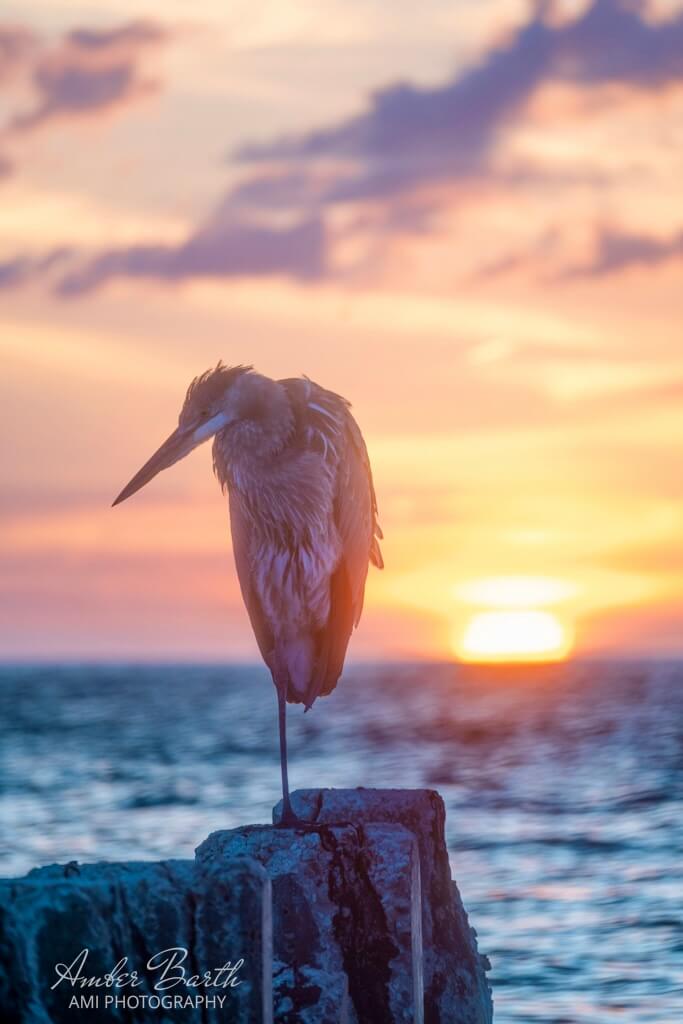

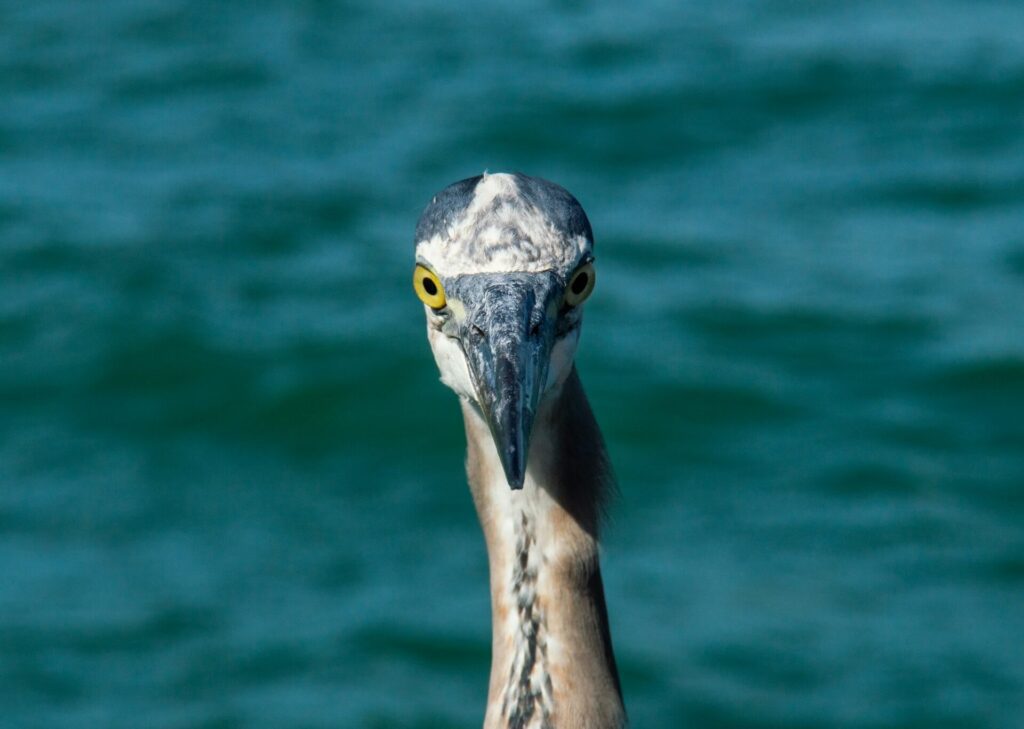
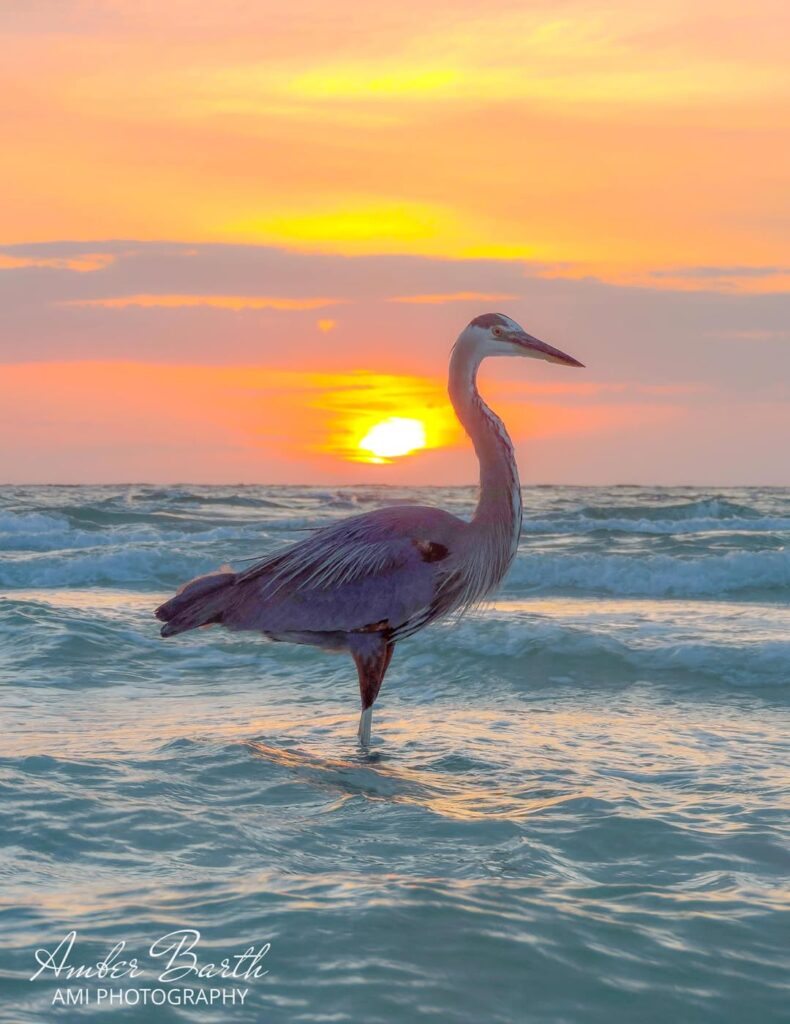
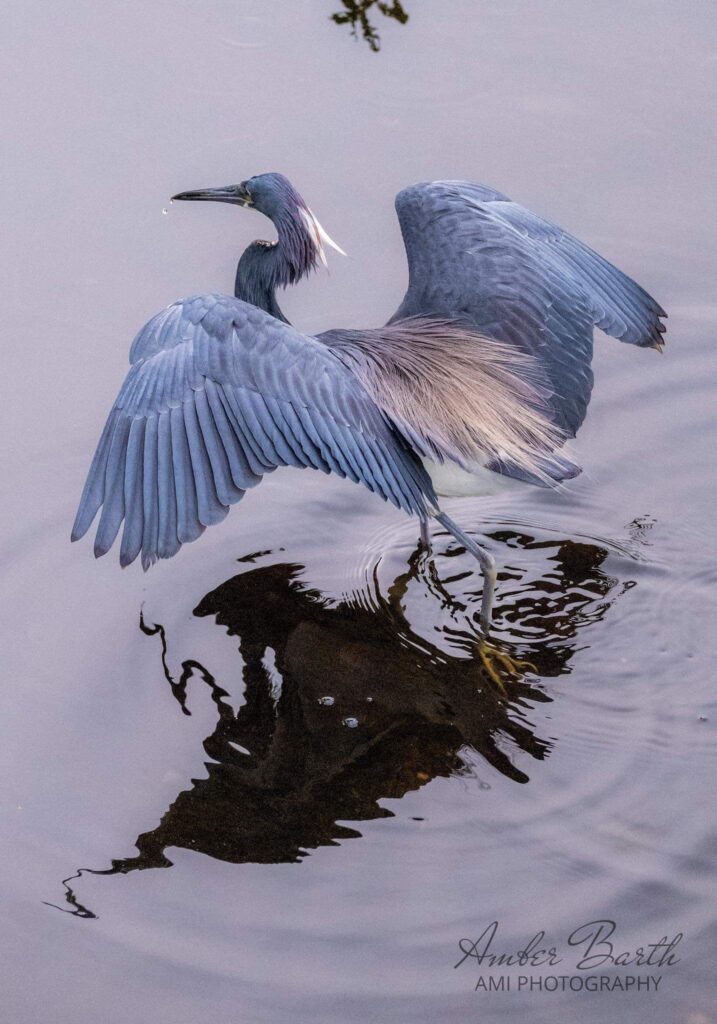
The Great Blue Heron is the largest and most commanding wading bird you’re likely to see while birdwatching on Anna Maria Island. Standing over four feet tall with a blue-gray body, long legs, and an S-shaped neck, it has an unmistakable silhouette against the island’s marshes and shorelines. These impressive birds are commonly spotted along bayside waters, tidal flats, and mangrove edges, especially around Robinson Preserve and quieter stretches of coastline.
Great Blue Herons feed primarily on fish, but their diet is surprisingly varied. They also eat crabs, shrimp, frogs, small reptiles, and occasionally even small mammals. Patient and deliberate, they stalk prey slowly through shallow water before striking with remarkable speed and precision, using their dagger-like bill to spear or grasp their catch.
Behavior-wise, they are typically solitary hunters, often seen standing still for long stretches before making a sudden move. In flight, their broad wings and slow, powerful wingbeats are distinctive, with their neck tucked tightly into an S-shape. Despite their size, they move with quiet grace — a steady, dependable presence that makes them a highlight of any Anna Maria Island birdwatching experience.
Where to spot them: Robinson Preserve, Leffis Key, bayside mangroves, tidal flats
Best season: Year-round
Habitat: Coastal marshes, shallow bays, estuaries
Ibis
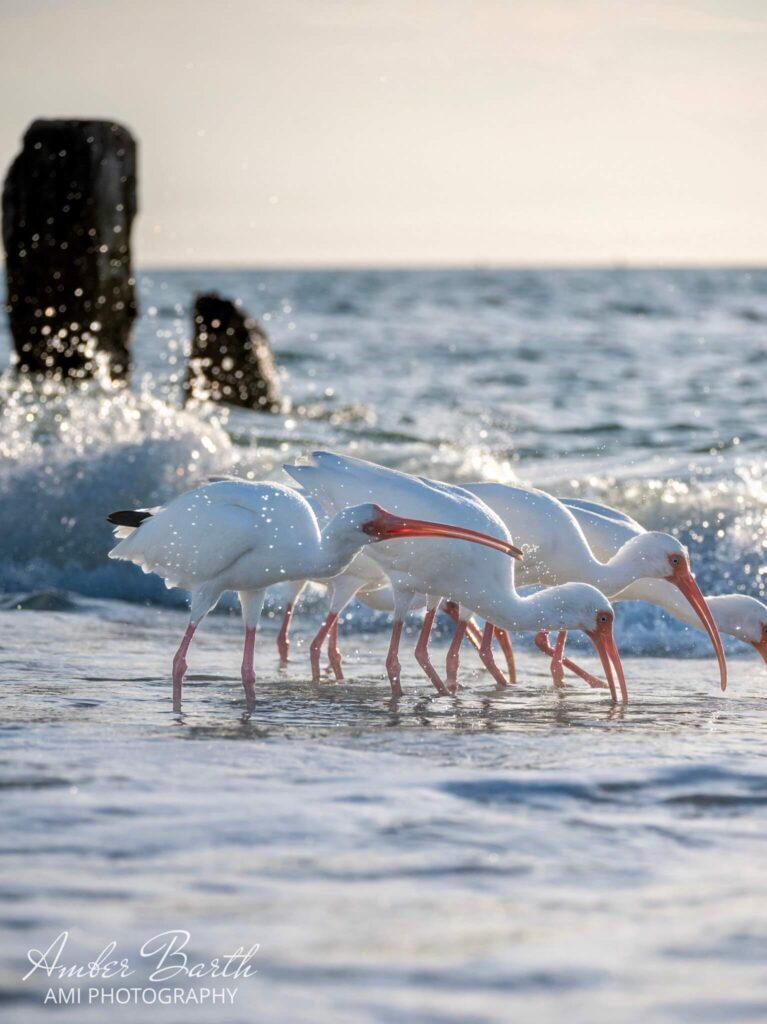

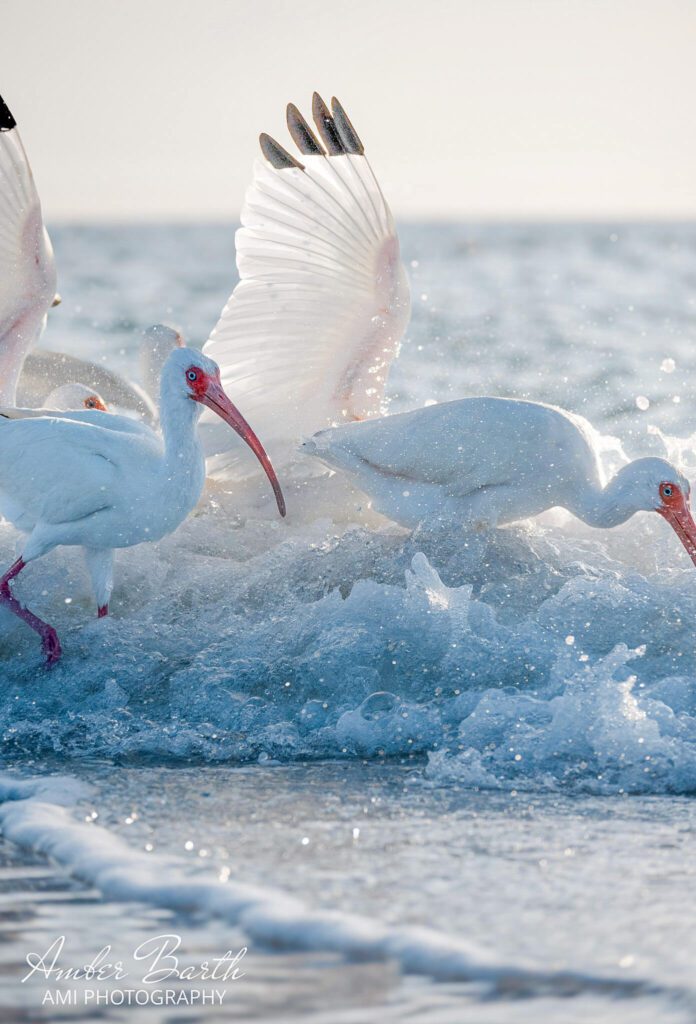
The White Ibis is one of the most recognizable and frequently spotted birds while birdwatching on Anna Maria Island. With its bright white body, long curved red bill, and pinkish legs, it stands out beautifully against green mangroves and sandy shorelines. You’ll often see them in small flocks probing the ground in parks, tidal flats, and marshy edges, especially around Robinson Preserve, Coquina Beach, and even residential lawns near the coast.
White Ibises feed primarily on crustaceans such as crabs and shrimp, along with insects and small aquatic creatures. Their long, down-curved bills are specially adapted for probing into mud and sand, allowing them to detect prey by touch. Watching a group forage together — bills moving rhythmically through the shallows — is a classic coastal birdwatching scene.
Behavior-wise, they are highly social birds and are often seen feeding and flying in groups. In flight, their black wing tips become visible against otherwise white wings, creating a striking contrast. During breeding season, their facial skin can deepen in color, adding to their vibrant appearance. Active, adaptable, and easy to spot, the White Ibis is a dependable highlight of any Anna Maria Island birdwatching outing.
Where to spot them: Robinson Preserve, Coquina Beach, bayside marshes, grassy parks
Best season: Year-round
Habitat: Tidal flats, marshes, mangroves, open lawns near water
Nanday Parakeet
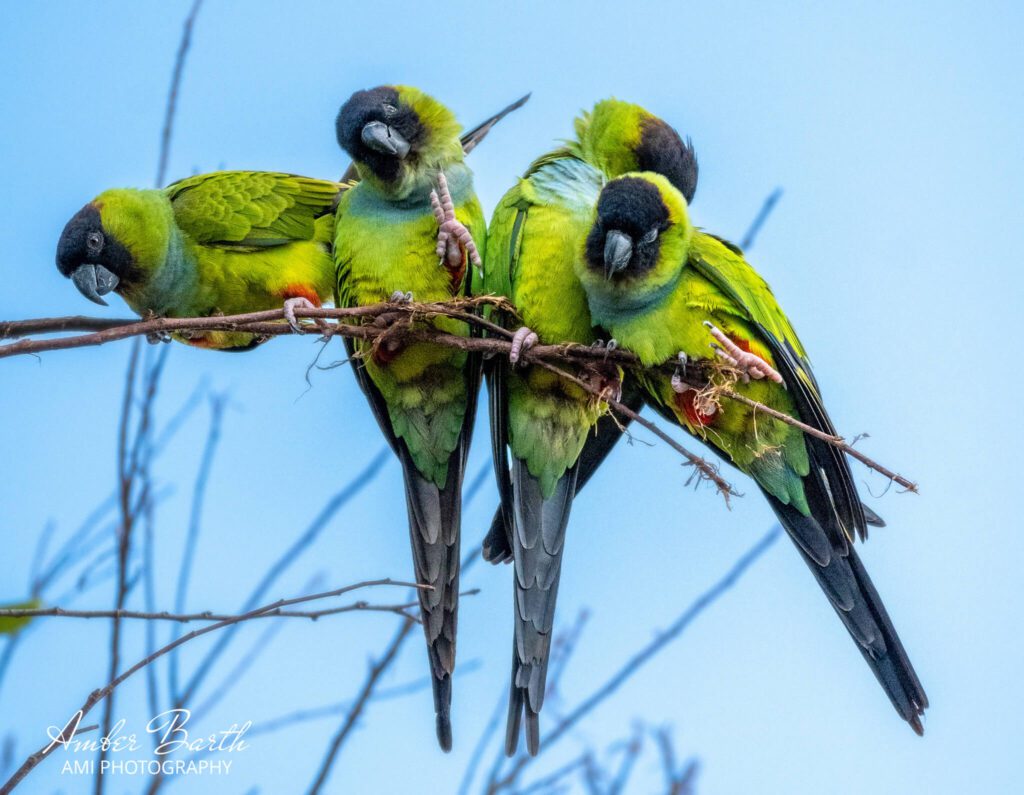
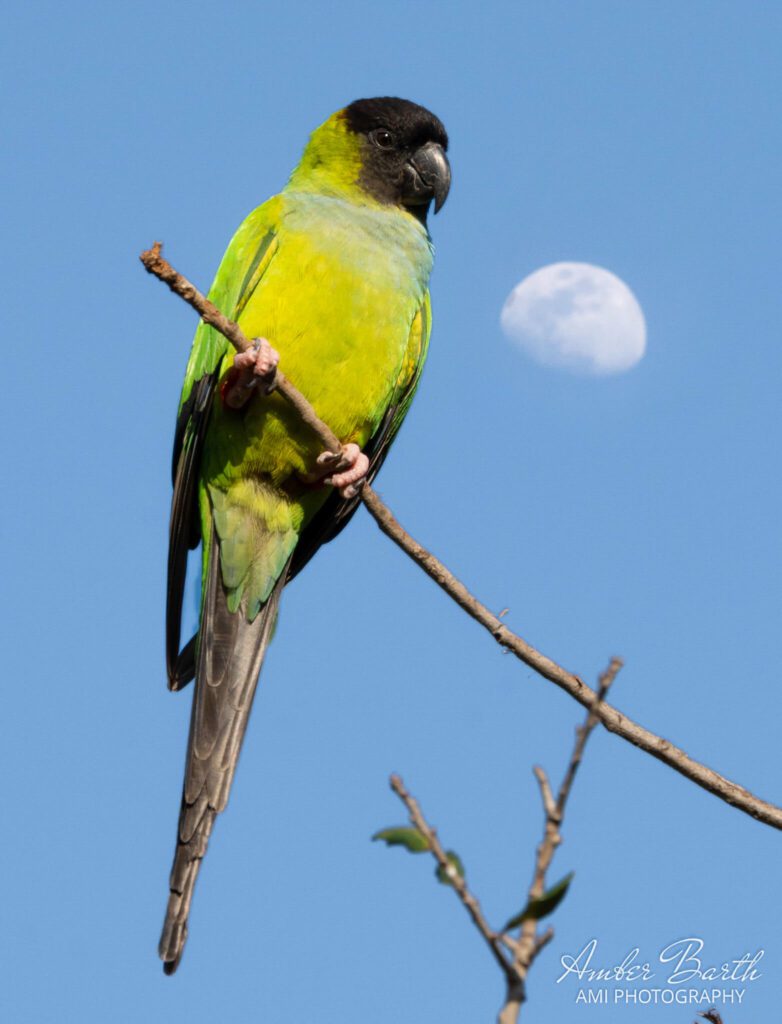
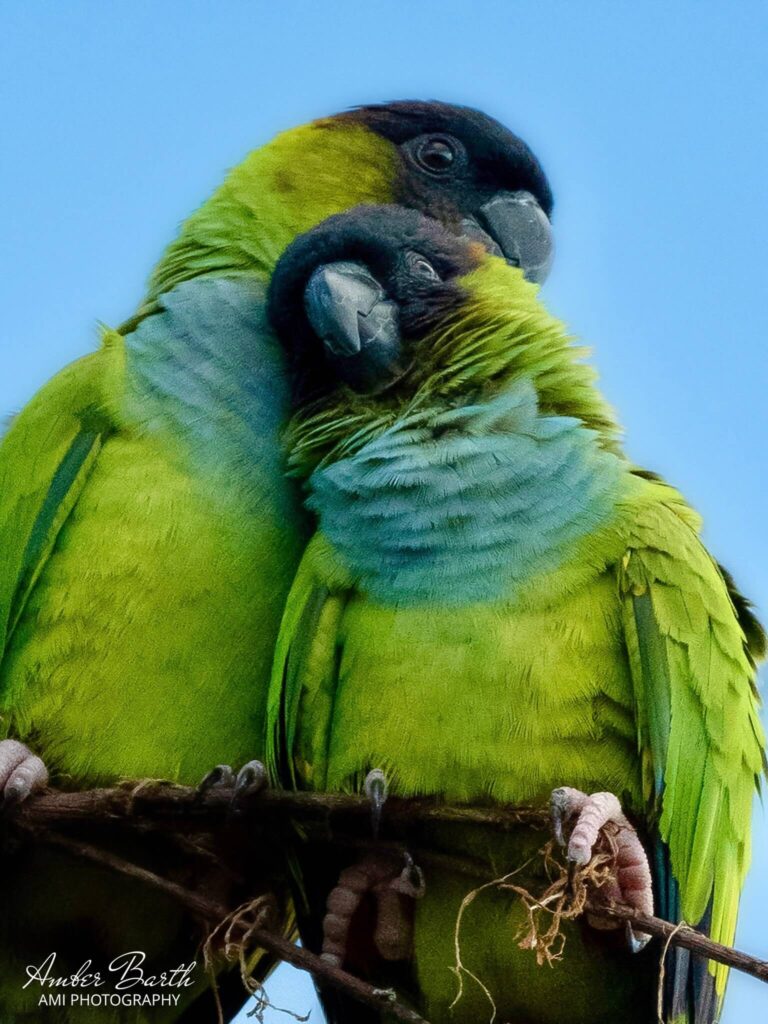
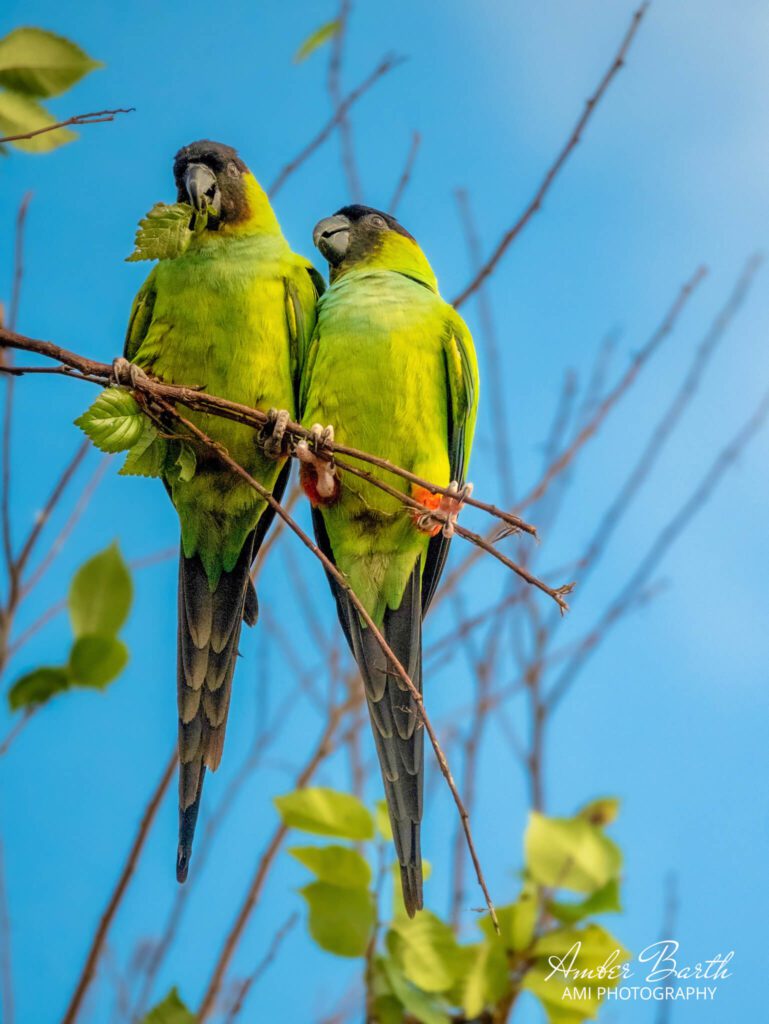
The Nanday Parakeet is one of the most unexpected birds you might encounter while birdwatching on Anna Maria Island. Bright green with a distinctive black face mask and long tapered tail, this lively parrot adds a tropical flair to the island’s birdlife. Unlike many native shorebirds and waders, Nanday Parakeets are non-native but have established small, thriving populations in parts of Florida. You’ll often spot them perched on palm trees, power lines, or flying overhead in noisy flocks.
Nanday Parakeets feed primarily on seeds, fruits, berries, and palm nuts. They’re opportunistic foragers and are frequently seen moving through neighborhoods or coastal tree canopies in search of food. Their strong curved bills allow them to crack seeds and nuts with ease.
Behavior is what truly gives them away. These parrots are highly social and extremely vocal, announcing their presence with loud, sharp calls before you even see them. They tend to travel in small flocks and are active throughout the day, often gathering in tall trees at dusk. While they differ from the island’s native wading birds, their bold personality and vivid coloring make them a memorable part of any Anna Maria Island birdwatching experience.
Where to spot them: Residential areas, palm-lined streets, parks, and tree canopies
Best season: Year-round
Habitat: Urban and coastal tree habitats
Osprey
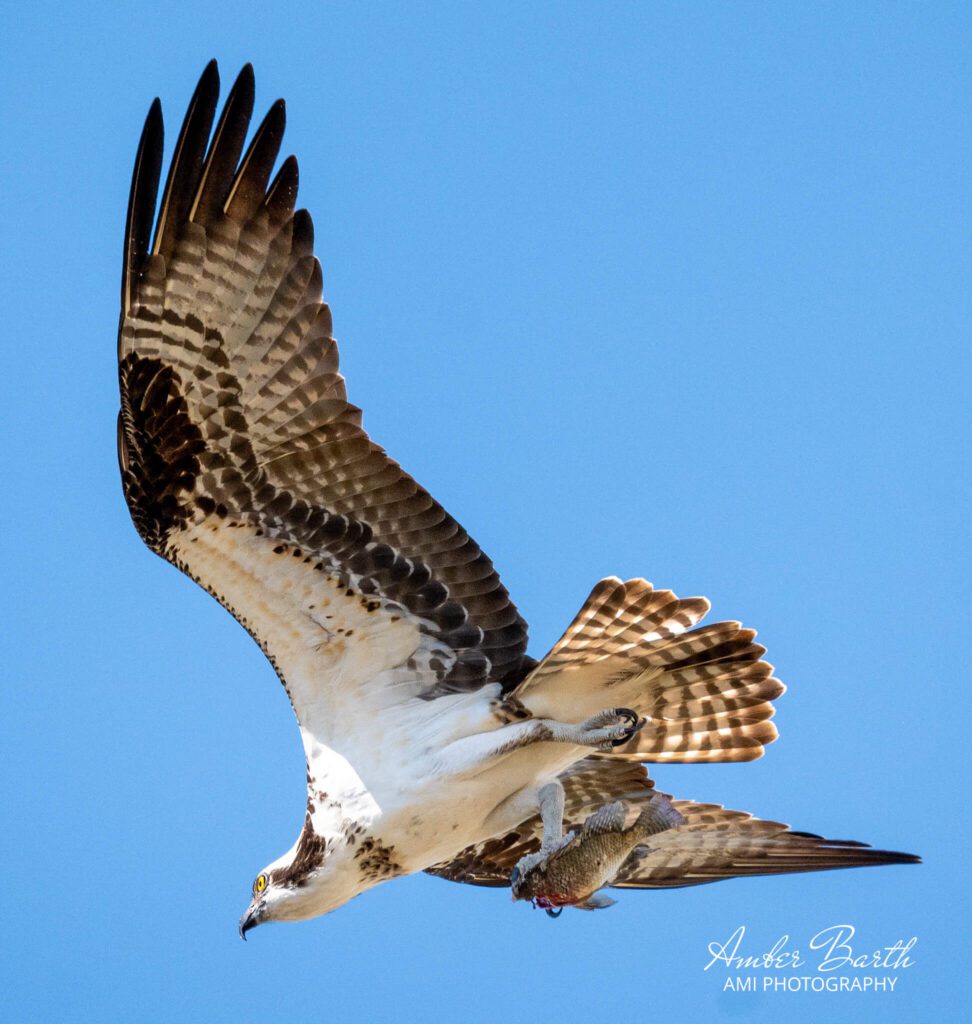
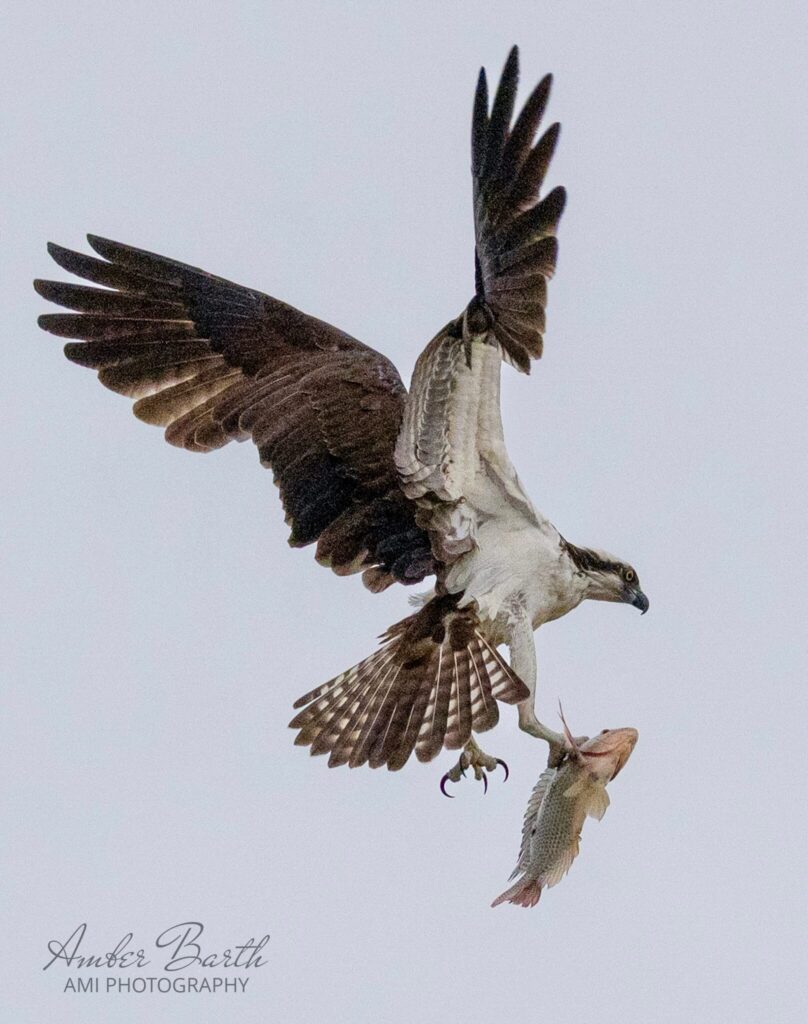
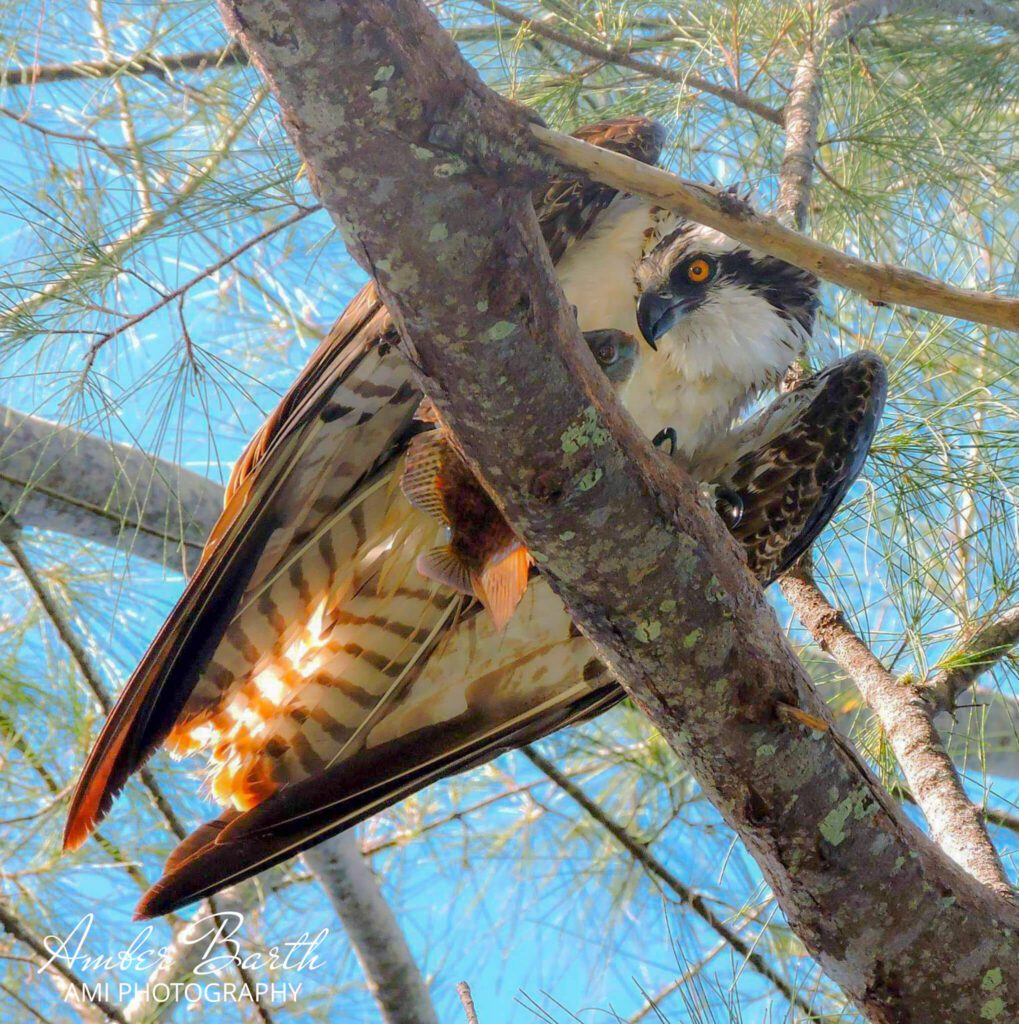
The Osprey is one of the most dramatic birds you can spot while birdwatching on Anna Maria Island. With its striking white head, dark eye stripe, and brown upperparts, this raptor is unmistakable as it soars gracefully over the Gulf or perched atop channel markers and palm trees. Ospreys are most commonly seen near open water where they hunt, including Coquina Beach, Longboat Pass, and the bayside areas around Robinson Preserve.
Ospreys feed almost exclusively on fish, which they catch by hovering high above the water before plunging talons-first into the surface. Their curved, sharp talons and reversible outer toes make them incredibly efficient at gripping slippery prey. After a successful catch, they often carry fish headfirst to a nearby perch to eat.
Behaviorally, Ospreys are highly territorial and are often seen nesting in tall man-made structures or dead trees close to water. During flight, their wings bend at the “wrist,” giving them a distinctive M-shape when gliding. Watching an osprey dive from the sky and emerge with a wriggling fish is one of the most thrilling experiences of birdwatching on Anna Maria Island.
Where to spot them: Coquina Beach, Longboat Pass, Robinson Preserve, bayside waters
Best season: Year-round, though more visible during nesting and feeding season in spring and summer
Habitat: Coastal waters, bays, estuaries, and open-water channels
Pelican
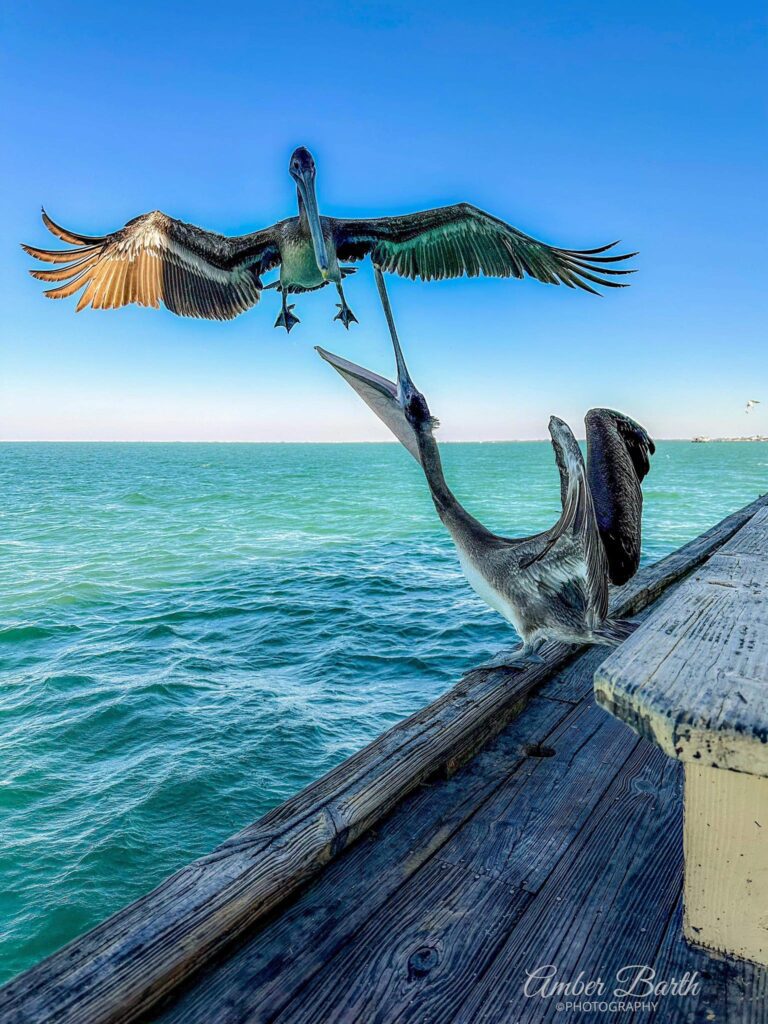
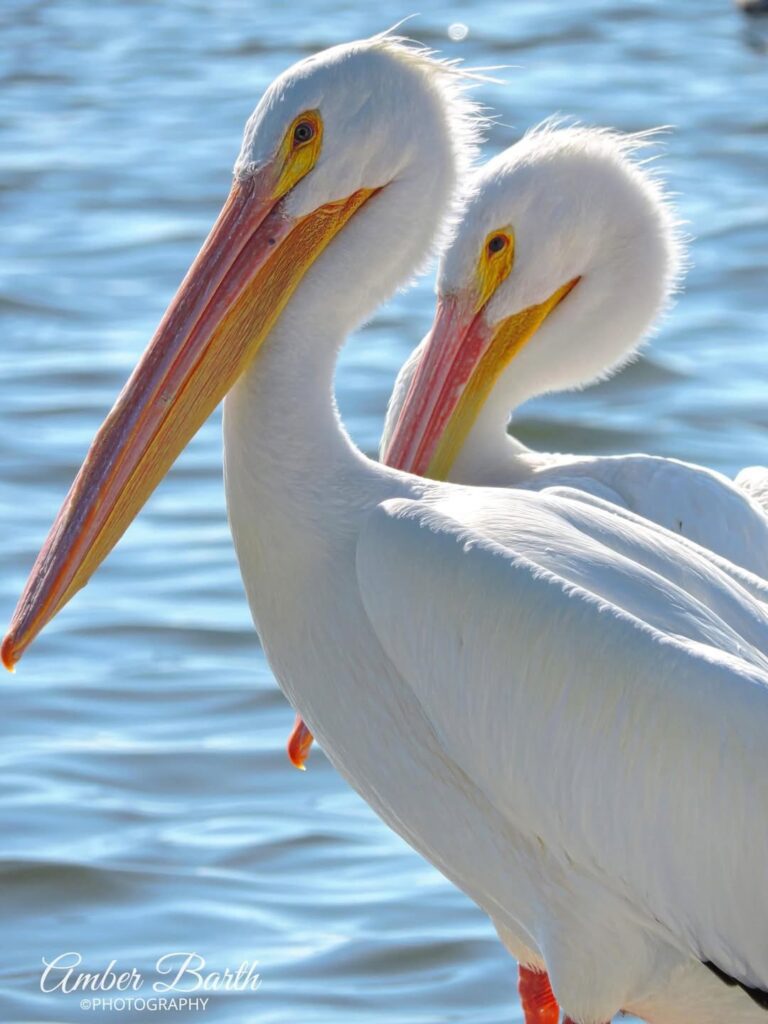
The Brown Pelican is one of the most iconic and easily recognized birds on Anna Maria Island. With its large, heavy body, long bill, and expansive wingspan, it’s a quintessential symbol of the Gulf Coast. Pelicans are commonly seen gliding low over the water, perched along piers, or diving spectacularly into the shallows to catch fish. Prime viewing spots include Coquina Beach, Longboat Pass, and the northern tip of the island near Sandbar Seafood & Spirits.
Brown Pelicans feed almost exclusively on fish, which they catch with dramatic plunge dives from heights of 30–60 feet. Their expandable throat pouch allows them to scoop up water and prey, then drain the water before swallowing the fish whole. Watching a synchronized flock of pelicans diving is one of the most memorable sights for birdwatchers on the island.
Behaviorally, pelicans are social and often seen in groups, either flying in formation or resting on posts and sandbars between dives. They are active during the day, especially around high-activity fishing areas. In flight, their long wings and steady gliding create a graceful silhouette against the Gulf horizon, making them a highlight of any Anna Maria Island birdwatching experience.
Where to spot them: Coquina Beach, Longboat Pass, Sandbar Seafood & Spirits area, northern beaches
Best season: Year-round
Habitat: Coastal waters, shorelines, piers, and sandbars
Roseate Spoonbill
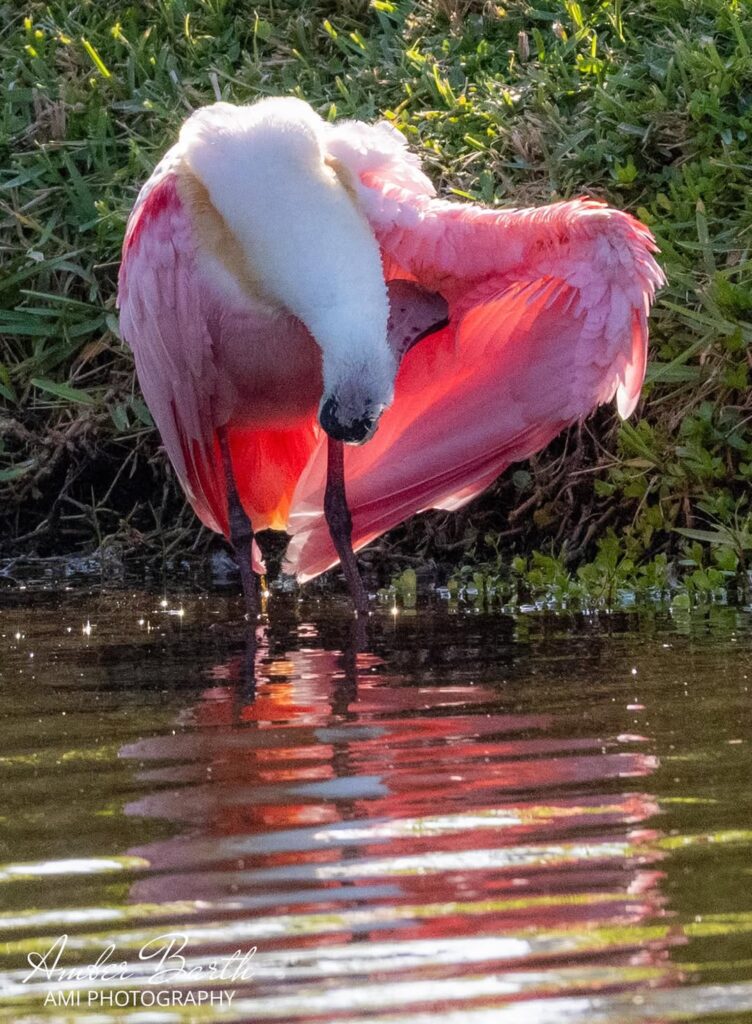
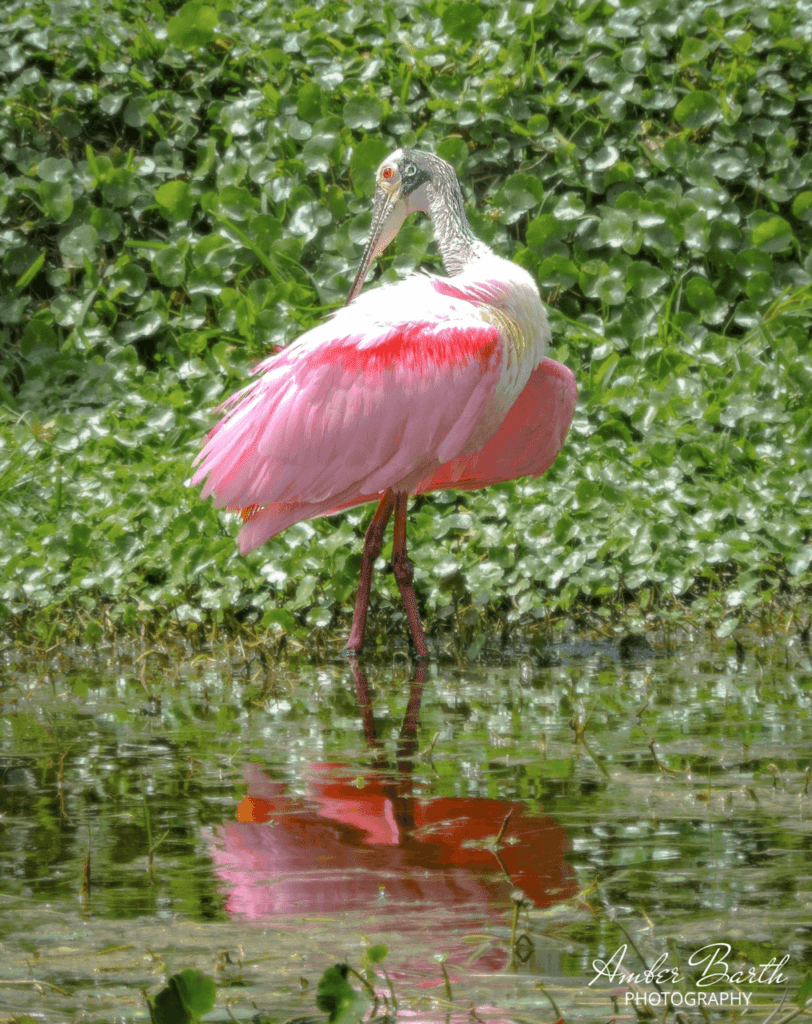
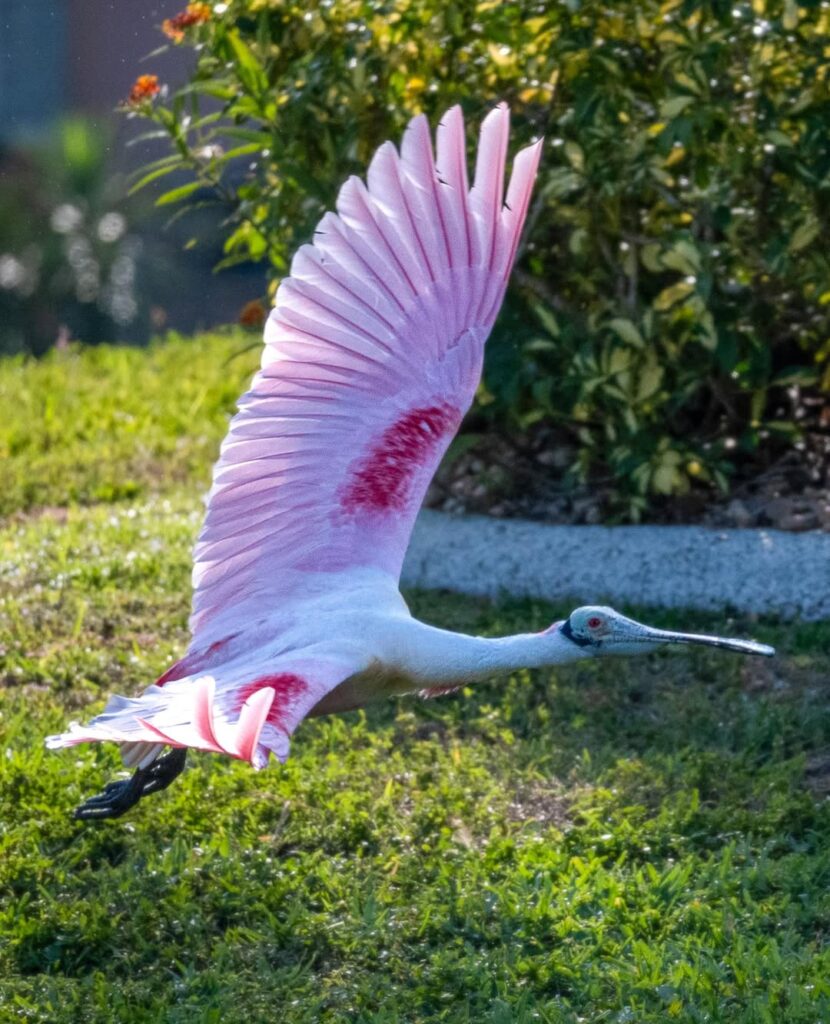
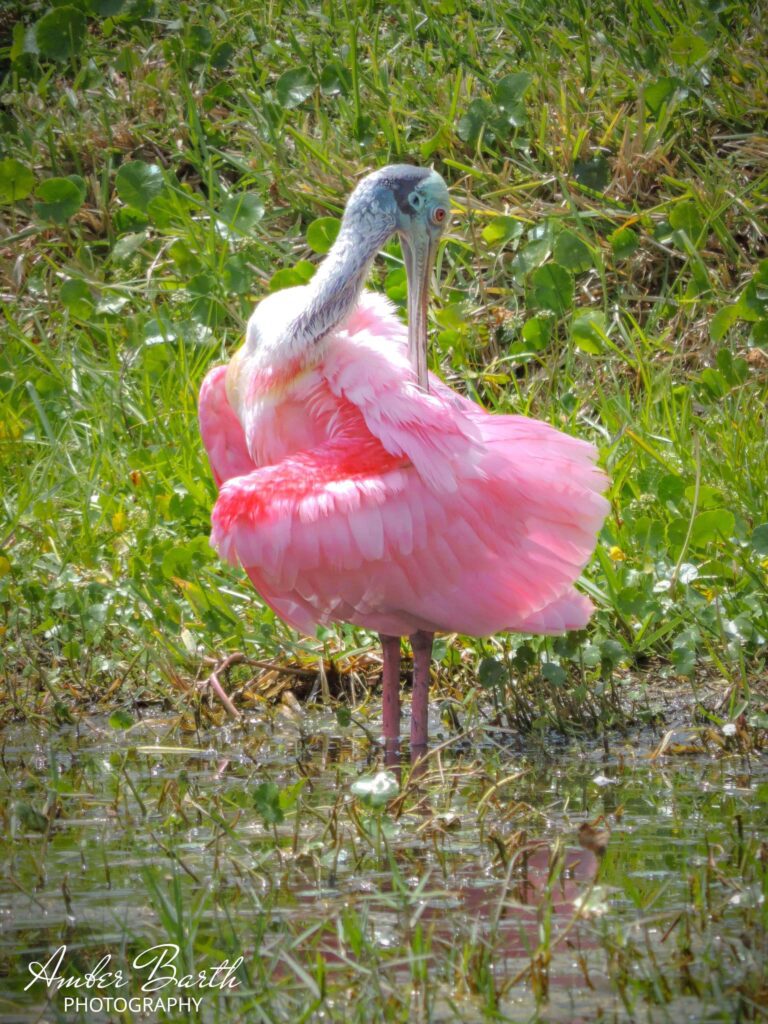
The Roseate Spoonbill is one of the most breathtaking birds you can spot while birdwatching on Anna Maria Island. With its vivid pink feathers, long legs, and unmistakable spoon-shaped bill, it often draws double takes from visitors exploring the island’s tidal flats and preserves. You’re most likely to see them at Robinson Preserve, Leffis Key, or along quiet bayside shallows, especially during the cooler winter and early spring months.
Roseate Spoonbills feed primarily on small fish, shrimp, crabs, and other aquatic invertebrates. Unlike herons that rely heavily on sight, spoonbills hunt by touch — sweeping their partially open bills side to side through shallow water until they detect movement. When prey brushes against the sensitive bill, it snaps shut instantly.
Behavior-wise, they’re often seen foraging in small groups, slowly wading through pink reflections at low tide. In flight, their bright wings flash against the blue sky, with a wingspan that can reach nearly four feet. Though striking in color, they move with calm, deliberate grace — a quiet highlight of any Anna Maria Island birdwatching outing.
Where to spot them: Robinson Preserve, Leffis Key, bayside tidal flats
Best season: Winter through early spring
Habitat: Shallow coastal waters, mangroves, estuaries
Sandpiper

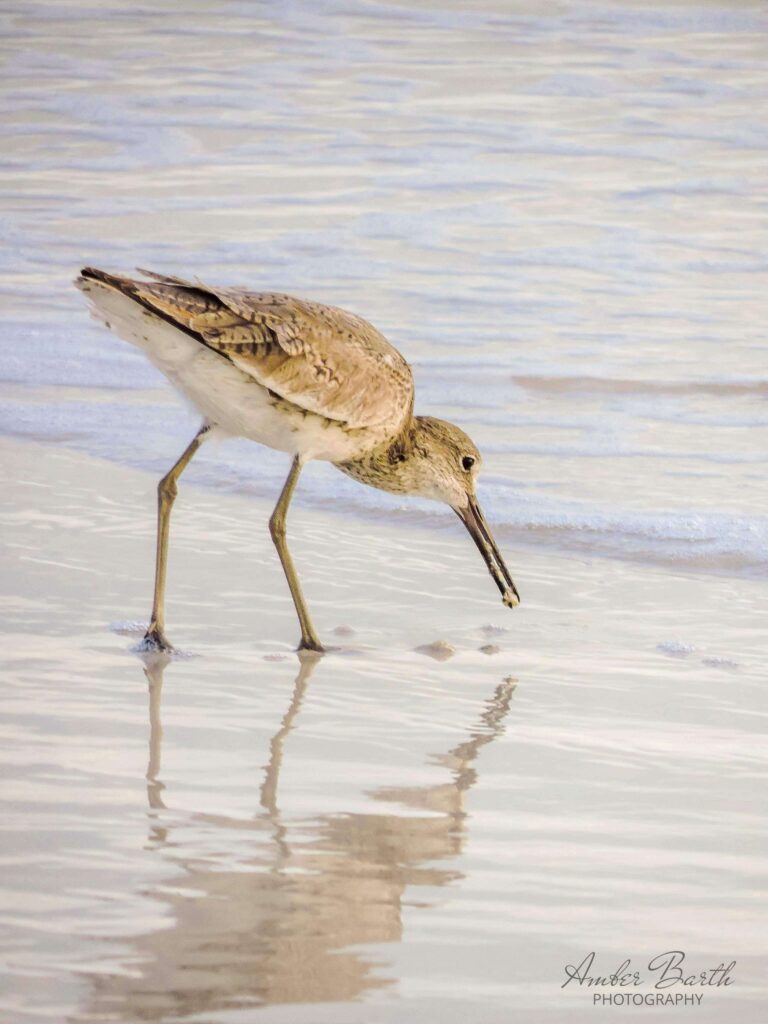
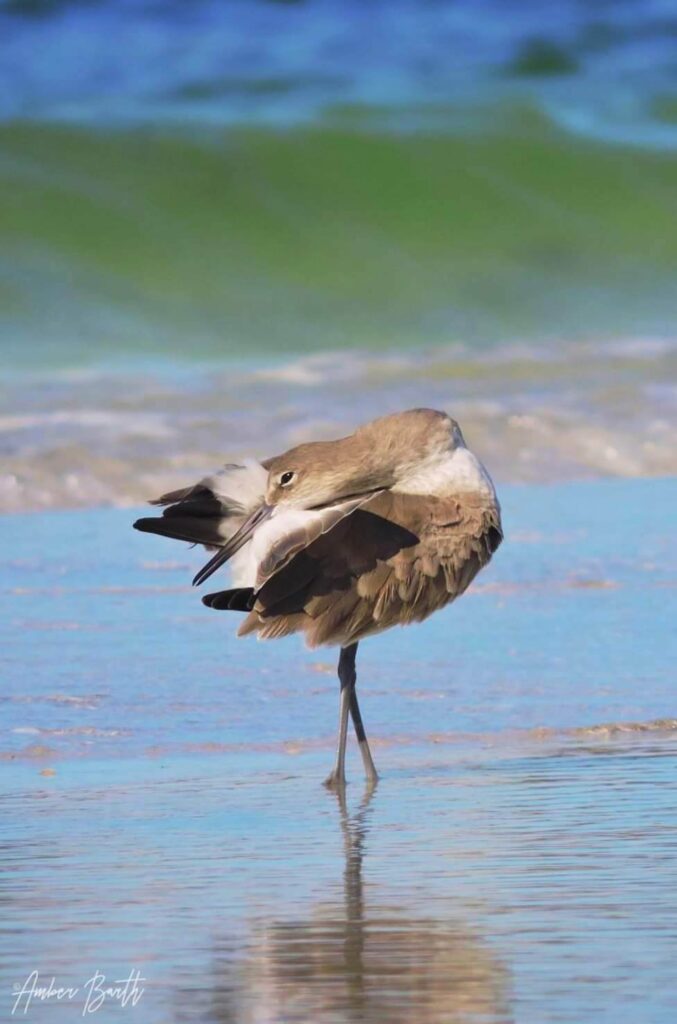
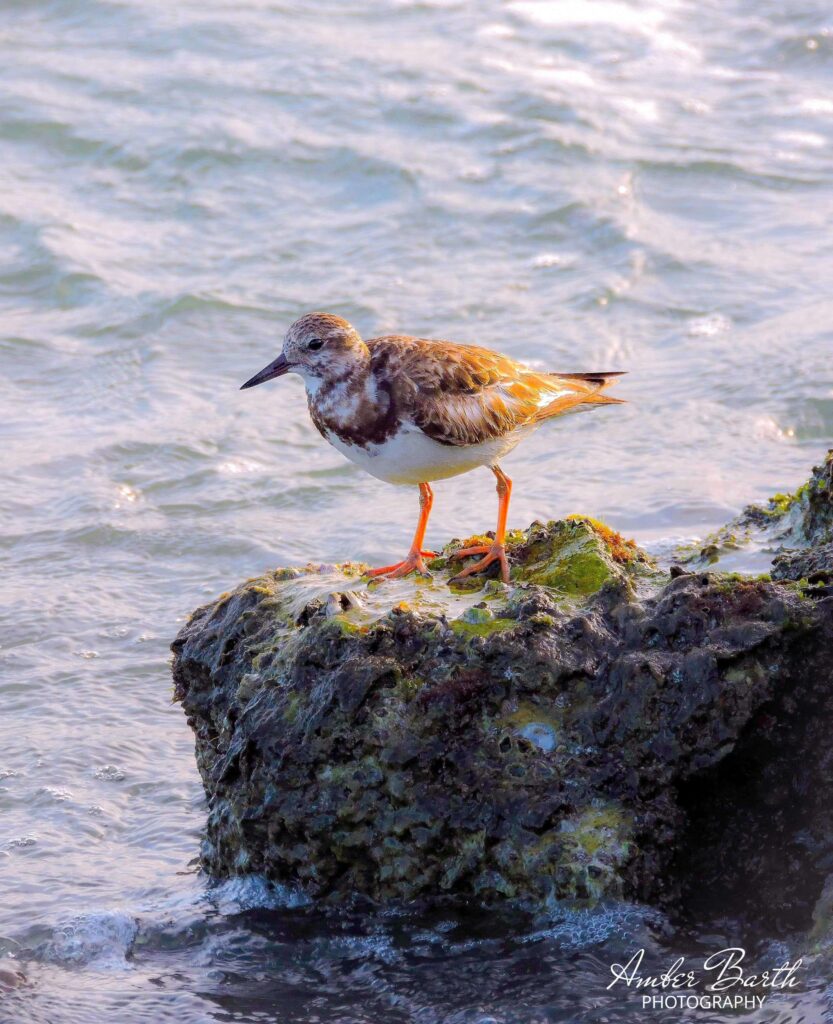
The sandpiper is a small, energetic shorebird that is a classic sight along Anna Maria Island’s beaches. With its pale gray and white plumage and quick, scuttling movements, it’s often seen racing along the wet sand at the water’s edge, chasing waves as they advance and retreat. Sanderlings are most commonly spotted on Coquina Beach, Bean Point, and other sandy shorelines, especially during the fall and winter migration season.
Sanderlings feed primarily on small invertebrates, including sand fleas, crustaceans, and marine worms. They probe the sand quickly with their short bills, often in tight groups, creating a rhythmic, almost hypnotic movement as they follow receding waves.
Behavior-wise, these tiny shorebirds are constantly on the move, never standing still for long. They forage in flocks, moving in perfect synchrony along the shoreline, and their speed and persistence make them fun — if slightly tricky — subjects for photography or close observation. Watching a group of Sanderlings dart in and out of the surf is a quintessential Anna Maria Island birding experience.
Where to spot them: Coquina Beach, Bean Point, other sandy shorelines
Best season: Fall and winter migration
Habitat: Sandy beaches, tidal flats, surf zones
Seagull
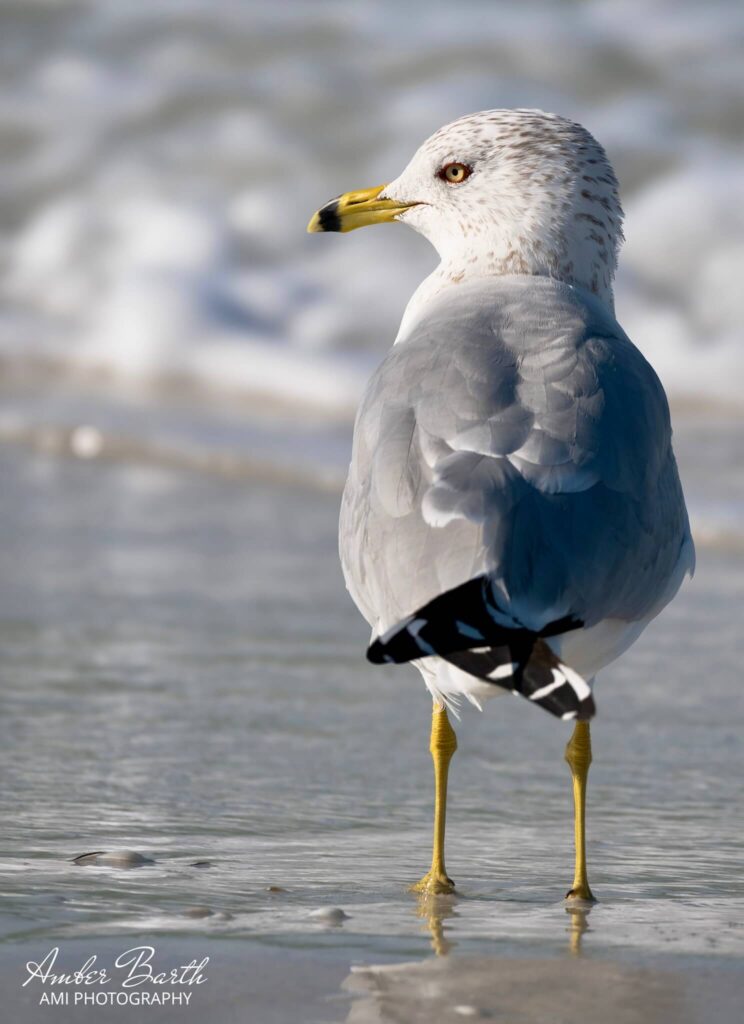
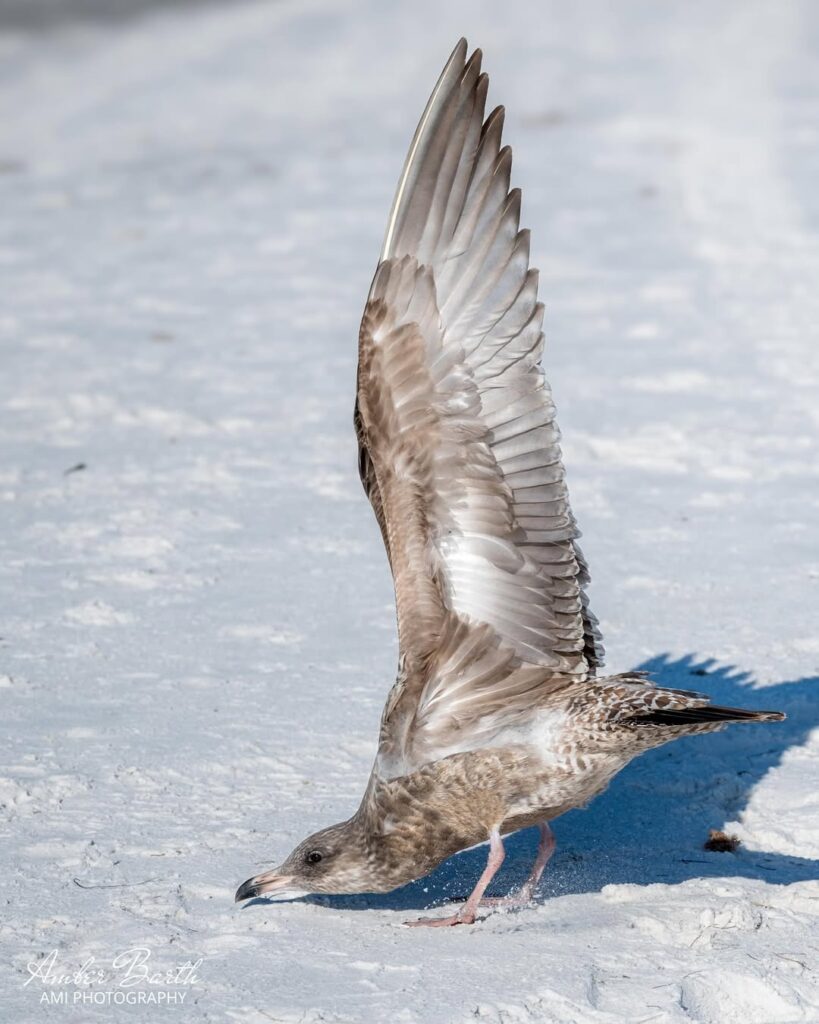
The seagull is a familiar sight for anyone birdwatching or strolling along Anna Maria Island’s beaches. Medium-sized and mostly white with gray wings and a distinctive black ring around its yellow bill, this gull is easy to spot as it swoops above the shoreline or scavenges along piers and sandbars. You’ll often see them at Coquina Beach, Bean Point, and near waterfront restaurants, especially where food scraps are available.
Ring-billed Gulls feed opportunistically on fish, crustaceans, insects, and occasionally human food. They are highly adaptable, often following fishing boats, foraging in shallow water, or picking up crumbs along the beach. Their versatile diet allows them to thrive year-round on the island.
Behaviorally, these gulls are social and often gather in large flocks, particularly during migration or at feeding hotspots. They are agile in flight, performing acrobatic maneuvers as they dive for food or interact with other gulls. While sometimes noisy, Ring-billed Gulls are an integral part of the coastal birdwatching experience on Anna Maria Island, offering plenty of opportunities for observation and photography.
Where to spot them: Coquina Beach, Bean Point, piers, waterfront restaurants
Best season: Year-round
Habitat: Beaches, tidal flats, piers, and shallow bays
Tern
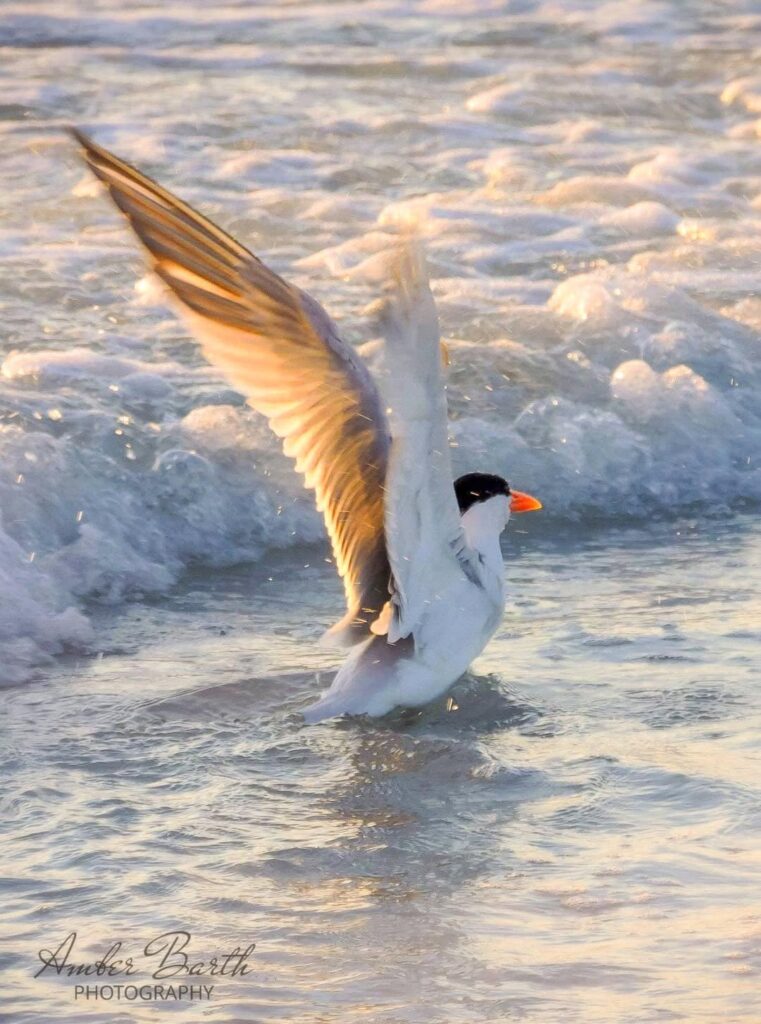
The Royal Tern is a striking coastal bird frequently seen while birdwatching on Anna Maria Island. With its tall, slender body, bright orange bill, and black crest that extends over the head during breeding season, it stands out against the sparkling Gulf waters. Royal Terns are commonly spotted gliding over the surf, resting on sandbars, or diving into shallow water to catch fish. Prime locations include Coquina Beach, Bean Point, and the bayside flats near Longboat Pass.
Royal Terns feed almost exclusively on fish, which they catch by plunge-diving from the air into the water. Their specialized hunting technique requires sharp vision and precise timing, allowing them to snatch small baitfish near the surface. They often hunt in loose groups, creating a coordinated pattern over schools of fish.
Behaviorally, Royal Terns are highly social and can be seen loafing together on sandbars or floating in calm water between foraging bouts. Their calls are loud and distinctive, a sharp “ker-ree” that carries across the shore. Watching these elegant hunters dive and surface repeatedly is a highlight for any birdwatcher exploring Anna Maria Island’s beaches and coastal waters.
Where to spot them: Coquina Beach, Bean Point, sandbars, bayside flats
Best season: Spring through summer (breeding season)
Habitat: Coastal beaches, sandbars, shallow bays
Majestic Avian Photos by Amber Barth

Hi! I’m Amber, a local nature photographer. I love sharing the beauty of our little paradise with you! If you would like a piece of AMI in you home, you can purchase my photography here: https://amiphotos.etsy.com
This website uses affiliate links which may earn a commission for purchases at no additional cost to you.
Tips for Successful Bird Watching
Essential Gear
Birdwatching on Anna Maria Island requires essential gear such as binoculars, a field guide, comfortable clothing and shoes, sunscreen, and bug spray. In addition, for a good birdwatching experience do not forget to check the weather conditions.

 72°F
72°F
Birdwatching Etiquette
By adhering to a few rules, you can contribute to the preservation of birds and their ecosystems:
- be aware of surroundings
- keep a safe distance
- stay on designated trails
- adhere to preserve rules
- minimize noise
- leave no trace
- do not feed the birds
- wear neutral clothing
- keep phones on silent
- practice patience
Photography Tips
Patience! Birdwatching is a pastime not a sport. Being patient allows you to capture authentic photos of these Anna Maria Island birds. In addition, using the right bird photography techniques including camera settings, lighting conditions, and composition techniques will enhance your avian photos.
Bird Watching Tours
AMI Bird Nerd Nature Tours offers a birdwatching on Anna Maria Island tour providing a unique opportunity to learn about local birds through free mobile apps with tips and instructions. In addition, they rent binoculars for a closer look at Anna Maria Island’s birds. A portion of their profits is donated to local wildlife conservation efforts.
A Different Side on Anna Maria Island
Birdwatching on Anna Maria Island reveals a quieter, more intimate side of the island — one shaped by tidal rhythms, coastal preserves, and the steady glide of wings overhead. Whether you’re scanning the shoreline at sunrise or watching ospreys circle above the mangroves, there’s something grounding about slowing down and paying attention to the details.
And that’s the beauty of this place — the day doesn’t have to end when the binoculars come down. After a peaceful morning in the dunes or preserves, you can ease into sunset and experience the island’s relaxed evening energy. If you’re looking to round out your day, I share my favorite spots and sounds in my Live Music Vibe on Anna Maria Island.
Nature by day. Music by night. That’s Anna Maria Island at its best.
Frequently Asked Questions
Is Anna Maria Island good for birdwatching?
Yes — Anna Maria Island is one of the most rewarding birdwatching destinations along Florida’s Gulf Coast. Its mix of beaches, tidal flats, mangroves, and coastal preserves attracts both resident and migratory species year-round. Whether you’re a casual beach walker or an experienced birder, the island offers accessible and diverse birding opportunities.
What birds can you see on Anna Maria Island?
Birdwatching on Anna Maria Island includes sightings of roseate spoonbills, great blue herons, great egrets, brown pelicans, ospreys, white ibises, double-crested cormorants, sandpipers, terns, and gulls. During fall and winter migration, additional shorebirds and waterfowl increase the variety of species you may encounter.
Where are the best birdwatching spots on Anna Maria Island?
Top birdwatching spots include Coquina Beach, Bean Point Preserve, Robinson Preserve, Leffis Key Preserve, Neal Preserve, and Longboat Pass. Beaches and sandbars are excellent for shorebirds, while mangroves and marshes attract wading birds and raptors. Visiting during low tide often improves your chances of seeing active feeding behavior.
What is the best time of year for birdwatching on Anna Maria Island?
Fall and winter (October through March) are peak seasons due to migratory birds arriving along the Gulf Coast. However, birdwatching on Anna Maria Island is rewarding year-round thanks to resident species such as herons, egrets, pelicans, and ospreys.
What time of day is best for birdwatching?
Early morning and late afternoon typically offer the most bird activity. Cooler temperatures and changing tides encourage feeding, especially along beaches and marsh edges. Midday can still be productive, but activity tends to slow during the hottest hours.
Do you need binoculars for birdwatching on Anna Maria Island?
Binoculars are recommended but not required. Many birds can be seen clearly from beaches and preserves, but binoculars allow you to observe plumage details, feeding behavior, and distant raptors over the Gulf.
Until next time…
· izzy