
Updated: October 2026
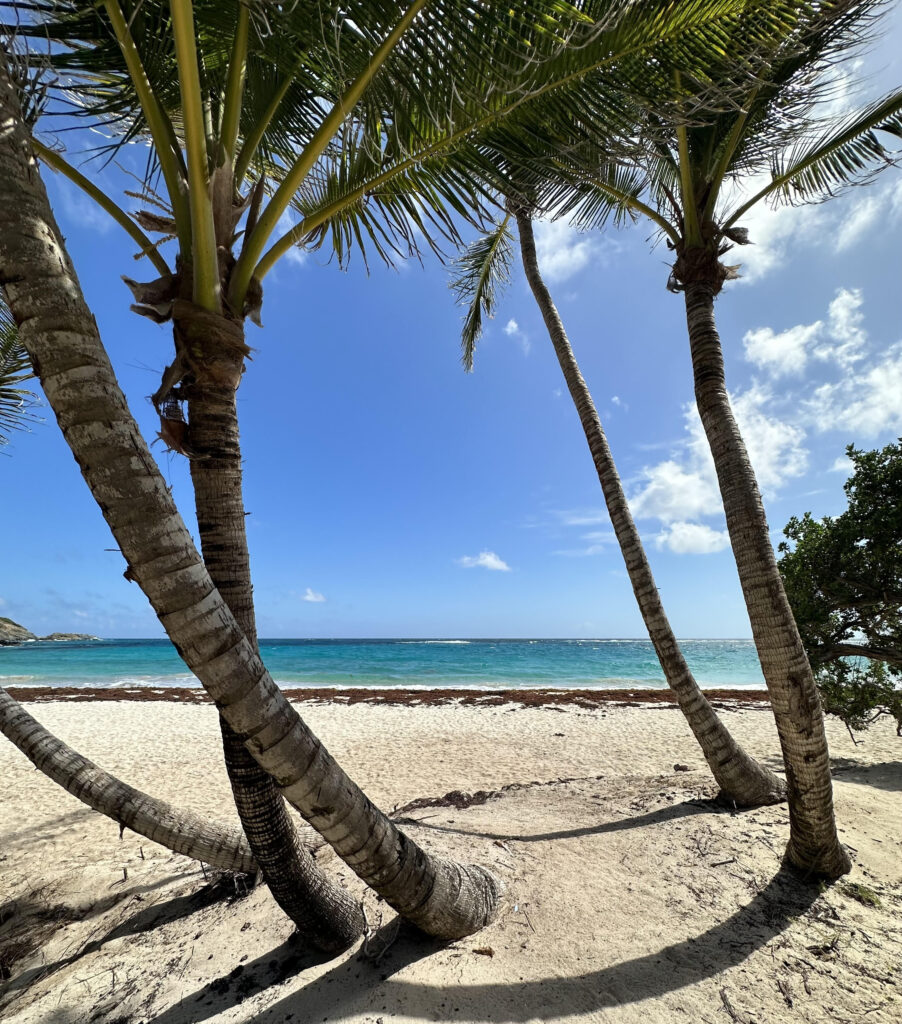
There are places in the Caribbean that exist on everyone’s radar: the popular anchorages, the well-known beach bars, the islands that show up on every sailing itinerary. And then there are the places that only come up when the right person suggests them at the right moment.
Mustique was that kind of place.
Our captain mentioned Mustique casually, the way experienced sailors do when they know something you don’t. We were two weeks into a bareboat sailing trip through St. Vincent and the Grenadines aboard a power sail catamaran, and he suggested we drop anchor for the afternoon. We had no idea what we were walking into.
Mustique is a 1,400-acre private island, one of 32 that make up St. Vincent and the Grenadines, and it has a reputation that precedes it. Mick Jagger owns two homes here. Tommy Hilfiger has one. Princess Margaret had a beach named after her. Prince William and Kate have been coming for years. And yet, stepping ashore, the first thing that struck us was how surprisingly relaxed and unpretentious it all felt.
No one was performing. No one was trying to impress. Four of us spent an afternoon here with a local our captain knew, and it turned into one of the most memorable stops of the entire trip.
What Mustique Actually Is
Mustique is privately owned and operated by the Mustique Company, a group of shareholders and villa owners from 26 countries dedicated to protecting the island’s natural beauty and keeping it exactly as it is. There are no direct flights from the U.S. or Europe, no large hotels, and no general tourism. If you’re here, someone knows you’re coming.
The island is three miles long, home to a permanent population of around 500, and operates with a quiet but very real security presence. You can leave your keys in your mule, the open-air electric vehicles everyone drives here, and nothing will happen to them. That kind of safety, combined with near-total privacy, is exactly why people keep coming back. The island’s 77% guest return rate says everything.
How to Get There
The most common route is to fly into St. Lucia or Barbados, where a Mustique representative will meet you and fast-track you to the island’s private lounge. From there, an 18-seater Twin Otter aircraft makes the approximately one-hour transfer to the island. Alternatively, you can travel directly from St. Vincent by catamaran or a seven-minute private flight.
One important note — no planes land on Mustique after dark. Plan to arrive at your first destination no later than 3:30 PM to make your transfer in time. All arrangements can be made through the island’s travel concierge at travel@mustique.vc.
We arrived the way most sailors do — by sea. Our captain anchored in Britannia Bay and we went ashore by dinghy. It is, without question, the best way to arrive.
Good to Know
A few practical details before you visit:
You must have confirmed accommodations to land on Mustique: a villa booking, a room at the Cotton House, or an invitation from a villa owner. The island keeps a record of who is coming and where they are staying.
No planes land after dark. If you are flying in, plan to arrive at your connection point no later than 3:30 PM to make your transfer in time.
Cash is useful for smaller purchases, Sweetie Pie Bakery and some shops prefer it. Most larger establishments accept cards.
The Local Vibe
Mustique is not where people come to be seen. It is where they come to disappear.
Guests drive mules with their hair down and their phones put away. The dress code across the island runs toward sun-faded linen and bare feet. Nobody asks what you do for a living — that question comes, if at all, after several days of seeing the same faces at the beach bar. The understanding is simple: if you’re here, you can afford to be here.
And yet it never feels exclusionary. Within a few hours of arriving we felt like we belonged, partly because of our local guide, and partly because that is simply what Mustique does to people.
Our Afternoon with a Local
Our captain introduced us to someone who knew the island the way only locals do, and what followed was one of those afternoons that doesn’t feel real until you’re back on the boat trying to describe it.
Macaroni Beach
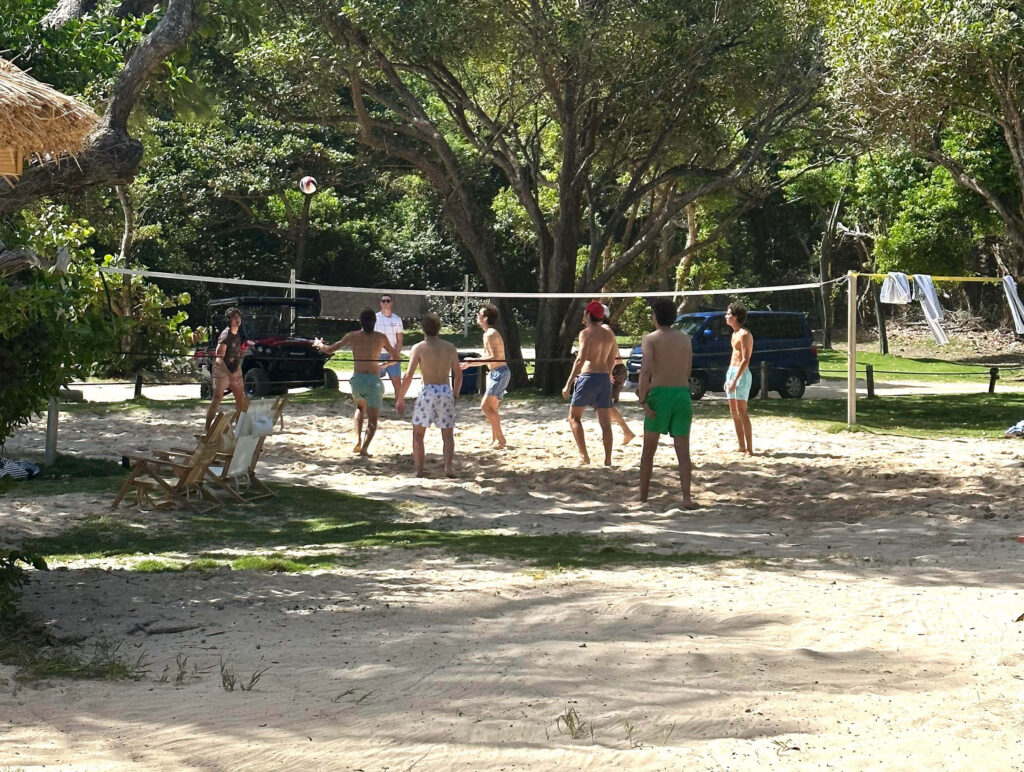
We made our way to Macaroni Beach, on the Atlantic side of the island, known for its powdery white sand and dramatic waves. A volleyball net stands on the beach where, on the right day, a game is already in progress. It felt nothing like what you’d expect from one of the most exclusive destinations in the world. Just people, a beach, and a game of volleyball.
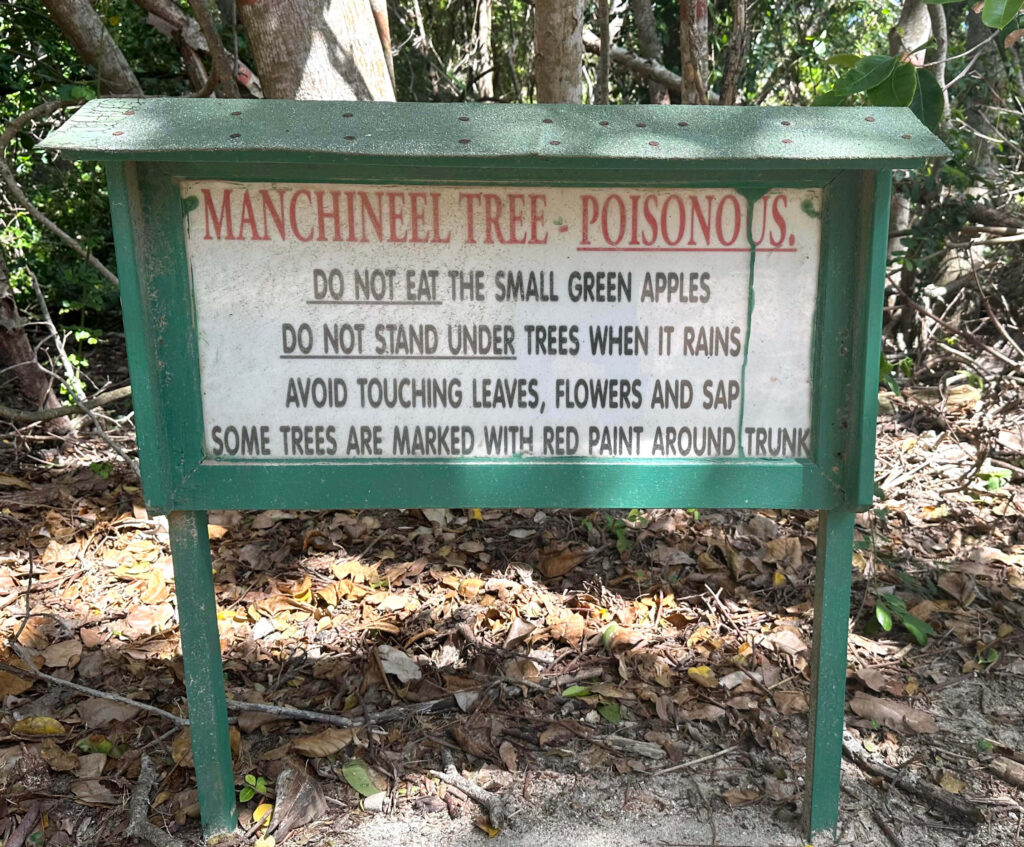
Macaroni Beach delivered one more surprise, a green apple poison sign posted matter-of-factly in the sand. Manchineel trees, some of the most toxic trees in the world, grow along parts of the beach, and the warnings are clear. Don’t touch. Don’t eat. Don’t stand under them in the rain. Only on Mustique would you find a danger sign this specific next to one of the most beautiful beaches in the Caribbean.
The Statues
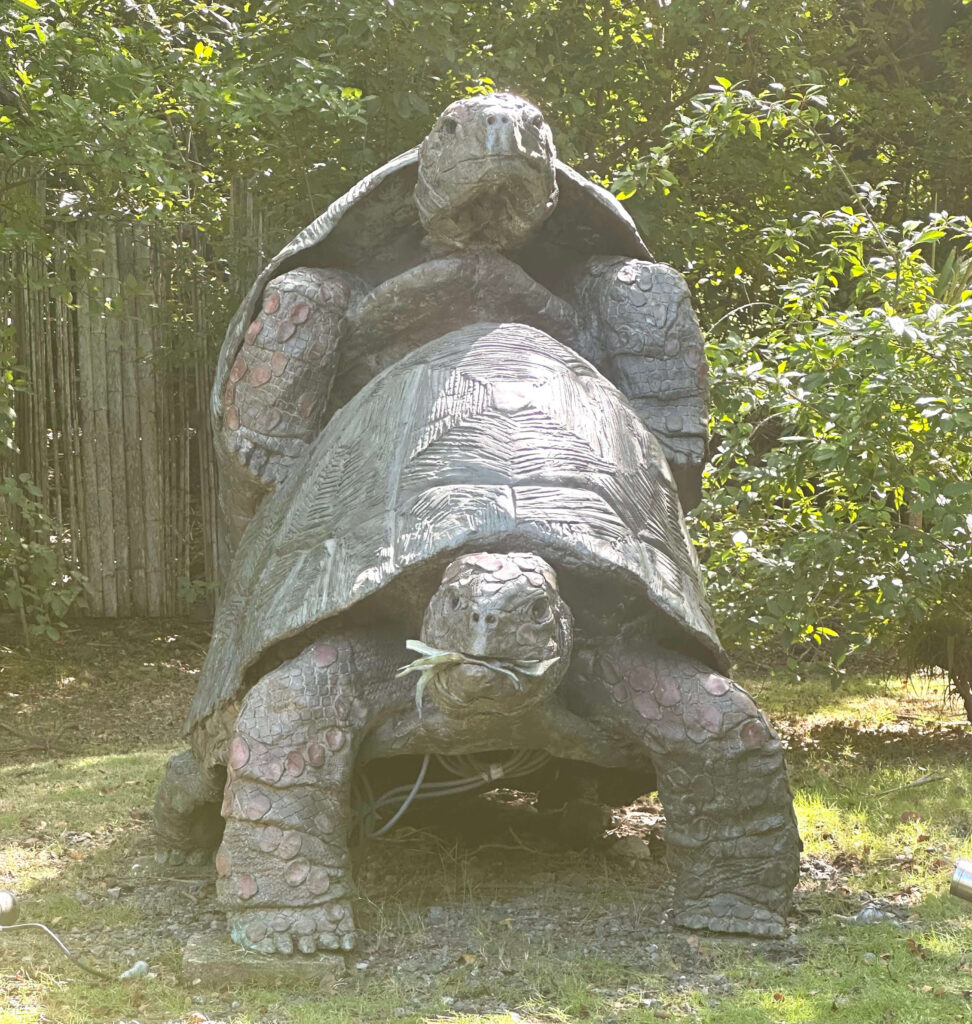
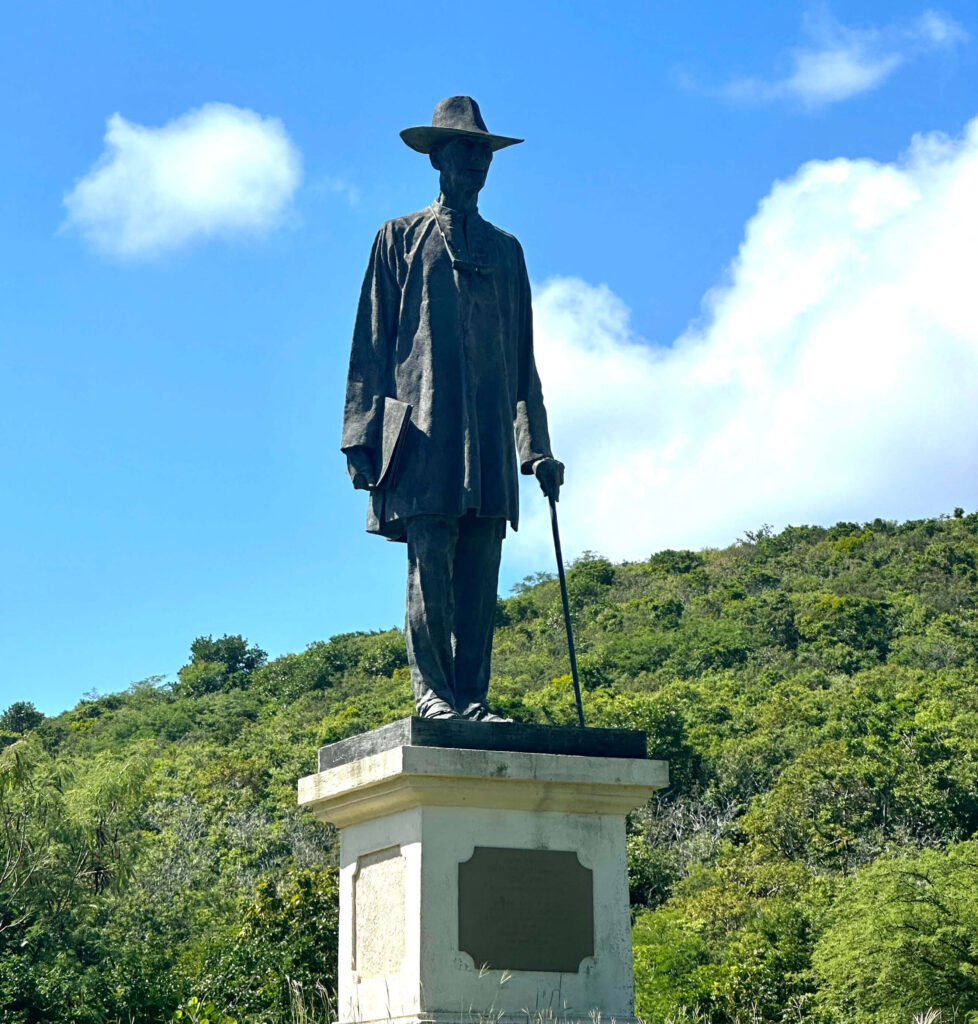
The statues scattered around the island are a good example of Mustique’s character: whimsical, unhurried, and quietly significant. The figure of a man with a hat and cane is Colin Tennant, the 3rd Baron Glenconner, who purchased Mustique in 1958 and transformed it into the private sanctuary it is today. Without him, none of this exists. Nearby, the Tortoise Corner sculpture, two tortoises stacked one on top of the other, sits roadside as if it has always been there. Nobody explains them. They’re just there.
The Garden of Remembrance
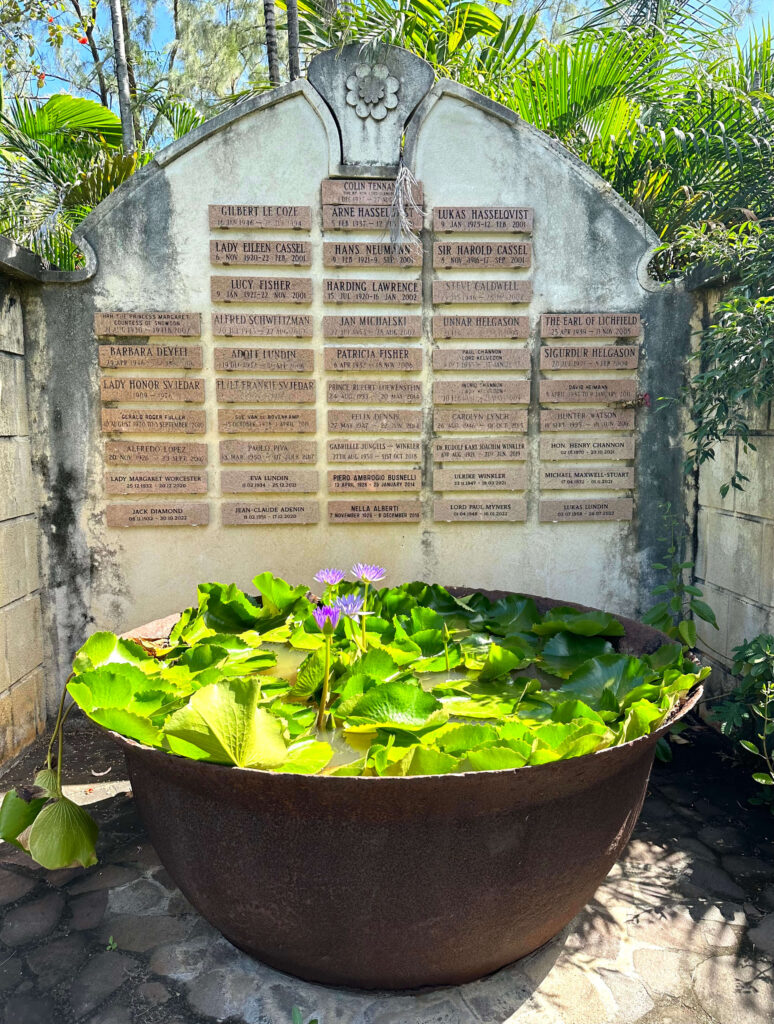
Tucked quietly on the island, the Garden of Remembrance is the kind of place most visitors never find. A memorial wall holds plaques honoring notable residents, a permanent, unhurried tribute to the people who shaped this place.
Basil’s Bar
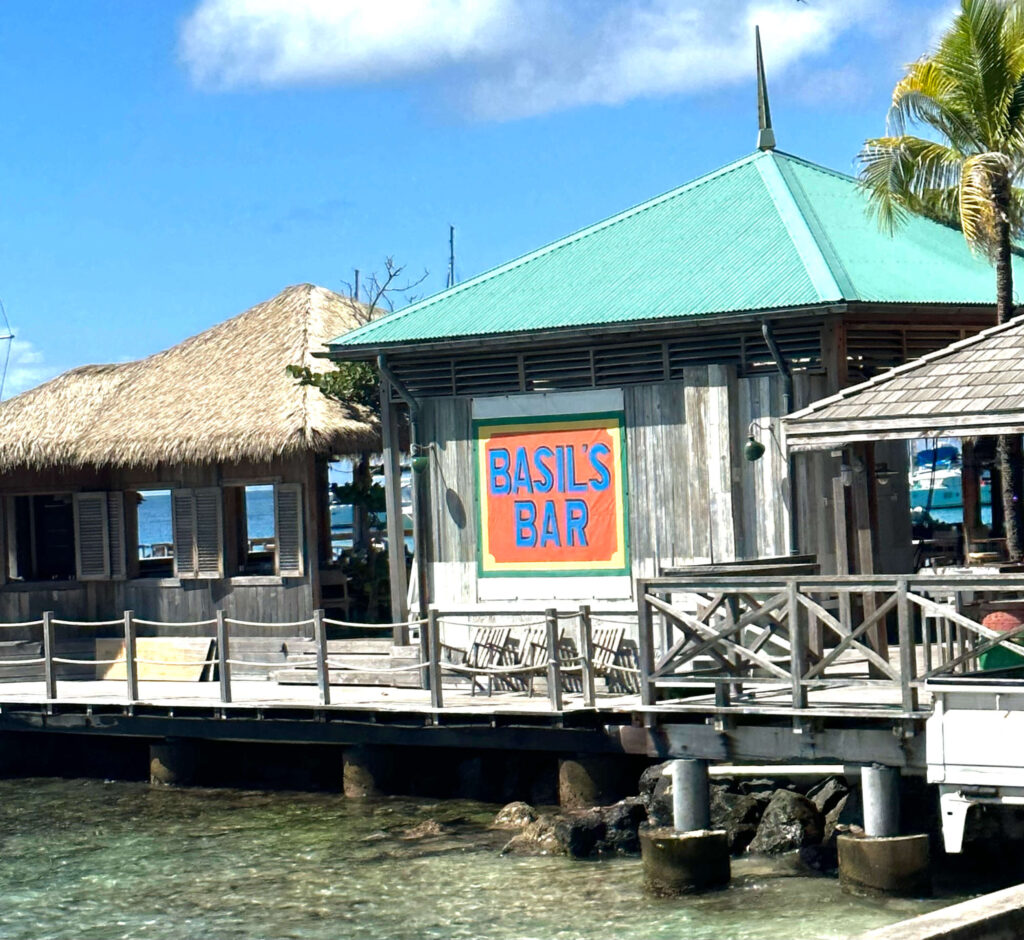
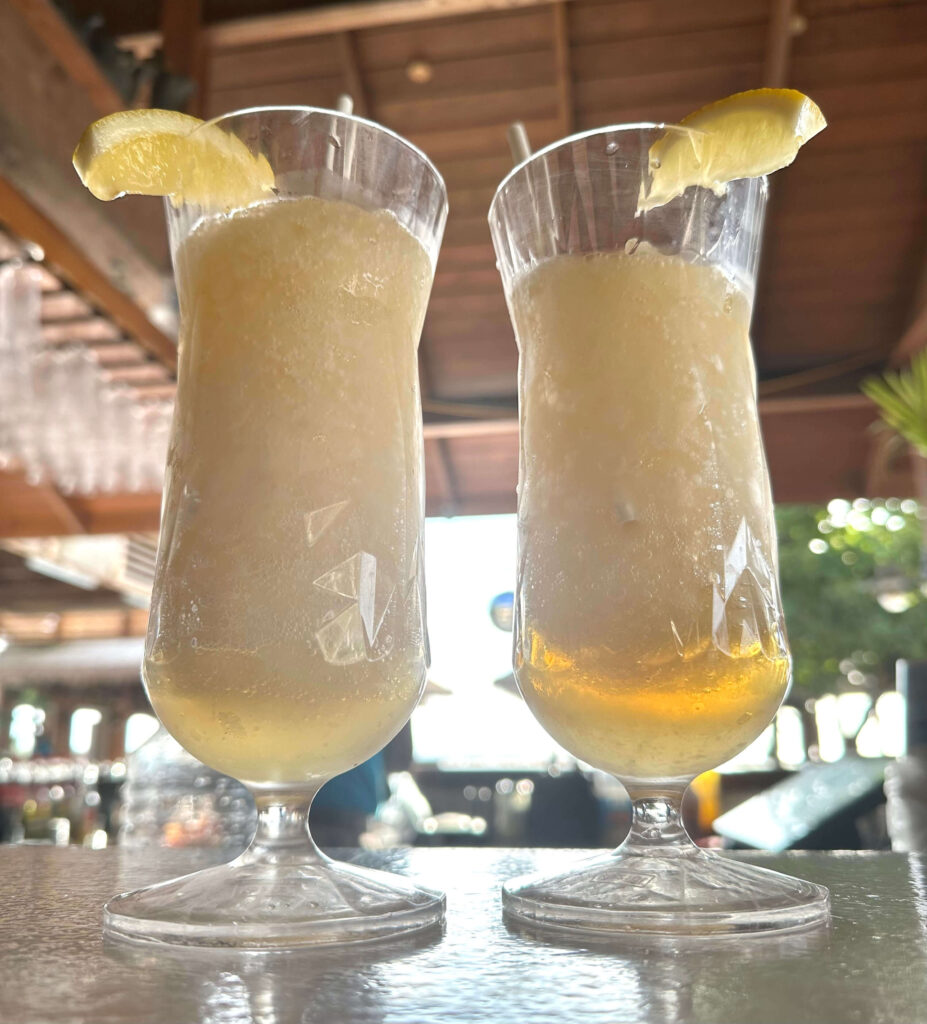
Basil’s Bar has been the heartbeat of Mustique since 1976. Open-air, Balinese-inspired, and sitting right on Britannia Bay, it’s where locals, guests, villa owners, and sailors converge. Boats anchor at its pier for lunch and dinner. The pina coladas are exactly what they should be.
Wednesday nights bring live music at Jump Up. Thursdays are Taco and Tequila. The annual Blues Festival, typically late January through February, draws crowds from around the world to this otherwise deliberately quiet island.
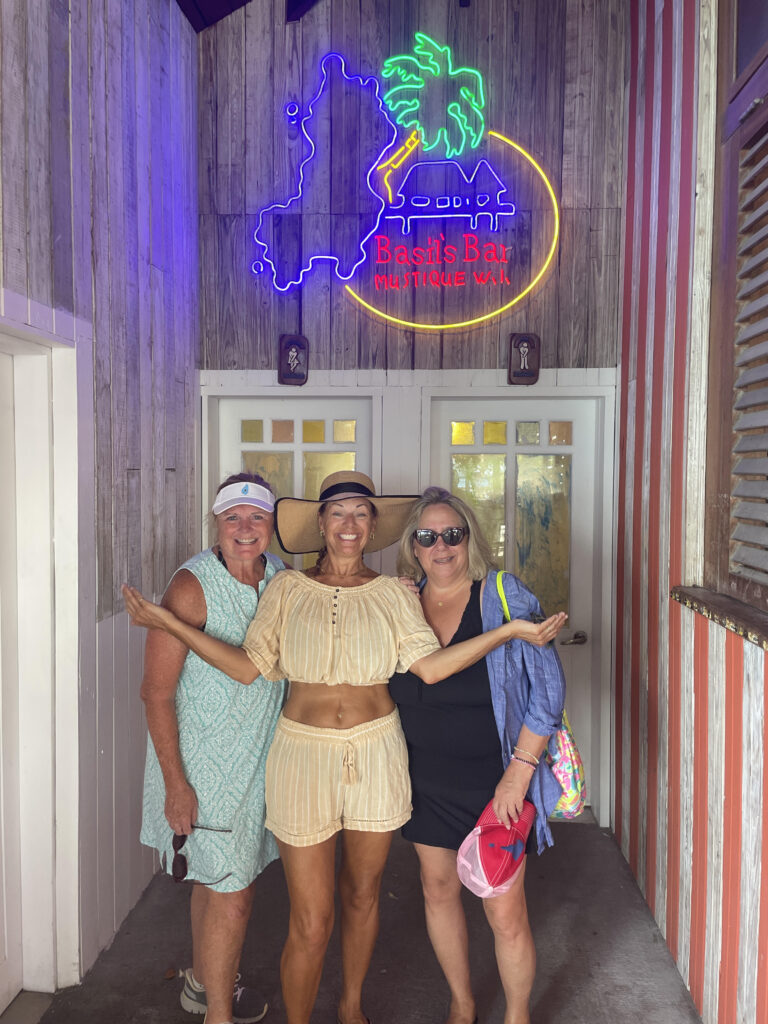
We sat at the bar long enough to understand why people keep coming back. It has nothing to do with who else is there and everything to do with how it feels to be there.
The View Restaurant and Bar
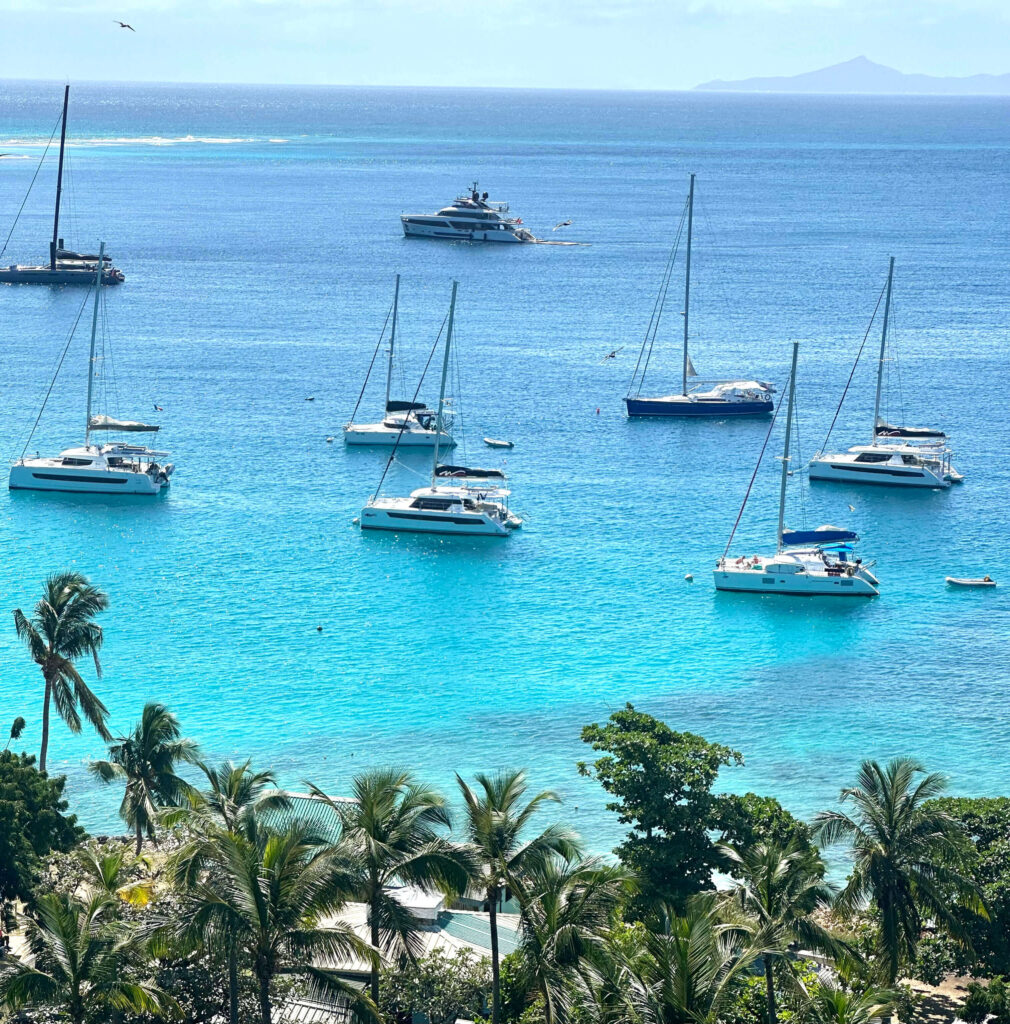
After Basil’s we made our way to The View Restaurant and Bar and the name says it all. Perched above the island with an open-air setting and panoramic views, it’s the kind of place that makes the afternoon feel even less real. The setting alone is worth the stop.
Shopping & Provisions
For an island this size, Mustique punches well above its weight when it comes to shopping and it all fits the island’s character perfectly. Nothing feels like a tourist trap. Everything feels curated.
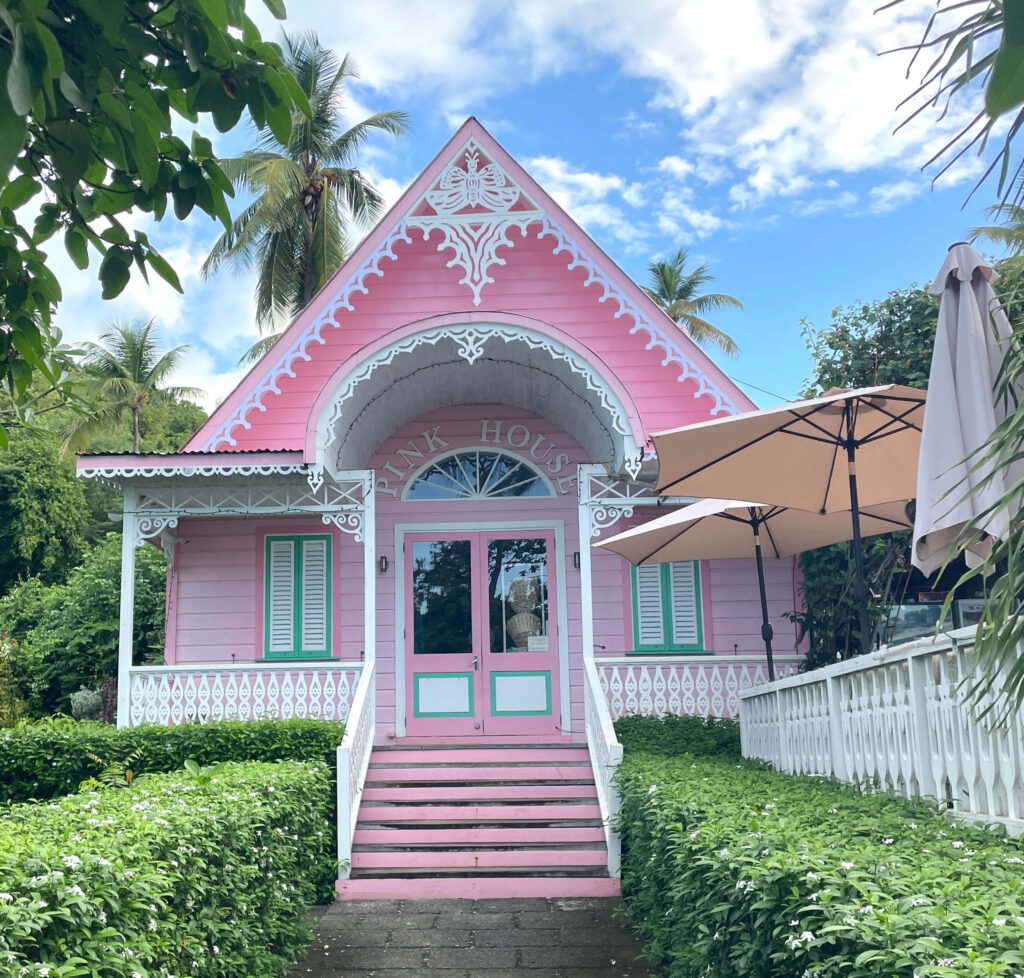
The Pink House is the place to start, a picturesque boutique stocked with exclusive tropical apparel, accessories, and home goods that you won’t find anywhere else. Next door, The Purple House offers high-end island treasures, beach clothes, and accessories in the same relaxed, unhurried spirit.
At Basil’s Bar on the waterfront, Basil’s Bazaar carries jewelry, beach wraps, and souvenirs that make for far better keepsakes than anything you’d find at a typical Caribbean port.
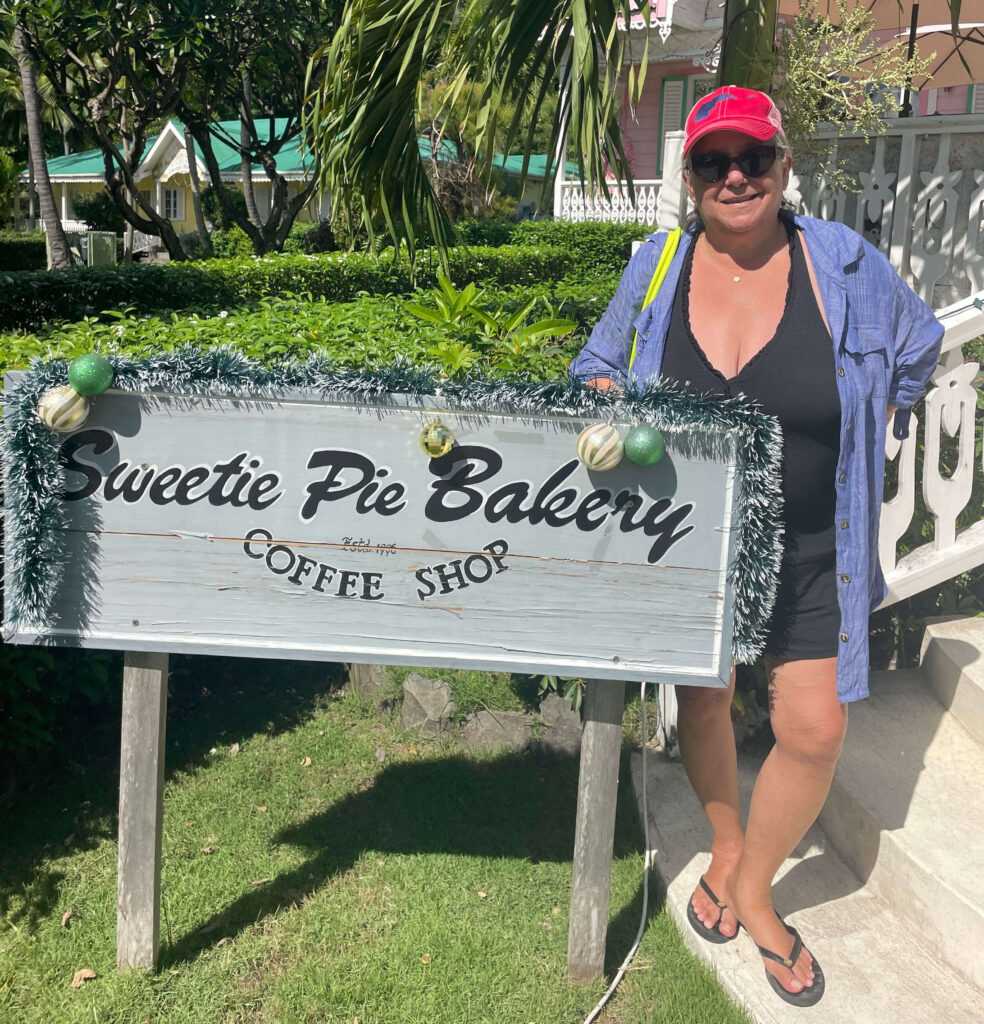
Sweetie Pie Bakery & Shop is the unexpected gem. They offer coffee, fresh pastries, linen clothing, and locally designed items all under one roof. We stopped in for donuts and left with more than we planned. Very Mustique.
For provisions, The Food Store Coreas is where sailors and villa guests alike stock up. We loaded the boat before heading back out, a reminder that even on the most exclusive island in the Caribbean, practical life still happens. For a deeper look at provisioning a charter boat, see The Art of Provisioning for a BVI Boat Charter Adventure.
Where to Stay
If you’re not arriving by sailboat, your two options are the Cotton House or a private villa.
The Cotton House is the island’s only hotel. They offer 17 suites and cottages with private verandas and plunge pools, a spa, gym, and three restaurants, starting around $730 per night. It’s the social center of the island, hosting weekly events like Friday happy hour and the beach bonfire barbecue. For first-time visitors or solo travelers, it’s the easiest way to settle into the rhythm of the island.
Private villas are the other option, more than 80 properties ranging from two to nine bedrooms, all staffed with housekeepers, chefs, and butlers. Some belong to notable names. Some were designed by world-renowned architects. Some offer views of both the Atlantic Ocean and the Caribbean Sea simultaneously. Nightly rates range from around $600 to over $1,000, with some villa rentals reaching upward of $60,000 per week during peak season.
When to Go
Peak season runs December through April, when the weather is reliably beautiful and the island is at its most social. The Blues Festival in late January and February is the one event that draws the biggest crowds.
June through November is quieter and hurricane season can bring rain, though it tends to be brief. If privacy is the priority, the off-season has a lot to offer.
Getting Around
Everyone drives a mule, the open-air electric Kawasaki vehicles that are usually complimentary with your accommodations. The island is small enough to cover entirely on your own, and getting a little lost is encouraged. Some of the best discoveries happen when you stop following a plan.
For Sailors
Britannia Bay is where you anchor. It is well protected, easy to navigate, and puts you steps from Basil’s Bar by dinghy. Tie up at the dock, go ashore, and the island opens up from there. The anchorage can get busy during peak season so arriving early in the day gives you the best pick of spots.
Our Charter
We sailed with The Moorings — one of the most established bareboat charter companies in the Caribbean. If you are planning a sailing trip through St. Vincent and the Grenadines, they are worth starting with.
Caribbean Close
Mustique doesn’t try to be anything other than what it is, a small, beautiful, quietly extraordinary island that rewards the people who find their way there. Whether you arrive by private plane, charter a villa, or dinghy off a sailboat, the island has a way of making you feel like you belong.
— izzy