
Updated: October 2026
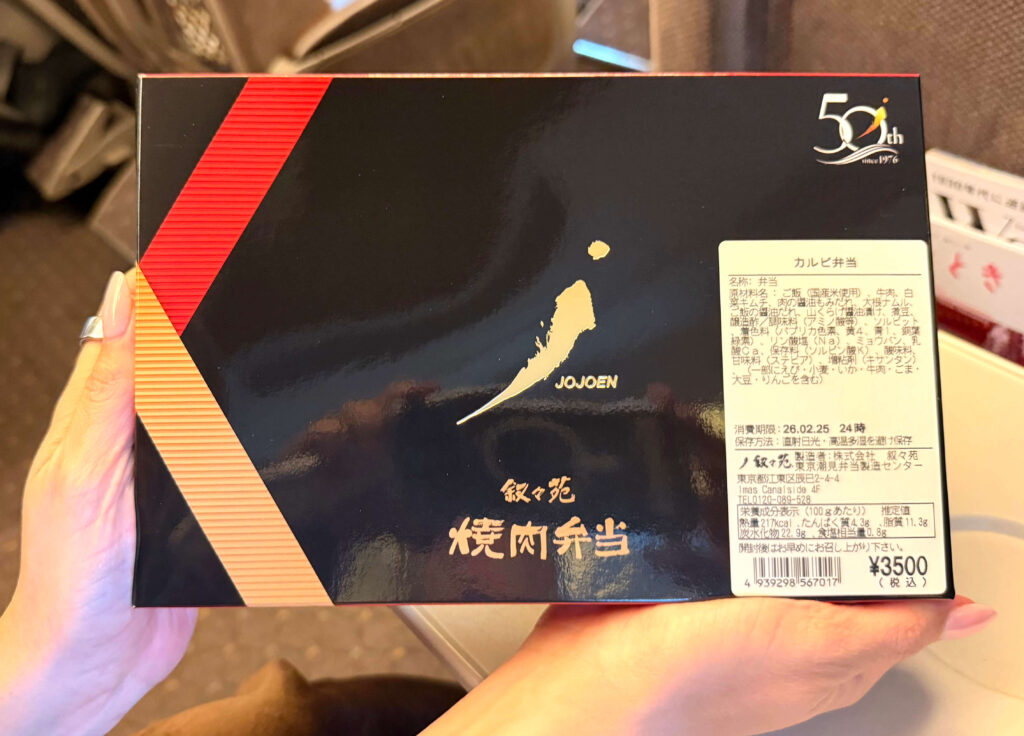
Opening an ekiben on a Shinkansen is one of my favorite small moments in Japan and Tokyo Station is the easiest place to buy one.
If you are still in the planning phase, Japlanning 101: Your Crash Course to an Epic Trip is the place to start.
What Is an Ekiben
Ekiben combines eki (train station) and bento (lunch box). Vendors started selling boxed meals to hungry travelers not long after Japan’s railways opened, and many regions now have a signature box. That makes an ekiben a good way to taste a place you are leaving or one you are about to reach.
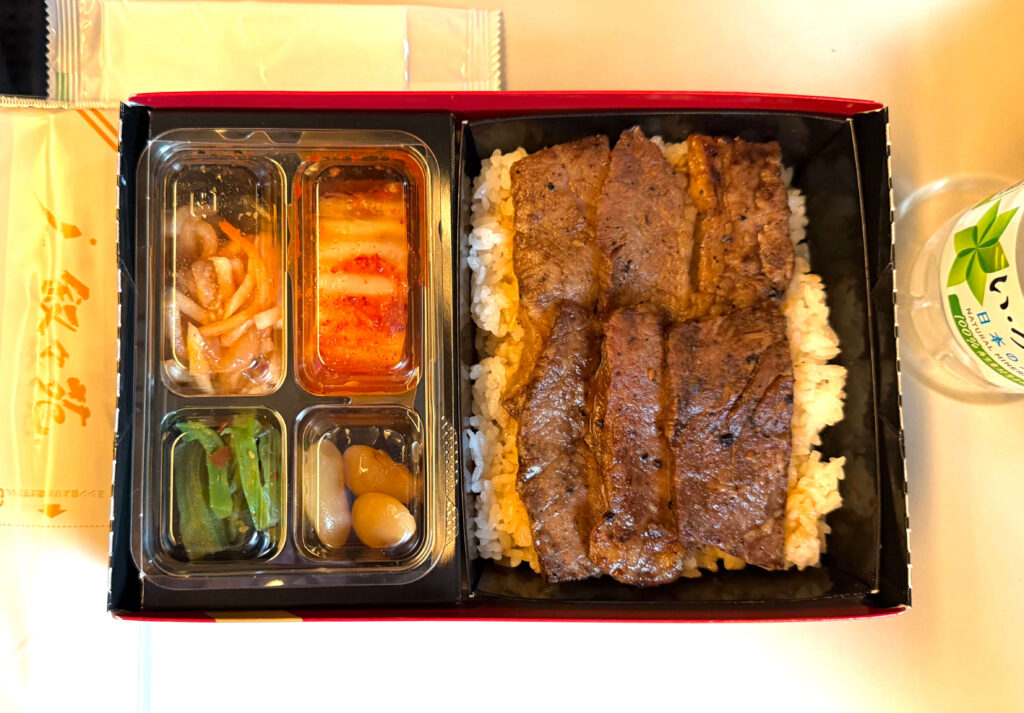
Most boxes include rice, a protein such as meat or seafood, vegetables and pickles, and sometimes a small dessert or fruit. Everything sits in its own compartment.
Eating on the Shinkansen is normal, but keep the smell and the mess to a minimum. My Train Etiquette in Japan: Everything You Need to Know Before You Ride covers the rest.
Where to Buy Ekiben at Tokyo Station
Dozens of shops sell ekiben here. Most sit inside the ticket gates, so you may need a ticket or IC card to reach them. Ask station staff about the current entry rules before you go.
Ekibenya Matsuri is on the first floor inside the gates and carries about 200 varieties from all over Japan. It is busy and loud, but it is the easiest one-stop shop. Nearby, Ekibenya Odori sells character boxes, novelty designs, and seasonal regional specialties.
Other options inside the station:
- Hanagataya: classics, seasonal boxes, and self-heating bento
- Nippon Shokusai: premium regional boxes with polished presentation
- Gransta Tokyo: several ekiben counters and higher-end non-ekiben bento
- Ecute Tokyo: wagyu, seafood, and lighter choices
What to Order
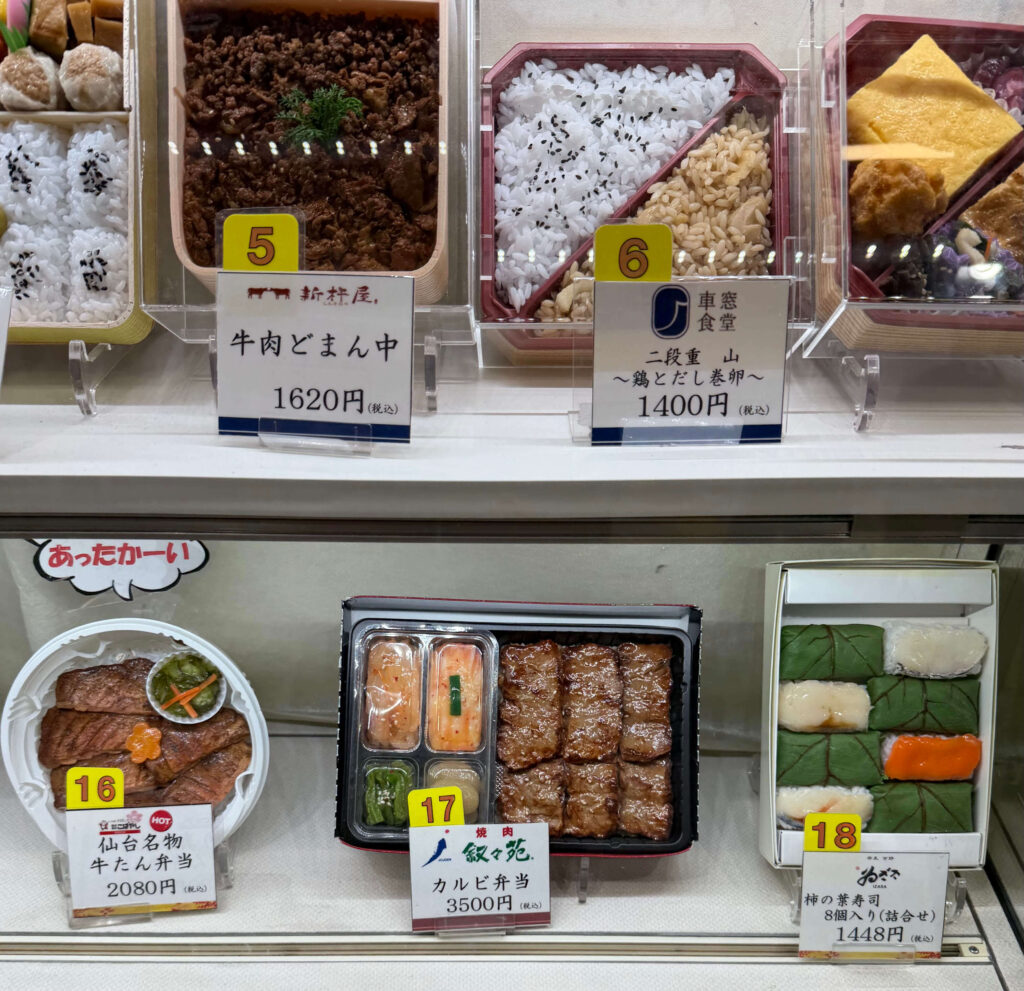
The shops use numbered display cases, so you can order by pointing at a number even if you cannot read the labels. In my photo, #5 is Gyuniku Domannaka, #16 is Sendai gyutan, and #18 is kaki no ha sushi.
Regional Favorites
- Gyuniku Domannaka (Yamagata): Sauce-marinated Yonezawa beef that stays tender even when cold.
- Gyutan Bento (Sendai): Charcoal-grilled beef tongue over barley rice, smoky and savory.
- Anago Meshi (Hiroshima): Sweet and savory conger eel over rice.
- Hipparidako Meshi (Hyogo): Braised octopus, conger eel, vegetables, and shredded egg over vinegared rice, served in a small clay pot.
- Toge no Kamameshi (Gunma): Chicken, mushrooms, chestnuts, and vegetables over seasoned rice, packed in a reusable ceramic pot.
- Masu no Sushi (Toyama): Pressed trout sushi wrapped in bamboo leaves, light and fresh.
- Oshizushi (Ofuna, Kanagawa): Pressed horse mackerel sushi, sold since 1913.
- Ikameshi (Hokkaido): Whole squid stuffed with seasoned rice and simmered until tender.
- Daruma Bento (Gunma): Simmered burdock root, bamboo shoots, and shiitake, packed in a red Daruma doll container you can keep.
Tokyo and Everyday Boxes
- Tokyo Bento: Tamagoyaki, salmon, seasonal vegetables, rice with pickled plum, and a matcha mochi dessert.
- Three-Flavor Beef Bento: Sansho pepper beef soboro, spicy beef, and miso-grilled beef with rice and a soft-boiled egg.
- Tuna and Salmon Roe Bento: Tuna and salmon roe over vinegared rice with shredded omelet.
- Pork Cutlet Bento: Crispy tonkatsu with rice, potato salad, and pickled radish.
- Seasonal Bento: Limited editions built around chestnuts, sweet potato, smoked duck, trout, or mackerel, depending on the month.
- Shinkansen Bento: A bullet-train-shaped box packed with fried chicken, shrimp, sausages, dumplings, and rice. Kids love it, and the box makes a fun souvenir. [PHOTO: Shinkansen bento]
- Self-Heating Bento: Pull the string, wait a few minutes, and eat hot rice and meat. These cost more, but they are worth it on a long ride.
Vegetarian options are limited. Look for a vegetable bento, inari sushi, salads, or sandwiches, and check every label. Availability changes with the season.
The Convenience Store Backup
If the crowds feel like too much, a convenience store is the easiest and most budget-friendly alternative. 7-Eleven, Lawson, and FamilyMart all sell bento, rice balls, and sandwiches. Mornings lean light, and heartier meals appear closer to lunch. Large supermarkets often have a bento aisle too.
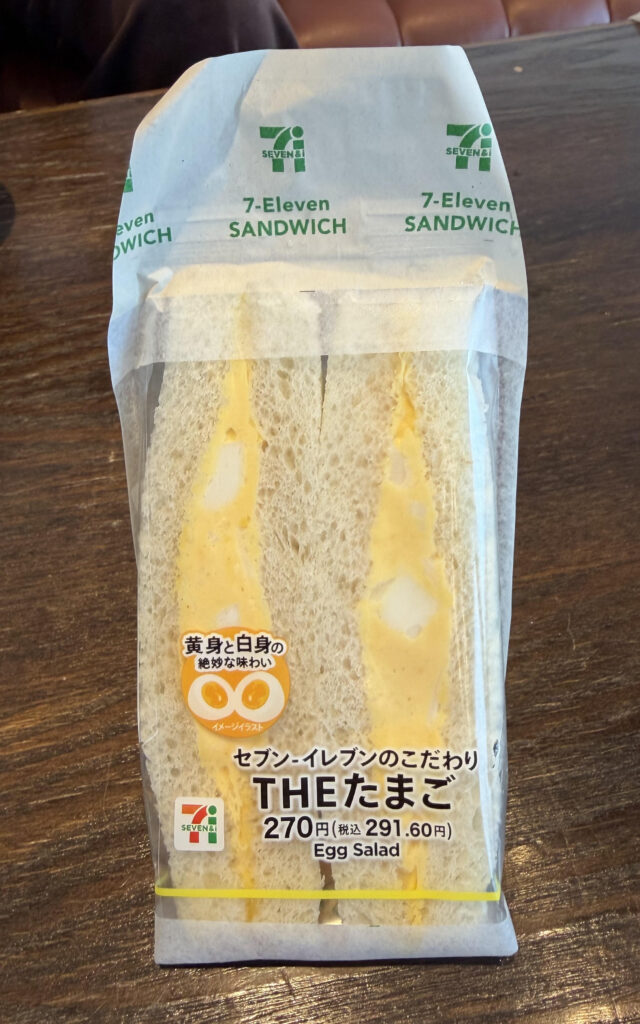
I had read about the 7-Eleven egg salad sandwich before my travels and was so excited to try one. It did not disappoint. It was so creamy and the milk bread is out of this world. I actually came back to the United States and found a recipe for it, and now I will never make egg salad any other way.
Convenience stores are also a good place to pick up snacks and drinks for the ride. Eat at your seat or on the platform rather than while walking, which I explain in [Everyday Japanese Customs That Foreigners Find Astonishing].
Allergies and Dietary Notes
Many ekiben shops list allergens in Japanese and English, and some use QR codes. If you have an allergy, a few Japanese phrases go a long way, and my Guide to Useful Japanese Words and Phrases guide has them. Most ekiben are built around rice, so low-carb options are very hard to find.
Ekiben, Soraben, and Bento
- Ekiben: eaten on trains
- Soraben: airline lunch boxes
- Bento: eaten anywhere
The differences are mostly cultural. Ekiben and soraben tend to be fancier and more tied to a region.
Japan Close
Ekiben are part of the journey, not just a meal. Whether you pick one up at Tokyo Station or at a tiny rural platform, opening the lid as the train pulls away is one of my favorite small moments in Japan. Buy one before you board.
— izzy