
Updated: September 2026
Kyoto was the imperial capital of Japan for over a thousand years, so it is fitting that one of the most engaging samurai experiences in the country sits right in the middle of it. The Samurai Ninja Museum Kyoto With Experience is not a quiet room of glass cases. It is a hands-on museum where guests try on real armor, hold a katana, and learn a bit of ninja skill from staff who clearly enjoy their jobs. If you are still putting together the rest of your trip, my Japlanning 101: Your Crash Course to an Epic Trip covers the planning basics before you get into stops like this one.
Before I get into the visit itself, it is worth understanding who the samurai actually were, because the museum leans heavily on that history to shape the experience.
A Short History of the Samurai
Japan’s warrior class traces back to the Heian period, roughly the 8th through 12th centuries, when regional landowners needed armed retainers to protect their estates. That role grew into real political power. By the late 12th century, samurai had effectively taken control of the country, and Japan entered centuries of rule by military governments known as shogunates rather than by the emperor alone.
A code of conduct later named bushido, or “the way of the warrior,” governed how a samurai was expected to live. Loyalty to one’s lord, honor, discipline, and a willingness to die rather than live with shame all fell under bushido. The katana, the curved single-edged sword carried by samurai, became such a central part of their identity that it was often described as the soul of the warrior who carried it.
Centuries of civil war, particularly during the Sengoku period in the 15th and 16th centuries, produced some of the most famous samurai and daimyo, or feudal lords, in Japanese history. That prolonged warfare shaped the elaborate armor styles still on display in museums today, including the kabuto, the ornate samurai helmet, which often carried dramatic crests meant to identify a commander in the chaos of battle.
It all ended formally in the late 19th century, during the Meiji Restoration, when Japan modernized its military and abolished the samurai class along with their legal privileges. Even so, the values and aesthetics of that era remain deeply woven into Japanese culture, which is exactly what a museum like this one is built to preserve and share.
Finding the Samurai Ninja Museum Kyoto
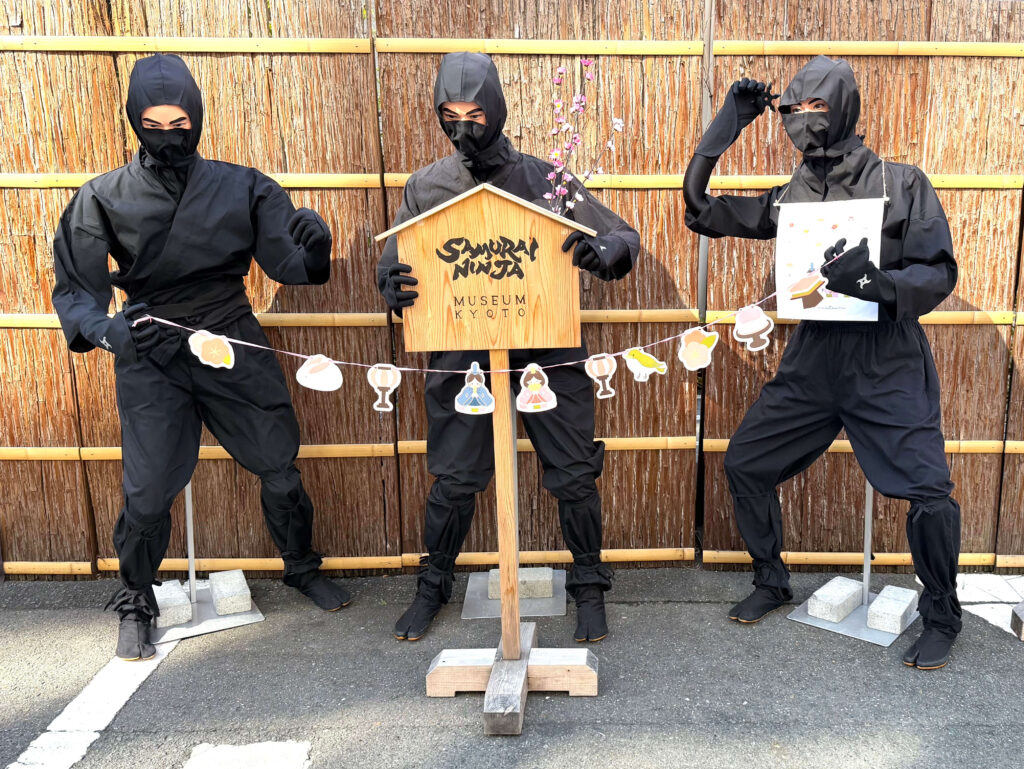
The museum sits in the Kawaramachi area of central Kyoto, an easy walk from many of the city’s main shopping streets and canals. Before you even reach the door, a trio of ninja mannequins usually greets you out front, posed near a wooden sign and a string of seasonal decorations strung up for photos.
The museum’s own banner sums up the concept well: a museum built around experience rather than passive viewing.
What Happens Inside
Guided tours are offered in English, led by staff who walk guests through displays of armor, weapons, and everyday artifacts from medieval and ancient Japan. The tour covers both samurai warriors and ninja, Japan’s famous covert operatives, and explains how each group trained, fought, and lived.
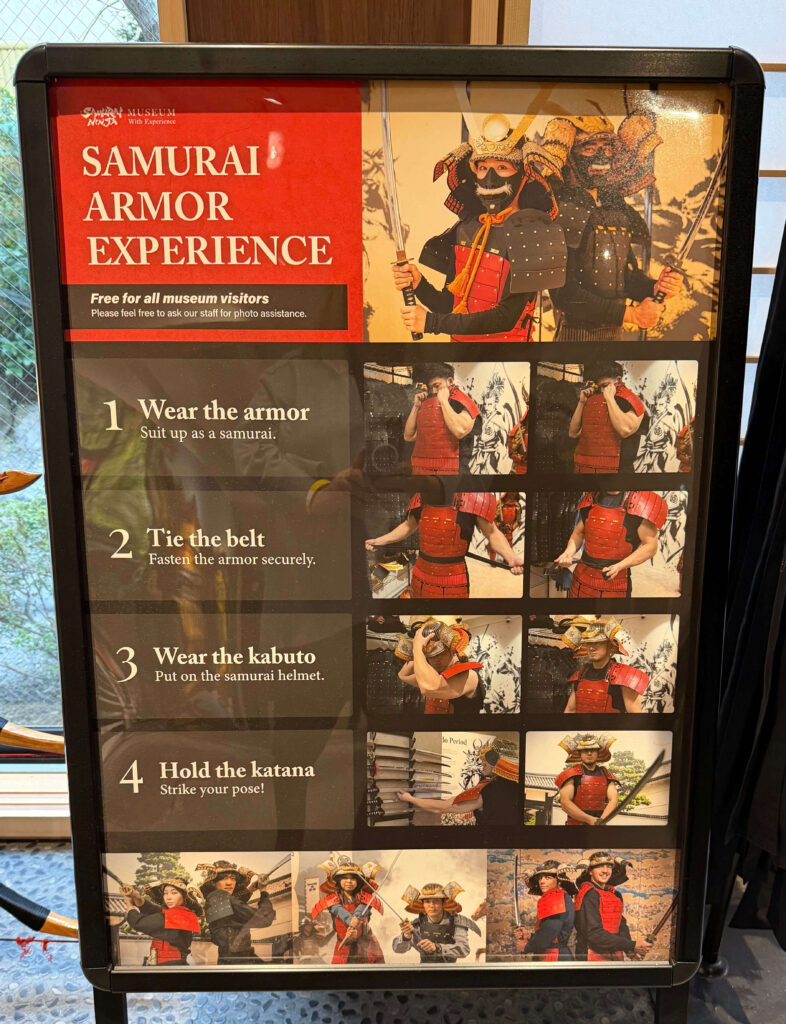
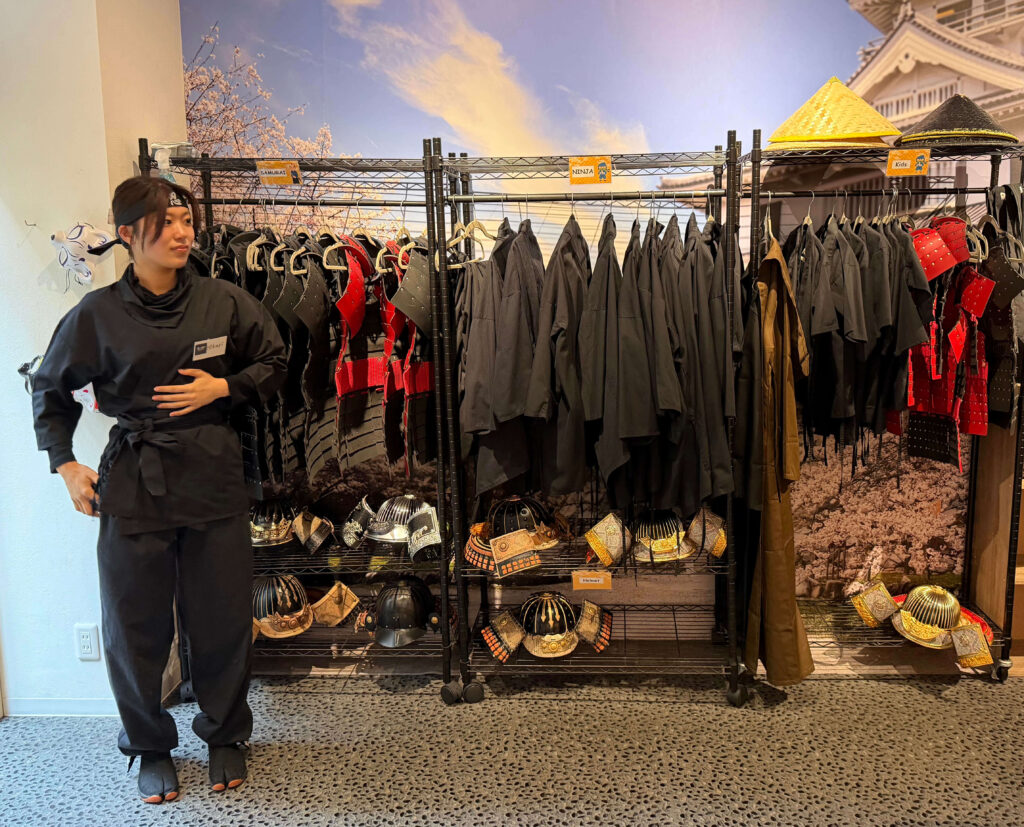
The centerpiece for most visitors is the Samurai Armor Experience. A posted guide near the fitting area breaks the process into simple steps: put on the armor, tie the belt to secure it, add the kabuto helmet, then hold the katana and strike a pose. Staff are on hand to help with buckles and offer to take photos.
Racks of costumes line one side of the fitting room, organized by category. There are full samurai sets with red-accented armor pieces, black ninja uniforms in a range of sizes, and a dedicated kids’ section so younger visitors can join in without wearing gear built for adults.
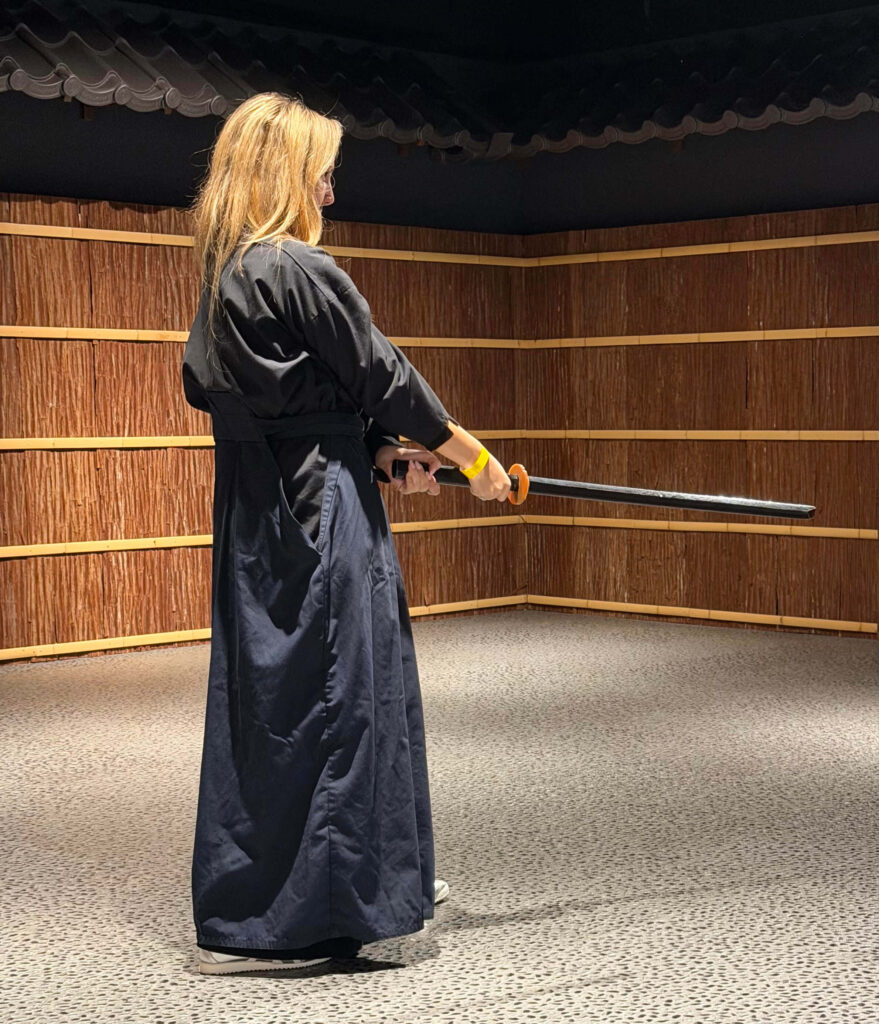
In the ninja room, my daughter put on the black robe and belt, picked up a katana, and struck a stance against the bamboo-lined wall while a staff member offered pointers on how a real ninja would hold the blade.
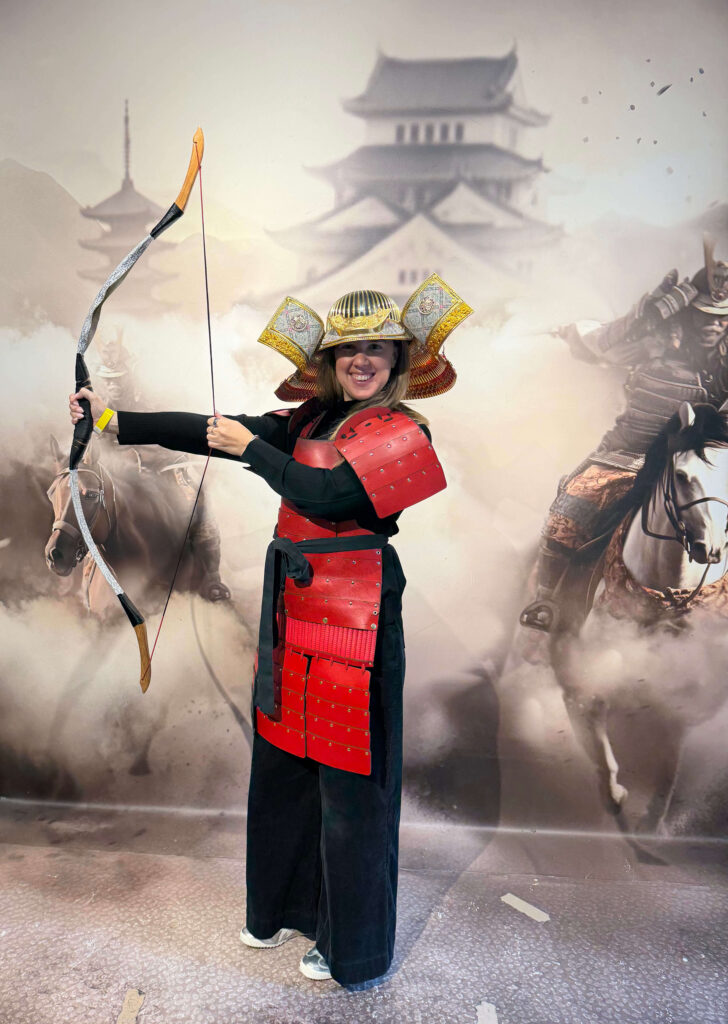
A few minutes later she traded the black robe for red lacquered samurai armor and a gilded kabuto, and picked up a bow instead of a sword for a photo against a painted battle scene backdrop. Both outfits were easy to move in, and the staff clearly do this all day, since they knew exactly how to angle a pose for the best photo.
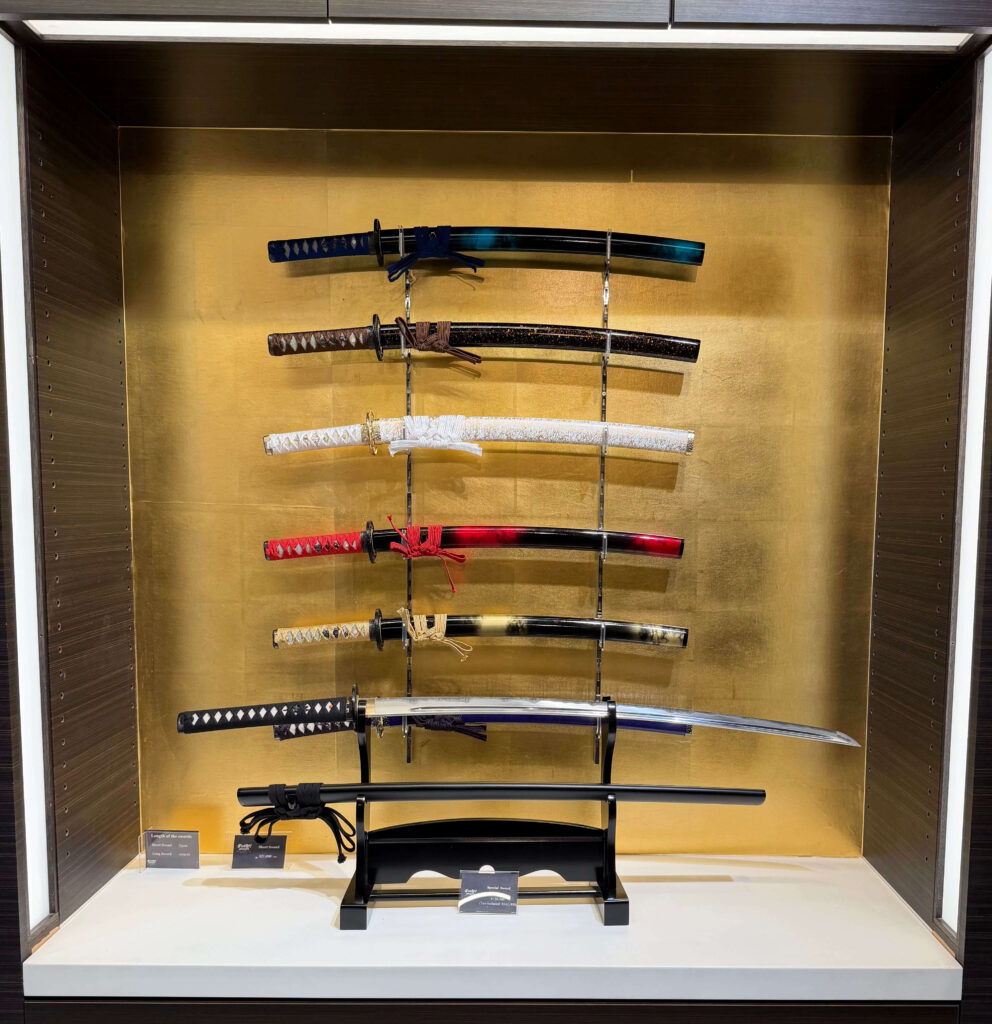
Beyond the dress-up experience, the museum also runs a ninja star throwing activity and a samurai sword demonstration, typically held in the mornings. A display case near the exhibits holds a wall of swords, blades in different colors and wrappings mounted against a gold background, worth a slow look on the way past.
A Gallery of Real Samurai Armor
Past the fitting room, the museum shifts into a more traditional gallery, and this is where the collection really shows its depth. A row of full samurai armor suits stands displayed against ukiyo-e woodblock prints, each set finished in its own color palette and each helmet topped with a different crest. One suit is trimmed in black and gold with a curved blade crest rising from the kabuto. Another is dressed in warm brown tones with tall antlers branching up from the helmet, a style meant to make a commander instantly recognizable on the battlefield.
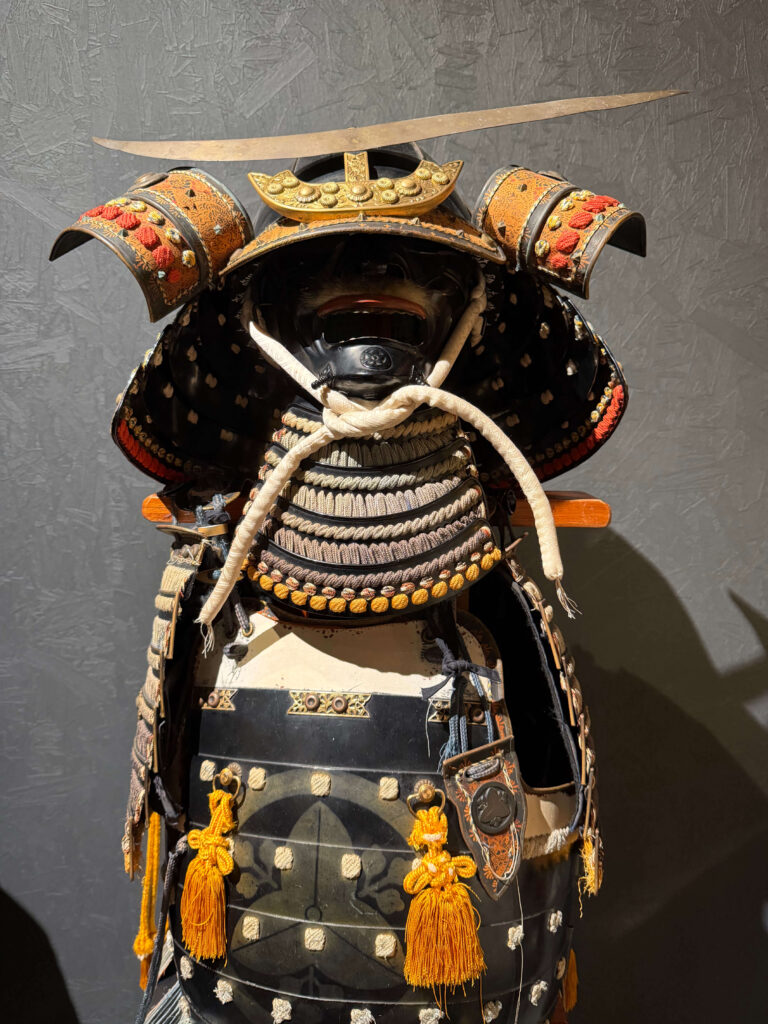
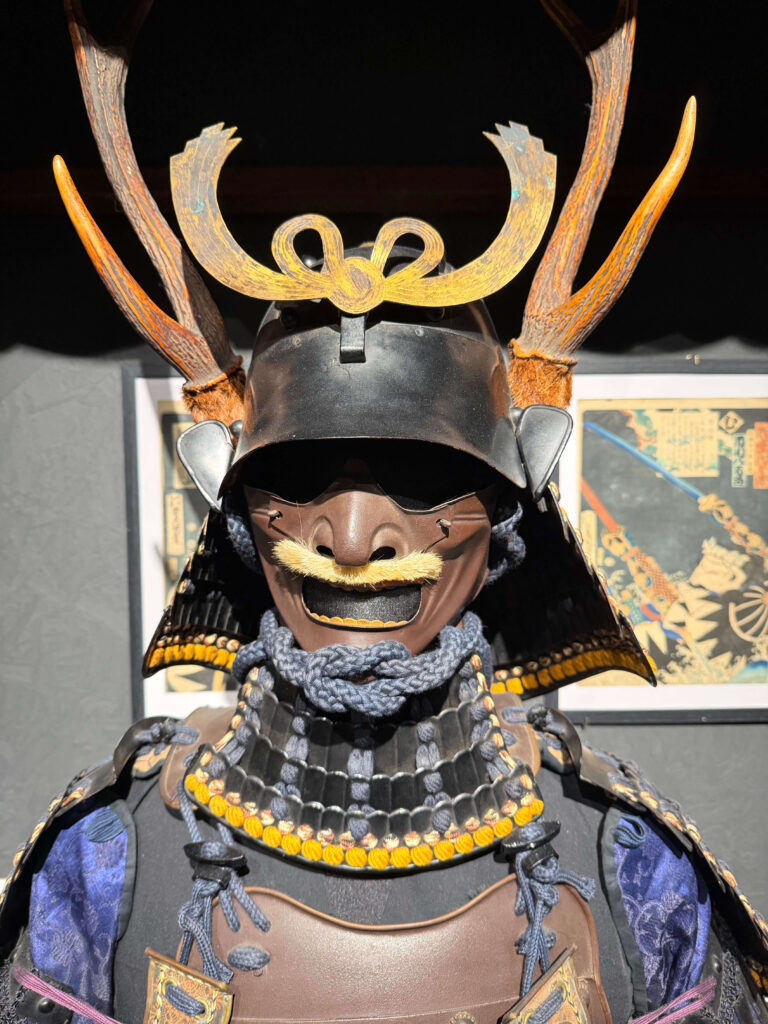
A third suit takes a striking orange and black finish, with crescent horns curving up from a gold crown plate and a menpo, the armored facial mask samurai wore both for protection and intimidation, complete with a bristled mustache. Nearby, a suit finished in white and floral patterned fabric shows a softer, more decorative side of samurai armor, still fitted with the same crescent horn design and gold crest medallion. A fifth suit pairs deep purple brocade sleeves with a black and cream cuirass and a bold gold medallion on the helmet.
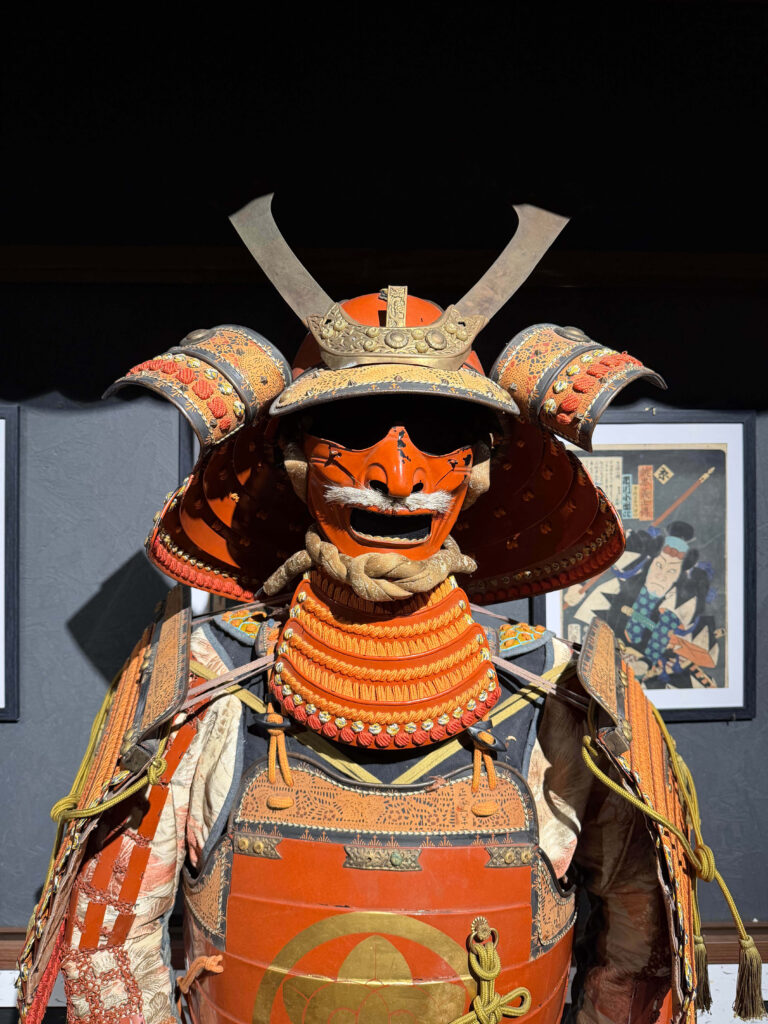
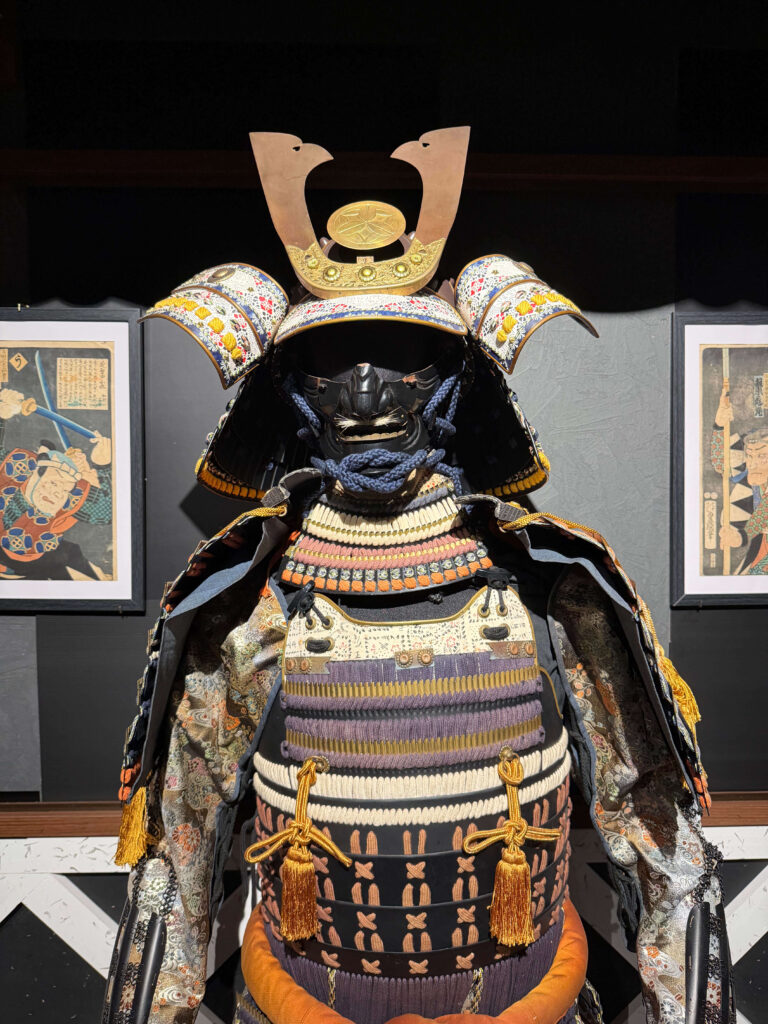
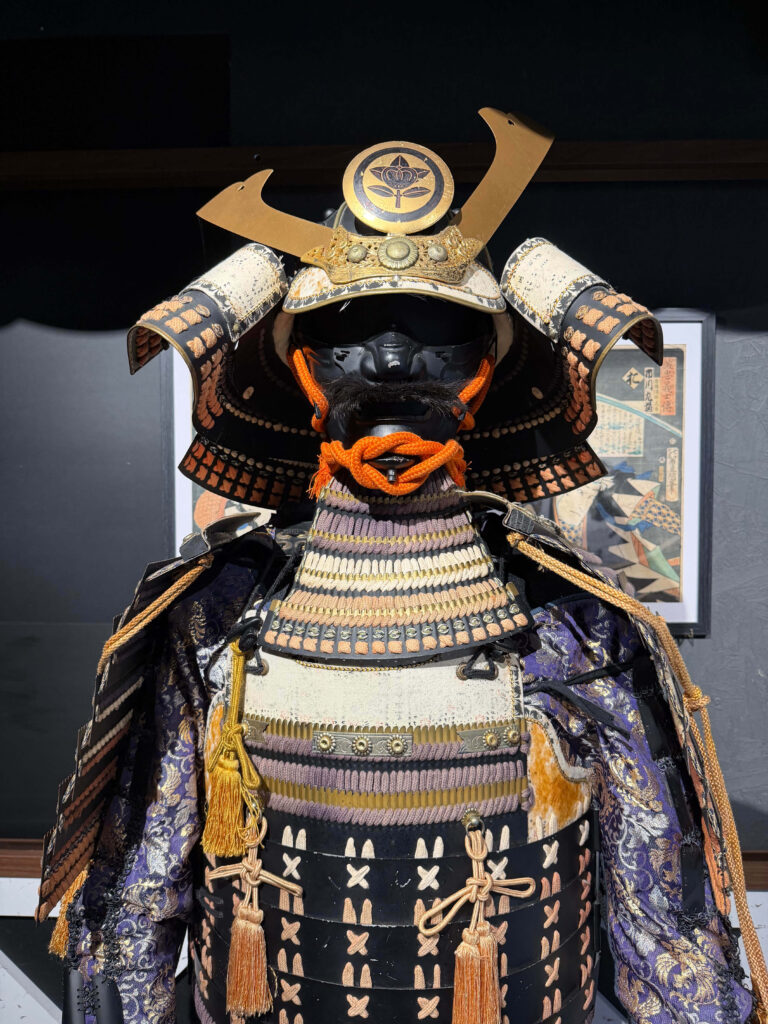
Lacing colors, crest shapes, and helmet styles were never random. They historically signaled clan allegiance and rank, and seeing several suits side by side makes that variety far easier to appreciate than reading about it in a textbook.
This post contains affiliate links. If you make a purchase through one of my links, I may earn a small commission at no additional cost to you.
Practical Notes for Visiting
The full experience, including the guided tour and both the samurai and ninja activities, runs about an hour, which makes it easy to fit into a day in Kyoto alongside a nearby temple or shopping street. Tickets can be purchased online in advance or at the door, and advance booking is worth doing during peak travel seasons since time slots fill quickly. Tickets are bookable through Klook, which is an easy way to lock in a time slot before you land in Kyoto. The museum welcomes families, and staff are used to helping children into the smaller armor and costume sets.
A gift shop near the entrance sells replica swords, tabi socks, and tabi shoes for anyone who wants to bring a piece of the experience home.
For history lovers, martial arts fans, or families looking for something more interactive than a standard museum stop, the Samurai Ninja Museum Kyoto With Experience earns its spot on a Kyoto itinerary. It manages to teach real Japanese history while letting guests feel, even briefly, like a samurai or ninja themselves.
Japan Close
Kyoto rewards travelers who slow down and look past the temples for a moment, and this museum is a good example of why. It takes centuries of Japanese history and turns it into something guests can touch, wear, and remember long after the trip ends.
— izzy