
Updated: June 2026

Welcome to Mljet National Park, where pine forests, saltwater lakes, and peaceful island vibes await.
If you’re looking for one of Croatia’s most peaceful natural escapes, Mljet National Park might be the country’s best kept secret. Located on the lush western side of Mljet Island, the park is known for its emerald forests, two saltwater lakes, and a tiny monastery island that looks like something out of a storybook.
Compared with the crowds of Dubrovnik or Split, Mljet feels wonderfully quiet. Visitors come here to bike around the lakes, swim in impossibly clear water, kayak through the calm bays, and slow down for a day surrounded by nature.
Whether you visit as a day trip or stay overnight, Mljet offers a completely different side of Croatia—one defined by pine forests, turquoise water, and peaceful island scenery.
What Makes Mljet National Park Special
Tucked away on the western side of Mljet National Park, this protected landscape feels worlds away from the busier destinations along the Adriatic Sea. With dense pine forests, two calm saltwater lakes, and a tiny monastery island at its center, the park offers a quieter, more peaceful side of Croatia—perfect for swimming, cycling, and slowing down in nature.
The Two Saltwater Lakes
At the heart of Mljet National Park are two saltwater lakes: Veliko Jezero (Big Lake) and Malo Jezero (Small Lake). Together they form one of the park’s most distinctive natural features and are the reason many visitors fall in love with this peaceful corner of Croatia.
Veliko Jezero, the larger of the two, covers roughly 145 hectares (about 358 acres), while Malo Jezero spans around 24 hectares (about 59 acres). Though they appear like inland lakes, both are actually connected to the Adriatic Sea through narrow channels, allowing seawater to flow in and out with the tides. This creates calm, crystal-clear water that’s typically warmer than the open sea, making the lakes especially inviting for swimming and kayaking.
Geologically, the lakes formed thousands of years ago when rising sea levels flooded natural karst depressions on the island. Over time, these flooded valleys created the unique saltwater ecosystems seen today. In the center of Veliko Jezero sits St. Mary’s Benedictine Monastery, a small island monastery dating back to the 12th century that adds a layer of history and charm to the landscape.
The lakes change subtly with the seasons. Summer brings warm water and long sunny days perfect for swimming, paddleboarding, and cycling the scenic paths around the shoreline. In spring and early fall, the surrounding pine forests are lush and quiet, offering cooler temperatures ideal for biking and hiking. Even in the quieter off-season months, the lakes remain beautiful and peaceful, reflecting the deep greens of Mljet’s forests and the soft light of the Adriatic coast.
The Monastery Island
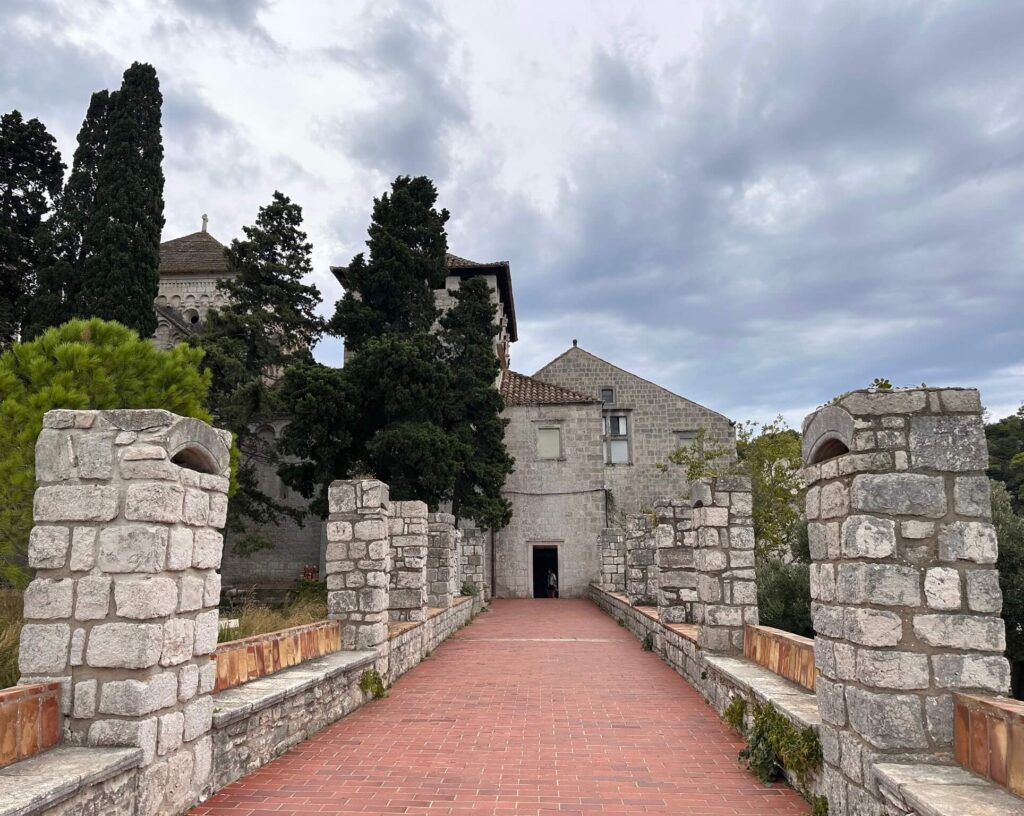
The historic Benedictine Monastery on the Islet of St. Mary, a cultural gem in the heart of Mljet National Park.
In the middle of Veliko Jezero sits St. Mary’s Benedictine Monastery, one of the most recognizable landmarks in Mljet National Park. The monastery stands on St. Mary’s Island (Sveta Marija), a tiny islet surrounded by the calm blue waters of the lake and shaded by tall pine trees, creating one of the most picturesque scenes on Mljet Island.
The Benedictine monastery dates back to the 12th century, with construction traditionally linked to 1151, when Benedictine monks established a monastery and church here. The complex includes a Romanesque church dedicated to St. Mary, a monastic cloister, defensive walls, and later Renaissance additions that were added over the centuries as the monastery expanded. The structure was strategically positioned on the island, both for seclusion and protection, giving the monks a peaceful yet defensible place to live and worship.
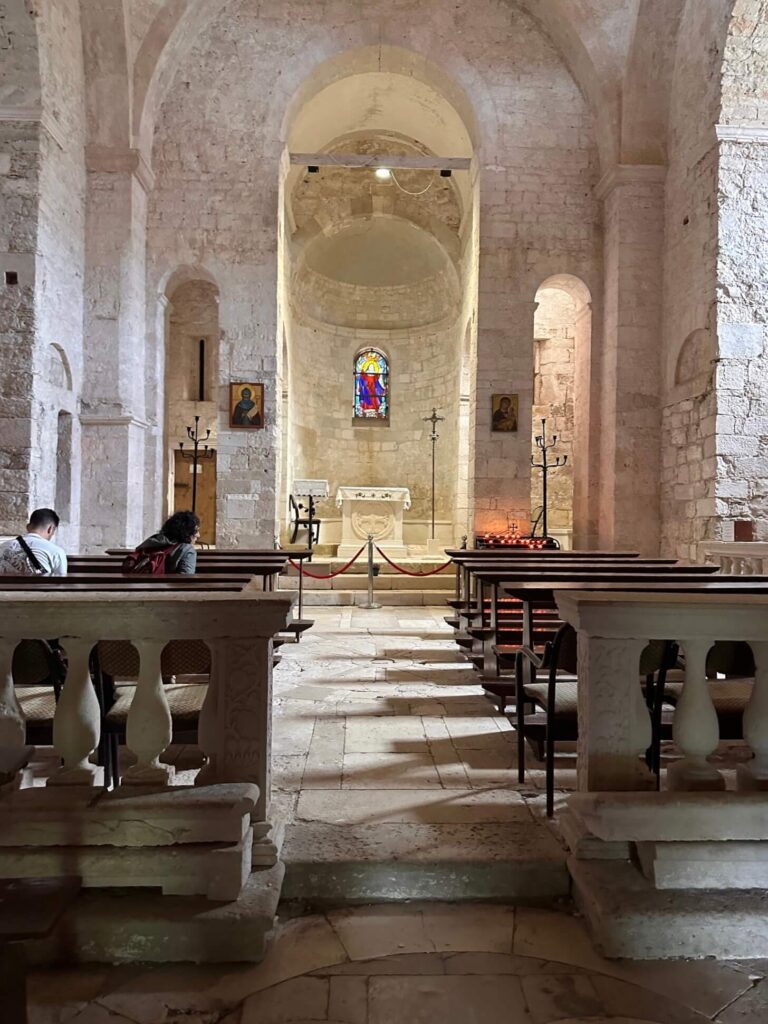
Timeless beauty on Mljet—this peaceful church feels like it’s been quietly watching over the island for centuries.
During the medieval period, the monastery served as an important religious and cultural center for the island. Over time, its role changed as monastic life declined, and parts of the complex were later adapted for other uses. Today, visitors can explore sections of the historic buildings, walk around the shaded paths of the small island, and enjoy views back across Veliko Jezero to the forested hills of the national park.
Regular small boats run between the lakeshore and St. Mary’s Island, making the short trip part of the experience. Many visitors choose to walk the island’s quiet paths, enjoy lunch at the lakeside restaurant, or simply sit along the stone walls and take in the peaceful setting that has defined this place for nearly nine centuries.
A Park Made for Exploring
One of the best things about visiting Mljet National Park is how easy it is to explore at a relaxed pace. The park is largely car-free, which means most visitors get around by bicycle, kayak, or on foot, following scenic trails that wind through pine forests and along the shores of the two saltwater lakes. A popular route circles Veliko Jezero, offering beautiful viewpoints, quiet swimming spots, and shaded rest areas along the way.
For a different perspective, the park also operates solar-powered boats that glide silently across the lakes, connecting the main lakeshore areas with St. Mary’s Benedictine Monastery on the small island in the center of the lake. These environmentally friendly boats help preserve the park’s peaceful atmosphere while allowing visitors to enjoy the scenery from the water.
Many travelers visit the park as part of a broader Adriatic itinerary. If you’re exploring the region by boat, Mljet is a memorable stop on many Croatian island routes. I experienced it during a sailing itinerary along the coast, which you can read about in my post Exploring the Stunning Croatian Coast on a Luxury Cruise.
Whether you choose to cycle the lakeside paths, paddle across the calm water, or take a quiet boat ride through the landscape, exploring the park feels slow, scenic, and wonderfully connected to nature—exactly the way Mljet Island was meant to be experienced.
Things to Do in Mljet National Park
- Bike the trail around Veliko Jezero
- Kayak across the calm saltwater lakes
- Swim in crystal-clear water along the lake edges
- Visit the monastery on St. Mary’s Island
- Watch sunset over the lakes and forested hills
Tips for Visiting
- Arrive early if coming from Dubrovnik to enjoy the park before day-trip crowds.
- Rent a bike at the park entrance for the easiest way to explore.
- Bring swimwear—there are beautiful swimming spots all around the lakes.
- Plan at least half a day to experience the park at a relaxed pace.
Wrap Up
Mljet National Park is the perfect escape for anyone looking to slow down, breathe in fresh pine-scented air, and soak in some of Croatia’s most serene natural beauty. Whether you’re biking around Veliko Jezero, kayaking across the calm saltwater lakes, or exploring the historic monastery on St. Mary’s Island, every corner of the park invites relaxation and discovery. Plan a day trip or an overnight stay to fully experience the peaceful side of Croatia that so many travelers overlook.
Until next time…
· izzy