
Updated: July 2026
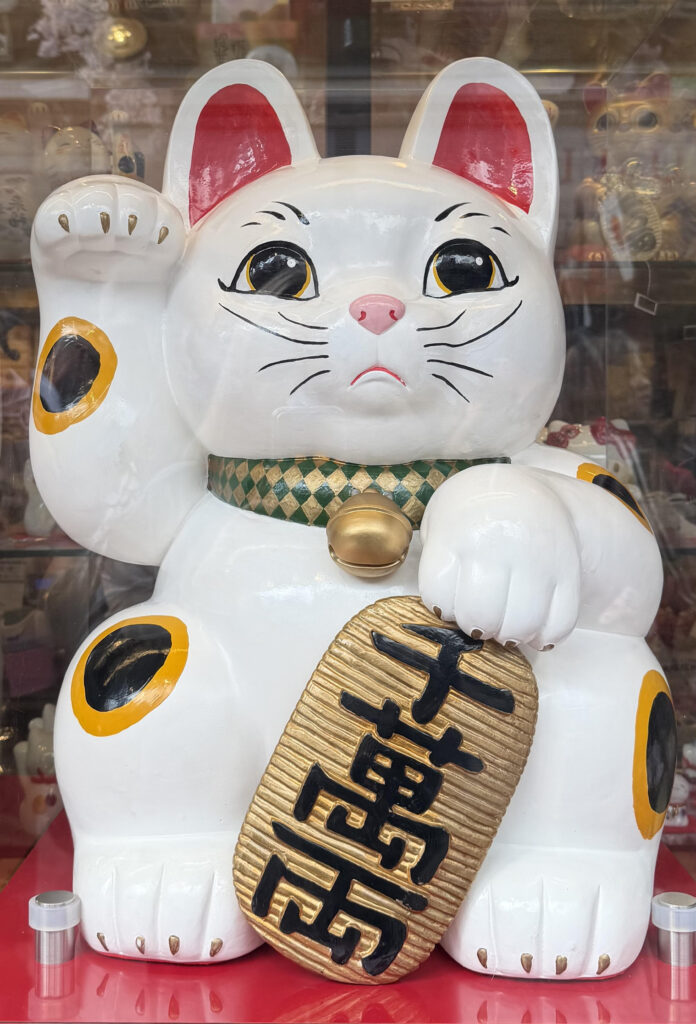
The Japanese lucky cat, known as Maneki-neko, is one of Japan’s most beloved traditional symbols of good fortune. You have probably seen it peeking out from shop windows, perched next to cash registers, or tucked into travel souvenir displays. That cheerful figurine with one paw raised has a story worth knowing. Once you know it, you will never walk past one the same way again.
If you are still in the planning stages of your trip, Japlanning 101: Your Crash Course to an Epic Trip is the best place to start.
What Is Maneki‑Neko?
Maneki-neko translates to “beckoning cat” in Japanese. These figurines, typically modeled after the Japanese bobtail breed, are said to bring good luck, prosperity, and welcome to whoever owns or displays them. The raised paw is not waving hello but rather gesturing in the traditional Japanese way of beckoning someone to come closer.
The origins of the Maneki-neko date back to the Edo period (1603-1868), when early versions were crafted as pottery in Tokyo’s Asakusa district and sold at temples. Over time they became a staple of homes, shops, and businesses across Japan and eventually spread around the world as one of the most recognizable symbols of Japanese culture.
The Legend Behind the Lucky Cat
The most famous origin story is connected to Gotokuji Temple in Tokyo’s Setagaya ward. According to legend, a poor monk cared for a stray cat that lived at the temple. One day the cat raised its paw to beckon a passing samurai, drawing him away from a tree that then fell. Grateful for having his life saved, the samurai donated generously to the temple, bringing it prosperity and fame.
Other tales involve cats bringing luck to shopkeepers or travelers in need, but the common thread is always the same: a cat’s beckoning paw signals good fortune, protection, and welcome. These stories helped cement the Maneki-neko as one of Japan’s most enduring good luck charms, and Gotokuji Temple remains one of the most fascinating places to visit in Tokyo, with thousands of figures in all shapes and sizes lining the temple grounds.
The Maneki-neko is just one example of how Japan infuses everyday objects with deep cultural meaning and artistry. The Art and History Behind Traditional Japanese Noren Curtains explores another, and the two together reveal something consistent about the way Japan approaches the objects that fill daily life.
What the Color Means
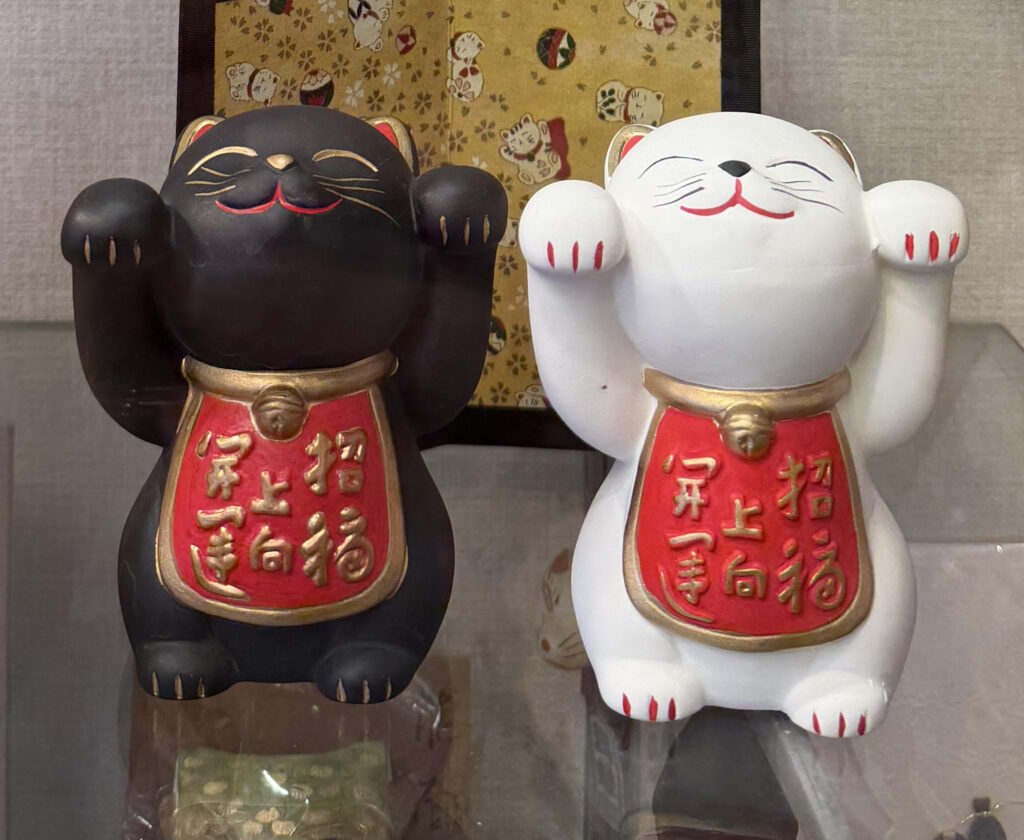
Not all Lucky Cats are equal. Each color carries its own specific meaning, so choosing the right one matters depending on what kind of fortune you are hoping to invite.
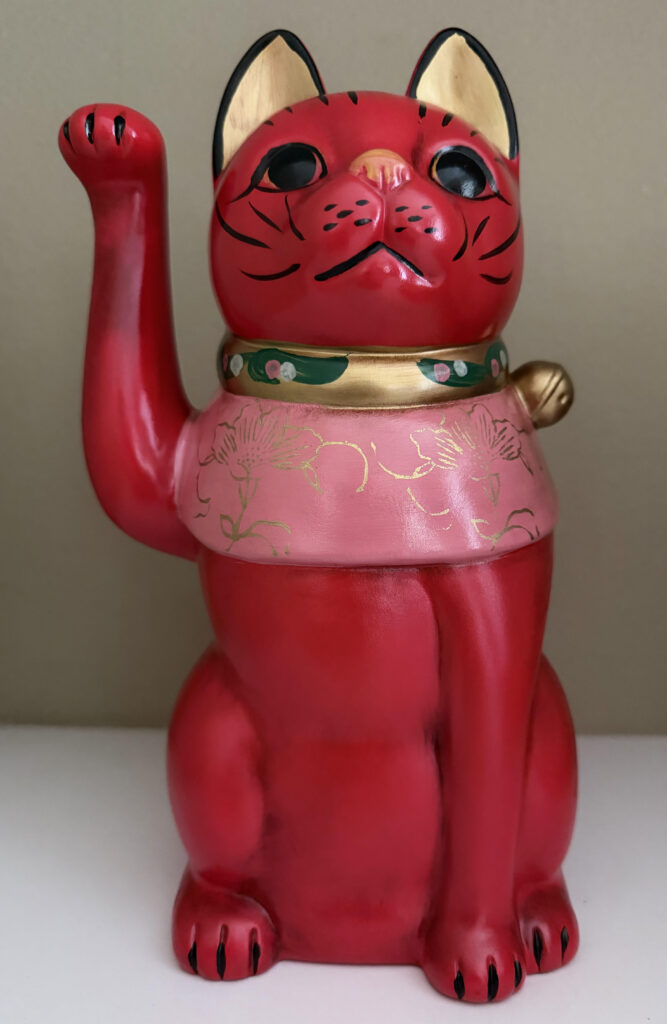
White is the most classic and common, associated with purity, happiness, and general good fortune. Gold represents wealth, financial success, and prosperity, which is why you so often find it near cash registers in Japanese businesses. Black offers protection against evil and misfortune and is traditionally placed near entrances. Red promotes good health, career success, and protection from illness. Pink invites romance, love, and harmonious relationships. Green and blue are associated with safety, wisdom, academic success, and calm judgment.
On my trip I picked up a red Lucky Cat, drawn to its meaning of health and protection, and it has earned a permanent spot at home. I also could not resist the miniature solar-powered cat from Don Quijote, which sits contentedly with its legs moving gently whenever the light hits it. Equal parts charming and completely impossible to leave behind.
What the Raised Paw Means
The color tells you what kind of luck the cat brings. The paw tells you how it brings it.
A left paw raised is traditionally believed to attract people and customers, which is why you see left-pawed cats most often in shops and restaurants. A right paw raised is thought to bring wealth and financial good fortune. Some cats raise both paws, inviting both customers and prosperity at once. The height of the paw matters too. A paw raised above the ear is believed to attract long-term, lasting luck, while a lower paw is associated with more immediate fortune.
What the Cat Is Holding
Most Maneki-neko are shown wearing a collar and bell or holding a symbolic object, each of which adds another layer of meaning to the figure.
A koban coin, the small gold coin you see most often, represents wealth and financial good fortune. A fish symbolizes strength and abundance. A gem brings wisdom and prosperity. A mallet attracts wealth and new opportunities. A money bag signals good luck and financial success. A drum is said to bring an overflow of customers. A bell or bib signifies protection and a welcoming presence.
Where to Place Your Lucky Cat
Placement is part of the tradition. Positioning your Maneki-neko thoughtfully is believed to help direct the type of luck it attracts.
White cats belong near entryways to welcome positive energy into the home. Gold cats are ideal near cash registers, desks, or office spaces to attract financial success. Black cats work best at doors or entrances to ward off negative energy. Red cats are at home in bedrooms or family spaces to promote wellbeing. Pink cats belong in bedrooms or shared spaces to encourage love and harmony. Green and blue cats are well suited to study areas, offices, or children’s rooms to inspire focus and learning.
Where to Buy a Lucky Cat in Japan
Lucky Cats are everywhere in Japan, but some places are especially worth seeking out for authentic, unique, or especially meaningful finds.
Tokyo
Gotokuji Temple in Setagaya is the birthplace of the Maneki-neko legend and one of the most photogenic stops in the city. Thousands of figures of all shapes and sizes line the temple grounds and the experience of visiting is as memorable as any souvenir you might bring home. Imado Shrine in the Asakusa area is another dedicated spot worth visiting. Nakamise Shopping Street at Senso-ji stretches 250 meters with 89 shops and is one of the best places to browse a wide variety of styles and price points. Koide Shoten on Kappabashi-dori, Tokyo’s famous Kitchen Town street, carries a solid selection alongside the kitchenware the street is known for. Yanaka and its retro shopping streets are ideal for handmade and hand-painted versions from local artisans.
Osaka
Shrine stalls and specialty gift shops near major shrines carry a good selection of traditional figures. Sennichimae Arcade near Kuromon Market is filled with kitchenware shops that often carry Lucky Cats alongside their wares.
Kyoto
Danno Horinji Temple is a dedicated spot for Lucky Cat finds in Kyoto. Traditional craft and souvenir shops and temple shops throughout the city carry a wide variety of styles from classic to contemporary.
If you are spending a day exploring the area, the Ultimate Guide to a Day in Arashiyama in Japan covers everything worth seeing while you are there, including the traditional craft and souvenir shops where Lucky Cats are easy to find alongside other meaningful keepsakes.
Hakone
Souvenir shops around Hakone Shrine and Lake Ashi carry regional versions worth picking up, and artisan pottery stores in the area occasionally carry hand-crafted figures that feel more special than the mass-produced variety.
Japan Close
The Maneki-neko is one of those details that reveals something true about Japan: even the most ordinary objects carry meaning, history, and intention. A small cat figurine in a shop window is never just decoration. It is an invitation, a wish, and a story that has been passed down for centuries. If you find yourself drawn to that kind of beauty hiding in plain sight, the Ultimate Guide to Decorative Manhole Covers in Japan is worth a read for the same reason. Bring one home and you bring a little piece of that story with you.
— izzy